Pages

Saturday, 5 April 2014

Batman Superman, Volume 1: Cross World Review (Greg Pak, Jae Lee)


I’d try to summarise the plot but for the life of me I don’t think there was one. New 52 Batman and Superman, before they join the Justice League (so this is 5 or 6 years back from the “present” - the New 52 timeline is so messy!), get sent to Earth 2 by a demon trickster called Kaiyo (Kaiyo = KO = Knock-Out - it’s that imaginative!) where they meet older, wiser versions of themselves. They fight. They go back home. The end. 

I think this was meant to show how Batman and Superman became close friends by showing them as disliking/distrusting one another to start with and then learning that they both share common goals, but really in the New 52, they’ve never been “friends”. Even now in the “present”, they’re still annoying one another, bickering in the constantly-fractured Justice League. 

I like the New 52 t-shirt and jeans Superman so seeing more of him was good and I really enjoyed Jae Lee’s super gothic, moody art which makes Gotham look so frickin’ awesome, and his Catwoman design rocked. But those are the only positives I can think of for this effort. 

It’s basically four issues of two Batmen and two Supermen talking about their differences (duh, Earth 1 is different from Earth 2 - let’s point out the changes!), fighting one another (because heaven forfend that we ever get a Superman/Batman story without the two fighting!) and then Darkseid makes a pointless cameo. It’s so boring, stale, and unimaginative, I don’t know what Greg Pak/DC were thinking! Well, I can guess - “Batman and Superman are our top-selling properties, let’s make another series with the two and make more money!”. Oh and having young Clark and young Bruce meet as kids when Wayne's car breaks down in Smallville? That's some Star Wars prequel-level garbage, Greg! 

Four issues is a bit short for a book so the Darkseid Villain’s Month one-shot is thrown in which tells you Darkseid’s origins in a brief, uninteresting way. Like the other Villain’s Month one-shots, this one is a total waste of time (with no Jae Lee art to save it either). 

I can’t recommend this for either Batman, Superman or Earth 2 fans as it’s such a dull, unsatisfactory story - seriously, has Greg Pak ever written anything worthwhile? How does he keep getting big assignments?! Jae Lee fans would definitely like it for the art alone but Batman/Superman is definitely not a must-read addition to the New 52.

Batman/Superman Volume 1: Cross World HC (The New 52)

Captain America, Volume 1: Castaway in Dimension Z, Part 1 Review (Rick Remender, John Romita Jr)


The summary of Captain America, Volume 1: Castaway in Dimension Z, Part 1, is as deep and complex as the book itself. Captain America is somehow transported to a cheesy, pulp sci-fi world run by Arnim Zola and has to survive, protect his son Ian, and escape. Think there’s more to this book? There isn’t. Cap suddenly has a son, the corny monsters attack for no reason, and somehow Cap is stuck in Dimension Z for years without escaping.

I know this is an overused maxim but it’s really relevant to this book: show don’t tell. If you suddenly give Cap a son for no reason and make him deeply care about him all without doing any of the character building necessary for the audience to feel the same, and then tell the audience that they should care too - that’s shitty writing. And yet that’s what happens here. It almost feels like a joke: here’s Cap - and here’s his son, Ian. Um, who the hell is Ian?! Get that annoying kid out of there! 

There’s no story, just Cap and Ian running around a gloomy landscape being shot at by aliens who irritatingly talk in choppy english (“When found him he was combating mutates. Him hurricane” etc.). The bad guys are cardboard cutouts of monstrous looking foes with jagged teeth and drooling with glowing eyes. It’s like a four-year-old wrote this. 

There are some redundant flashbacks to Cap as a child in the 1930s when he was having a hard time growing up, being bullied by older kids, which I guess was supposed to tie into Cap’s “son” Ian, passing on lessons he learned as a kid, or whatever. Then again I don’t give a damn about Ian so they were wasted efforts. 

John Romita Jr. is joined by Klaus Janson and Tom Palmer so the book looks awesome - the art was the only saving grace here. Rick Remender’s script is wholly derivative and reads like it was thrown together in a weekend while doing other things. It’s easy to see where his Image series Black Science came from as it’s basically the same script as Dimension Z minus Cap. 

This is a really shoddy comic that couldn’t be more shallow if it tried. I suppose if you like classic pulpy sci-fi, this is for you, but mixing that genre with Captain America doesn’t work (and anyway pulps are overrated - they’re horrible to read, even if it’s chic to look upon them as cool these days). Dimension Z is a Z-grade book.

Captain America - Volume 1: Cast Away in Dimension Z Book 1 (Marvel Now)

Friday, 4 April 2014

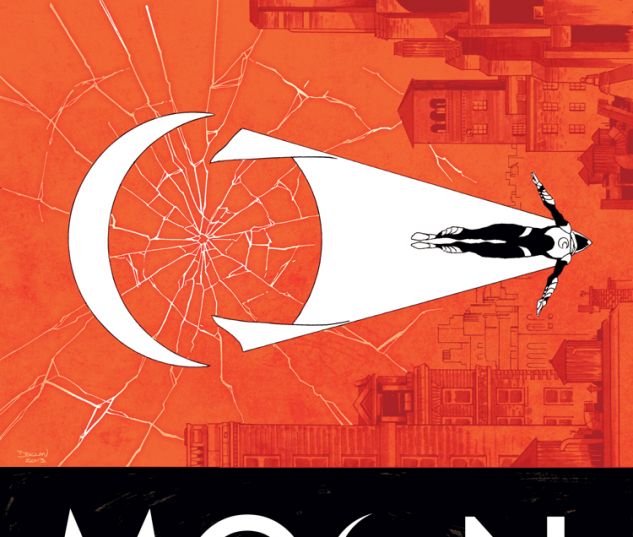
Moon Knight #2 Review (Warren Ellis, Declan Shalvey)


Read my review of Moon Knight #2 here: http://whatculture.com/comics/moon-knight-2-review

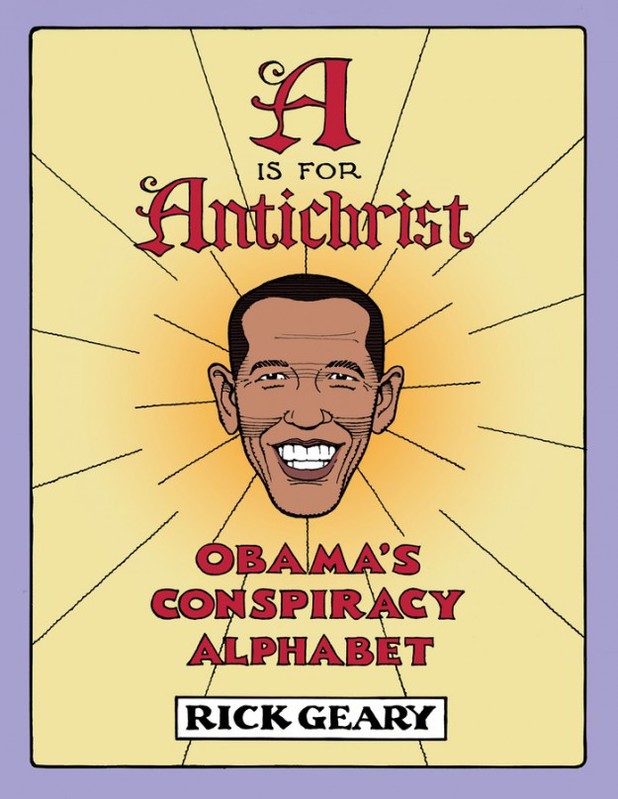
A is for Antichrist: Obama's Conspiracy Alphabet Review (Rick Geary)


Since President Obama took office there’ve been lots of nasty, vicious rumours about him both personally and professionally, some that are quite funny - and none that are true. Rick Geary collects together the most notable in alphabet form in A is for Antichrist: Obama’s Conspiracy Alphabet. 

Most people will be familiar with some of the lies spread about Obama - he’s a secret Communist Muslim Antichrist from Kenya who forged his birth certificate - but some are really off the beaten track. The bizarre rumours include that he’s ordered FEMA to organise concentration camps to keep anyone who opposes him down, that he murdered his grandmother and Andrew Breitbart who found out “truths” about him, and that he had plastic surgery to look less black.

Some of the rumours are clearly aimed at right wing gun-nuts like that he staged the Newtown massacre to tighten gun regulations and has special Viper teams ready to take away civilians’ guns at a moments notice. 

The less ugly rumours are just funny: he’s the great lizard overlord as foretold in the Bible; he uses mass hypnotism to get people to vote for him; he’s the son of Malcolm X; and he used a top secret machine to bring about Hurricane Sandy! Geary illustrates each satirical point beautifully on full pages in colour and in his signature style. 

This is a book that I backed on Kickstarter once I saw some of the rewards. I’ve been a Geary fan for years and the opportunity to own original art, sketches, and other things including the book were too good to pass up so I jumped on board to get the book published. It’s a really nicely produced book and the original sketch of Antichrist Obama on the inside page is awesome! 

Here’s hoping Geary’s able to sell A is for Antichrist to a publisher to get this entertaining book out into the mainstream!

Batman, Detective Comics, Volume 3: Emperor Penguin Review (John Layman, Jason Fabok)


I’m so relieved DC booted Tony Daniel off of Detective and replaced him with John Layman, the writer of the excellent Image series, Chew. DC must’ve been paying attention to the negative reaction of Daniel’s run because right on the cover is a blurb acknowledging that his series was dead in the water: “Layman has reinvigorated the book with his first story arc”. That said, while I think the new creative team - Layman is joined by artists Jason Fabok and Andy Clarke, both outstanding - is definitely a step up, the new Detective Comics isn’t brilliant. 

The first half of the book concerns Poison Ivy and Clayface who’re up to some shenanigans, while the second half follows a new villain called the Merrymaker, a dude in a plague mask inspired by the Joker. In the background is the titular character, the Emperor Penguin, who is the Penguin’s former assistant, Ogilvy, who’s decided to take advantage of Penguin’s absence (he was forced to help Joker in the Death of the Family storyline) to become the new head of Penguin’s empire. 

The Ivy and Clayface storyline was a complete flatline for me. It was Ivy doing her usual act of making guys do her bidding and the only “mystery” was why Clayface was going along with it, believing he was Ivy’s husband. I say “mystery” because I definitely didn’t give a damn one way or the other and my reaction at the reveal was a shrug. 

The Merrymaker storyline isn’t much better but is definitely more interesting. Referencing the Joker’s return in the Death of the Family storyline, a new group of devoted fans called the League of Smiles (terrible name!) is killing in the name of Joker. The references to fandom and Joker’s influence over weaker-minded people are narrative avenues Layman explores in a semi-compelling way. 

The entire Emperor Penguin stuff though… meh. Emperor Penguin doesn’t distinguish himself enough from Penguin so while we see Oswald on his ass dealing with being on the bottom of the ladder, Emperor Penguin isn’t doing anything very differently from the original Penguin - he’s still scheming, coming up with criminal plans to beat Batman, etc., plus his personality is your bland stereotypical villain. 

I was pleasantly surprised to discover this was the first New 52 book in a long while that wasn’t stuffed with pointless crossover issues. This volume collects Detective Comics #13-18 and NOTHING ELSE! It does reference events like Death of the Family and Damian’s death in Batman Incorporated but doesn’t have issues from those titles shoehorned into it. DC, if you’re reading this, and of course you are, let’s have more volumes like this please! 

Layman’s a good writer but the storylines here don’t enthral (the aimless Ivy/Clayface one especially) and he needs to find a better hook for the series. I wouldn’t say he’s reinvigorated the title but he’s definitely pointed it in the right direction, away from whatever the hell Tony Daniel was doing. Jason Fabok and Andy Clarke’s art on the other hand is wonderful. Fabok draws the main issues and Clarke draws the backups (those focus on small players in Gotham’s underworld, some of which are actually more interesting than the main stories) and both draw Batman and Gotham beautifully - dark, gothic, beautifully dramatic, and exciting. 

So is Detective Volume 3 a must-read? Nope! It’s an unfocused collection of middling Batman stories with great art, but there’s potential with this creative team that might develop in future volumes, so, unlike Tony Daniel’s first Detective book which turned me off the title, I’ll be around for the next one.

Batman Detective Comics Volume 3: Emperor Penguin HC (The New 52)

Avengers Arena, Volume 3: Boss Level Review (Dennis Hopeless, Christos Gage)


Avengers Arena started out with the promise of bloodshed and violence amongst Marvel’s teen heroes in a Hunger Games-style setting, and that could’ve been an ok series - not great, but ok. Instead it’s been a total letdown as Dennis Hopeless opted instead to try and make readers care about these “characters” by portraying instead tedious teen drama with superpowers. I read the third and final volume only because I wanted to see if he’d at least kill off a bunch of characters and maybe even Arcade, but nope, Hopeless failed to even live up to the basic premise! 

This series might mean something to someone who’s familiar with Avengers Academy and Runaways, but because I have no experience with either title, I’ve never given a damn about any of these kids. So, besides X-23 and the bizarrely named Anachronism, I can’t remember any of the characters names and won’t even try. 

Emo sweater boy turns into a monster which means bland and boring girls and boys have to fight him which eats up a bunch of pages. Then some robot monsters and weather stuff gets thrown at them which eats up some more pages. Then something happens to someone, someone cries for some reason - I think that was the “emotional”, “intense” and “powerful” ending? - the baddie gets away, and everyone is saved. If this review sounds lazy, I'm only matching the energy I got from this book.

Now I realise I’ve made it sound amazing with that description but it’s even worse. I ended up speed-reading the final half just to get it over with rather than endure the laughable “drama” of Anachronism (ironically the only character I think I got to know - the others were the anachronisms) and his cohorts as they blubbered about how their lives are ruined or whatever. 

Avengers Arena: one big boring letdown of a book. Oh, I thought of one good thing - it's over!

Avengers Arena Volume 3: Boss Level (Marvel Now)

Thunderbolts, Volume 3: Infinity Review (Charles Soule, Jefte Palo)


I’m not a big fan of Thunderbolts but I’ve been following the Marvel NOW! series and I was glad to see Daniel Way exit on the last volume and comic book wunderkind Charles Soule step in to take over. And then I saw the heading to the book - Infinity. 

Uuuuuuuuuuuuuuuuuuuuuuuuuuuuh. Infinity. That pile’a crap from last year when Jonathan Hickman brought Thanos back and did some stuff that didn’t matter, bored the world, and then left. I did not like Infinity at all. It was a bloated, over-hyped series that was severely underwhelming - a regular Marvel Event basically. 

So I was surprised when I found Soule had somehow managed to make something decent out of the Infinity hand he’d been dealt. 

When General Ross aka Red Hulk recruited the current Thunderbolts team, part of his sell was that in exchange for their help on his missions, he would lend the team’s support on their own individual missions - as Deadpool puts it, “We’re the selfish Avengers”. This time around, Punisher gets to pick the target so the Thunderbolts head to New York to take out a seemingly untouchable Mafia lynchpin family - and that’s when Thanos’ army attacks! 

New York. Aliens invading. Sounds very Avengers movie, no? It is - but not as exciting. Soule decides to split the team into various groups with different stories of varying interest: Punisher, Venom and Elektra go to take out the mob; Red Hulk, Leader and Mercy become embroiled in alien skirmishes; and Deadpool goes for pizza. 

The Punisher storyline is ok up to a point but once him, Venom and Elektra make it into the bunker where all the mafia dudes are, it becomes drawn out for no reason. Frank Castle, armed to the teeth, walks into a room full of gangsters: how long do you expect that scene to last - Frank kills everyone in a minute, maybe two? I think the only reason it went on for as long as it did was because Soule was told to keep the plates spinning while events in Infinity reached its climax with the detonation of the terrigen bomb, which plays into this book. 

The Red Hulk/Leader/Mercy storyline just didn’t grab me at all. Leader’s trying to sabotage things on the sly and Mercy is just a ridiculously powerful character whose motivations are too abstract for me to care about. They basically hang about staring at the massive alien fleet and wondering how to defeat it until Red Hulk says the right thing to Mercy who single-handedly blows everything up! 

The Deadpool storyline - eh. He gets pizza, does some silly things, kills some bad guys - it’s Deadpool 101. Not too boring but not too interesting either. 

The bookend issues aren’t that good either. One focuses on part of Mercy’s backstory and because I don’t care about Mercy, I just wanted the issue to end, and the other is a kind of dream sequence with the Leader that was just pointless. 

I really liked Jefte Palo’s art which doesn’t look like superhero comic art and feels more indie-like, so I found it refreshing to see such typically massive, dramatically Marvel things happening rendered in a different way. 

I definitely like this new creative team for Thunderbolts and I don’t put its failings down to Soule entirely - I think he’s basically given a broad outline of a story and told to fill in the blanks - but it’s still not a great volume that’s got some ok moments but generally feels overlong and dull for the most part. Now that Infinity’s over and done with and the Thunderbolts are headed (literally and figuratively) in a new direction, I think the next volume will be a more satisfying read. But for a book filled with Infinity crap, it was much better than I expected.

Thunderbolts Volume 3: Infinity (Marvel Now) (Thunderbolts (Marvel))

Thursday, 3 April 2014

What If? Age of Ultron #1 Review (Joe Keatinge, Raffaele Ienco)


Read my review of What If? Age of Ultron #1 here: http://whatculture.com/comics/age-ultron-1-review

The Fifth Beatle: The Brian Epstein Story Review (Vivek Tiwary, Andrew C Robinson)


“Mythology is better and more fondly remembered than history! So we create legends rather than recount truths.” - Brian Epstein

The Fifth Beatle is a graphic biography of Brian Epstein, the Beatles’ first manager, who broke them to the world and took them further than they thought possible - becoming more popular than Elvis - before passing away shortly after the release of Sgt Peppers from a drug overdose. 

Writer Vivek Tiwary presents a vivid and colourful portrait of the man who was also a troubled, lonely and tragic figure whose nature would be his own downfall. As the quote above indicates, Tiwary plays with fact and fiction in his retelling to spice up the story such as Epstein’s fictional assistant, Moxie, who becomes his confidant on his journey to the top, perhaps representing his ambition, while scenes like Ed Sullivan interviewing Epstein with a ventriloquist’s dummy remain potentially true or false. 

Before Epstein became The Beatles’ manager, he had tried his hand at fashion which would play a major part in transforming the leather jacket-wearing scousers into the smart, iconic young men who the world would come to know via songs like Please, Please Me and Love Me Do. But he also had a keen eye for bullfighting and is presented on the cover as a matador. 

In a key scene with John, he explains his fascination of the matador: “At his final moment of triumph, the matador becomes death - he kills the killing machine. But not before he gives the bull its glory, shows the world its beauty, its powers, its majesty. He also gives the aficionados something to believe in, something to admire, and ultimately something to hate. So in the end, he gives people hope.” That’s Tiwary’s approach to Epstein in this book - Epstein is the matador who shows the bull (The Beatles) to the world, exposing the glory and beauty of their music. 

Epstein was also a closet homosexual, though not particularly due to shame but because during his lifetime homosexuality was literally illegal - a fact that would change mere months after Epstein’s early death. And his sexuality does play a big part in his story as it isolated him from true companionship, like when The Beatles find girlfriends and spend time with them rather than Epstein who’s left looking into his mirror murmuring “Oh, if love were all… I should be lonely” and taking pills to “curb” his homosexual inclinations. 

Pills would be Epstein’s downfall as the stress of managing the world’s biggest band would cause anxiety, insomnia and exhaustion, and make him dependent upon sleeping pills to rest. He would eventually die at the age of 32 of a sleeping pill overdose. 

The book doesn’t go into too much detail of Epstein’s life, sometimes choosing Andrew Robinson’s superb art to tell an ambiguous scene rather than literally spell it out to the reader, which sometimes works and sometimes doesn’t. For example, if you wanted to know why Epstein was in a hospital towards the end of the book, you’d have to look it up separately to find out he was undergoing rehab to change his destructive lifestyle and wean himself off the drugs - in the book, he’s just in a hospital bed, exhausted. And there is a dream-like sequence in his flat as he’s dying that’s a bit too ambiguous for my liking and was also repetitive and a bit too on the nose in explaining Epstein’s feelings. 

Andrew Robinson’s art in this book is a revelation. His painted style gives the book an incredibly lavish look like when he takes traditional narrative captions and moulds them into the scene - the establishing landscape shot of Liverpool in the rain sees the words “Liverpool” etched across the sky forming part of the rain. But really every page is stunning, especially the colours, but I loved the dream sequence where he’s on a train to London and sees himself outside, outrunning the train with a copy of Love Me Do in his hands, and the dance montage with Moxie was incredibly beautiful (as was Moxie!). The clothes of the time, the character designs, the imaginative layouts and angles - it’s all perfect. 

For some reason Kyle Baker was brought in to draw the section dedicated to The Beatles’ Philippines Tour which was the only downpoint of the art in the book. Baker is one of the worst Marvel artists I’ve ever seen and his work on David Lapham’s Deadpool is shocking. I suppose his style was designed to show the humour of the tour? Ech. 

I wouldn’t say The Fifth Beatle is a perfect book as it only really shows a stylised portrait of Brian Epstein rather than the full picture but you do come away from it with the right ideas about him. That he was a lonely, somewhat tragic figure but a brilliant, charismatic man whose ambition and vision paved the way in introducing to the world the greatest pop group of all time. And it really is an absolutely gorgeous book to have (for the most part). Well worth a read if you’re interested in finding out more about the manager of the Beatles, Brian Epstein.

The Fifth Beatle: The Brian Epstein Story

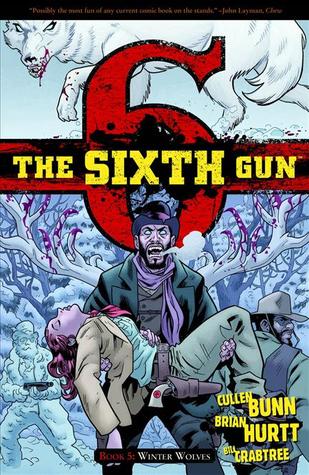
The Sixth Gun, Volume 5: Winter Wolves Review (Cullen Bunn, Brian Hurtt)


Drake and Becky are looking for a tracker to help them find the evil witch, Missy Hume, and accidentally stumble into a winter realm where they are hunted by a dangerous woodland spirit: the Wendigo. Meanwhile, in his search for Drake and Becky, Gord makes some unlikely allies in Kirby Hale and Asher Cobb - but the Sword of Abraham is hot on their heels. 

I’ll just come right out and say it: filler. That’s what Book 5: Winter Wolves reads like. The Sixth Gun’s story is excellent - six enchanted guns which, when united, allows the wielder, good or bad, to remake the world their way - and I love the colourful cast of rogues, bandits, witches, golems and mummies against the romantic frontier days of the wild west. But the story of Becky and co’s mission to defeat the widow Hume is put on hold for this book while the two putter around Narnia slowly figuring out how to defeat the Wendigo, and Gord and the others run in circles. 

It’s still written well by Cullen Bunn and there are flashes of brilliance like when we find out about Drake’s past and his last encounter with a Wendigo, and Brian Hurtt’s artwork is as gorgeous as ever, but for me the book didn’t come to life until the final chapter when Becky takes the fight to Missy Hume single-handedly. 

The Winter Wolves storyline isn’t bad but I’d have preferred it to be a done-in-one or two story rather than pad out an entire book - the story doesn’t hit the high gears until the final few pages with the reveal of some new characters and an exciting new direction for the next book. I’m looking forward to the sixth book but the fifth one felt like a bit of a wash - the first time the series has been less than brilliant!

The Sixth Gun Volume 5 TP

Wednesday, 2 April 2014

Inhuman #1 Review (Charles Soule, Joe Madureira)


Read my review of Inhuman #1 here: http://whatculture.com/comics/inhuman-1-review

Gambit, Volume 1: Once a Thief... Review (James Asmus, Clay Mann)


Gambit has his own Marvel NOW! series? They kept that quiet! But it’s true, there are 3 volumes of Remy Lebeau’s antics from James “Quantum and Woody” Asmus, and, after reading the first one, I can see why no-one’s talking about it. It’s Gambit repeatedly doing his rogueish thief thing while a bunch of two-dimensional characters take him through some unengaging storylines. 

Gambit appears at a rich businessman’s private party to lift some expensive gear, just ‘cos he’s bored of being a teacher at the Jean Grey School, and meets a femme fatale who leads him on a bizarre journey into another realm, or something. The second and final storyline sees Gambit forced into working for the rich businessman to steal Excalibur - enter Pete Wisdom and MI13 (paranormal British intelligence agency). 

James Asmus is doing great stuff over at Valiant but he can’t find a pulse with Gambit. I don’t think that’s entirely fault - Gambit simply isn’t a lead character who’s much better in an ensemble cast (like a lot of X-Men characters, Wolverine included). Asmus tries to give Remy a personality but besides the raffish ‘tude and occasional dips into French (oh-ho-ho mon ami!), there isn’t much to him. 

None of the supporting cast, from the generic evil businessguy to the bad girl with the rad ink and everyone in between, are particularly interesting either, so there’s no-one here to really become invested in. The first storyline didn’t make sense in where it headed while the second was easier to follow but still wasn’t very enthralling. 

My default mood when reading Gambit was basically unattached boredom, occasionally rising to mild interest (like when Gambit’s thrown out of a plane with his arms and legs tied and has to figure out how to survive), but its not enough to recommend and definitely didn’t interest me in wanting to pick up volumes 2 and 3. 

It looks like Marvel are giving every single character they’ve got a shot at their own series which sometimes works - take Magneto, Loki and the forthcoming Doop series which I’m sure will be mega-awesome - but in the case of Gambit, it’s a gamble that didn’t pay off. Au revoir, Remy and your weird hot-pink attire!

Gambit - Volume 1: Once a Thief... (Marvel Now)

Alone Forever: The Singles Collection by Liz Prince Review


All you need is love… right? Nah. Well, kinda, if you’re Liz Prince. Because while Alone Forever celebrates the single life and the frustrating, and sometimes funny, labyrinth that is modern dating, Prince is still in love with love. 

She’s always trying different methods to meet that someone special, whether it’s being a wingman for a mate when they hit the bars, or trying to make eye contact with cute guys on the tube or in the street, or even trying the online dating site, OK Cupid. As she puts it to those who aren’t trying to find love, she’s a hopeless romantic, you’re just hopeless! 

Which sounds like she’s a nutbag, but she’s not - she’s well aware of the person she’s presenting in the book which I’m sure is partly her real self but not entirely who she is as a person. So these strips, collected from her webcomic, centre around her foibles with love - falling for guys with beards and flannel shirts, being a part of the punk rock scene, and having disastrous first dates. 

The strips are meant to be funny but I didn’t really laugh at any of them - they’re clever funny, not laugh out loud funny, if you know what I mean, and some are just… meh. Self-deprecating autobio comics are a genre of comics I’m quite familiar with and Liz Prince, while a charming cartoonist, reminded me heavily of other artists like Julia Wertz, James Kochalka and Jeffrey Brown (the latter two I think are also with Top Shelf). 

That and all of the above artists have done comics about cats - Jeffrey Brown has published two entire books just about cats!!! - and so has Liz Prince. I get it, cats are whacky, we all love cats, but wow is it played out at this point. And to be totally honest the whole hopeless at love/neurotic girl and proud schtick gets old before the end - there are only so many strips you can read that follow along these lines before it becomes repetitive and stale. 

Alone Forever is a sweet and amusing book that’s very readable and I’m sure most people will be able to pick it up and enjoy it, even relate to some of the scenarios, but it’s generally unremarkable and too light to make much of a lasting impression.

Alone Forever: The Singles Collection

Tuesday, 1 April 2014

Superior Carnage Review (Kevin Shinick, Stephen Segovia)


Carnage: is there a more 90s character? Looks awesome, has zero substance. Well it’s the 21st century now and Carnage hasn’t changed, he’s still as one-dimensional as ever. The Carnage symbiote’s host, Cletus Kasady (a serial killing redneck), has had his brain eaten away after years of being bonded with Mister Red and Slobbery so he’s now a zombie for Carnage to run around in. Except Carnage has been captured by the Wizard who has other plans for him - wait, who!? You know, the dude from the Frightful Four. The what!?! Yeah - Superior Carnage is where all the lame villains gather. 

It’s kind of about Carnage but it’s really about the Wizard, whose own brain is starting to fall apart, and he just wants to impress the clone of his dead son - Bentley-23 - just once, to show him his old dad isn’t a loser, so he decides to reform the Frightful Four and take City Hall. Seriously, that’s the plot of this book. 

Unlike Superior Foes of Spider-Man, Superior Carnage does feature Superior Spider-Man (could I ram any more “superior”s into that sentence?) and there’s some cool Spidey on Carnage action. I do appreciate Kevin “Robot Chicken” Shinick is trying to make the reader care about the Wizard in this book even though he doesn’t accomplish it - not for lack of trying, it’s just such a flimsy storyline for such a weak-ass character. And, hey, it’s an unexpected direction to take for the Carnage book, so kudos? I just wish it were more interesting to read! 

Stephen Segovia’s art is pretty good, it’s about what you’d expect for a Marvel superhero comic and is kinda like Steve McNiven-lite, even though his design for Superior Carnage looks like the Red Skull cosplaying as the Punisher. 

I suppose Superior Carnage is for fans of Carnage and/or the Wizard but I’m not sure there are many of those (especially the latter!). For the rest of us, is it essential reading? Not in the least. It’s a quick, painless and forgettable offshoot of the Superior Spider-Man franchise and totally dispensable (then again, it’s a five-issue mini-series so that was probably the point. Mission accomplished, chaps!).

Superior Carnage