Pages

Saturday, 15 February 2014

Batman Black and White Volume 4 Review (Neal Adams, Sean Murphy et al.)


The black and white Batman short story anthology, imaginatively titled Batman: Black and White, returns for a fourth volume. Like the other three books, Black and White’s stories are very uneven with some standouts out of many duds but as is also the case with this series, the art is by far the selling point of these books. 

The most memorable story here is Neal Adams’ “Batman Zombie” where a zombie Batman shuffles through Gotham witnessing the effects of a recession on ordinary men and women. He wakes up having experienced a Christmas Carol-ish dream and decides he could do more good as Bruce Wayne the billionaire than Batman the vigilante, and goes out to spread the wealth. It’s great to see Adams’ art but man, that is a completely nutso storyline! I guess we couldn’t expect less from the guy who brought us Batman: Odyssey, right? 

Continuing the theme of having artists writing their own stories is Rafael Grampa’s “Into the Circle” where Joker is recruiting gangs to rob Wayne Manor – but Batman is waiting in the shadows to stop them. Why are Batman and Joker working together? Blair Butler and Chris Weston’s “I Killed the Bat” is an interesting riff on the sensational tabloid stories of yesteryear as a madwoman murders a man whom she believes to be Batman. Weston’s art is absolutely first class and his time with Grant Morrison drawing The Filth serves him well especially when things start to get meta towards the end. 

Ivan Brandon’s “Hell Night” shows Batman’s yearly attempt to break into Wayne Manor to test its defences, which was a pretty clever and enjoyable short, and Olly Moss and Becky Cloonan’s “Bruce” takes the perspective of the many hot women Bruce “dates” for appearances’ sake and what their take on the “billionaire playboy” is. Cloonan’s art is her usual stunning best and the story is an original angle for looking at Bruce that you rarely see. 

These kinds of shorts – a certain idea, often very small, about Batman explored in roughly 6 pages – are the ones that work best rather than the ones trying to fit in a full mystery/case within a short frame. Though looking at the book as a whole, it’s clear to see Batman’s not at his best in the short story format and the character works better in long-form narratives. 

The rest of the volume is filled with mediocre, forgettable stories with one particularly awful one by Dan DiDio called “Manbat Out of Hell” where Manbat’s kids get molested!!! JG Jones’ art is terrific, it’s just a shame he got the short straw to draw this crummy, utterly horrible story. 

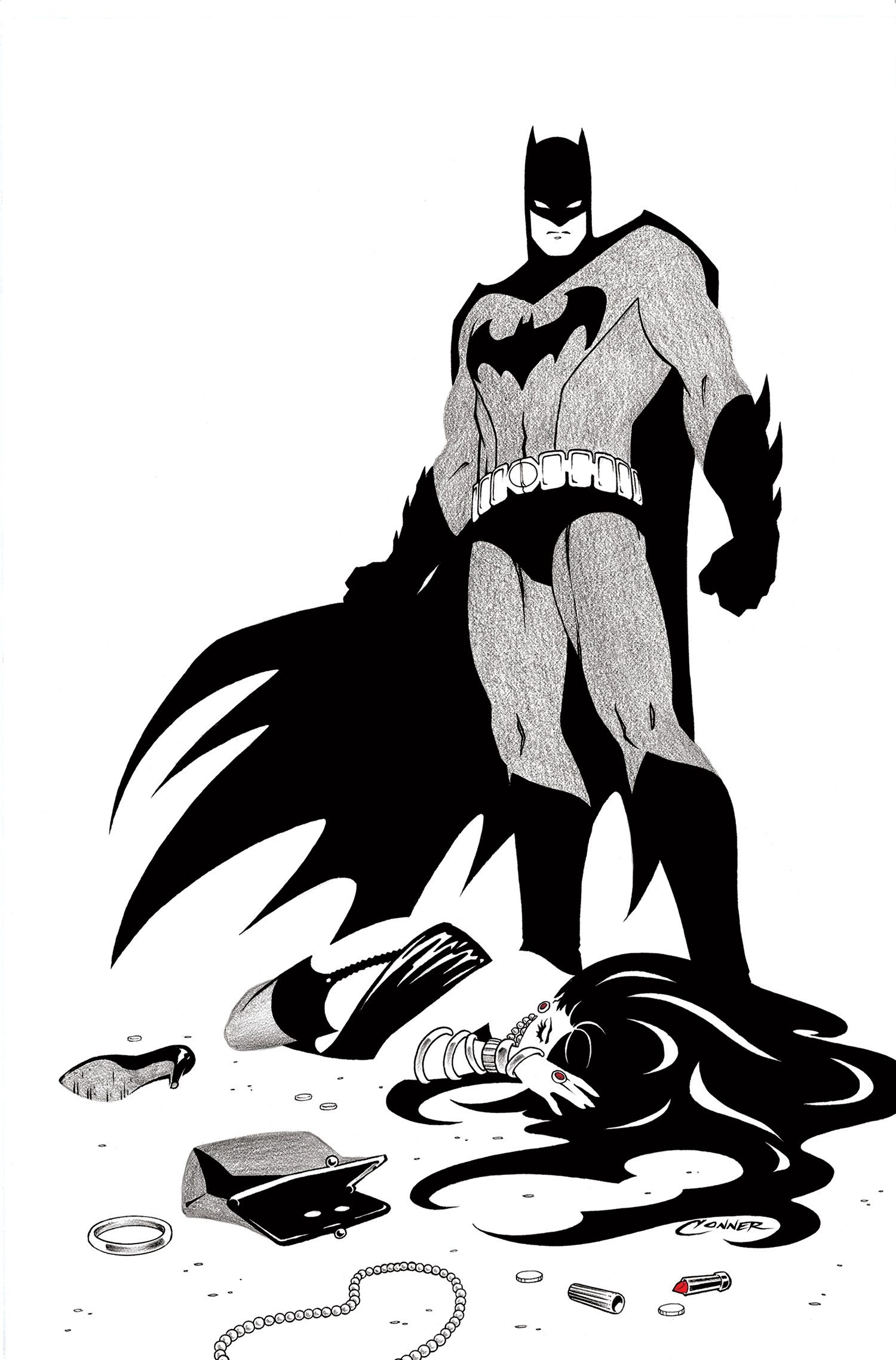
But if the stories are generally unremarkable, the art more than makes up for it. Jim Steranko’s absolutely confusing cover where a Jesus-esque Batman is standing above jigsaw puzzle pieces and giant ants is as well drawn as it is baffling, and Amanda Conner’s cover of Batman is also eye-catchingly beautiful. Artists who drew the interiors include Chris Samnee, Michael Cho, Rafael Albuquerque, Dave Bullock, Lee Bermejo, Damion Scott, Sean Murphy, Michael Allred, along with the aforementioned Becky Cloonan, Chris Weston, and Neal Adams. It really is a murderer’s row of first class comics artists! 

Batman Black and White Volume 4 isn’t a must-read Batman book but if you’re a fan there’ll be enough here for you to enjoy and there’s certainly a lot more here than the shorts I’ve mentioned – just remember to skip over Dan DiDio’s story!

Friday, 14 February 2014

10 Anti-Valentine's Day Comics


Read my article on 10 Anti-Valentine's Day Comics here: http://whatculture.com/comics/10-anti-valentines-day-comics

Painkiller Jane: The Price of Freedom Review (Jimmy Palmiotti, Juan Santacruz)


Painkiller Jane - whose superpower is a healing factor not unlike Wolverine’s - helps out a Saudi Arabian princess escape assassins and protect her from them. That’s the comic in a nutshell! 

I realised reading this that Jimmy Palmiotti doesn’t write complex comics. I’ve read a few of his other comics before but this one really underlined it for me. It’s not a bad thing but the non-stop action and gratuitous boob and butt shots (Jane is stacked, of course!) make this feel like any number of brainless Hollywood action movies. 

Jane and the princess run from explosions here, then they run from assassins there, then they separate and Jane has to rescue the princess from some beefy bad guy, there’s a shootout and it’s done. It’s written in a very formulaic fashion. 

It’s enjoyable for what it is which is just one action set piece after another, and at first it’s inventive enough. The scene at the airport where Jane’s got to save the princess, avoid the cops and a flying drone is really cool, but the action becomes more rote afterwards. Fisticuffs, guns, car chase - I get it, it’s “exciting”, I guess, but I’m reading it and feeling completely uninvolved in what’s happening on the page. 

It doesn’t help that Jane’s indestructible and that she can get shot and smashed into walls and thrown off buildings, and so on, and be absolutely fine a few panels later with a couple bandages to show she’s been hurt. Because there are no real stakes, it’s not very tense to see things like knives and bullets being waved at her - she can get hit by all of them and she’ll live. 

The Amanda Conner covers are stunning and Juan Santacruz’s artwork is absolutely fantastic - the art team were far and away the best part of the book. But Palmiotti’s writing? It’s competent and definitely not terrible, but it’s also very pedestrian and uninspired. Painkiller Jane starts well but loses steam almost instantly after the first issue to become an average forgettable action story with your usual boringly invincible protagonist. If straightforward violent action with hot chicks thrown in is all you’re looking for, Painkiller Jane delivers completely.

Painkiller Jane: The Price of Freedom

Asterix and the Picts Review (Jean-Yves Ferri, Didier Conrad)


Asterix was my favourite comic as a kid, and one of the first I ever read that turned me on to comics for life. The adventures of the moustachioed little Gaul from 50BC and his best friend, the much larger Obelix (don’t call him fat!), were an endless delight and even after I’d grown up (kinda) and moved on to the likes of Batman and Superman (see?), I still went back and re-read some of my favourite books like Asterix in Corsica and Asterix and the Laurel Wreath. 

Asterix and the Picts is the first non-Uderzo Asterix book. Rene Goscinny - one half of the Asterix creative team - died in the 1970s but Albert Uderzo continued producing the books, writing and drawing them. Now Uderzo’s in his late 80s, he’s probably unable to keep making them plus he’s not long for this world and it’s good to know Asterix will still be around even if his creators aren’t. So how is the first non-creator created Asterix book? Actually pretty good. In fact, if I didn’t know any better, I’d say it was written and drawn by Uderzo himself!

A Pict (ancient Scotsman) washes up to the Gaulish (ancient France) coast outside Asterix’s village, encased in ice. After Getafix the druid defrosts him, he reveals his home to be across the English Channel and, taking Unhygienix’s fishing boat, Asterix and Obelix accompany the Pict back to Scotland.

The really weird thing about this book is the stuff that you normally see in an Asterix book, replicated perfectly here. Asterix and Obelix getting into a heated argument, their large noses turning red as they scream at each other; Cacofonix getting beaten up after attempting to sing; Obelix getting drunk and not knowing his own strength; the inept Romans; and the book ending with the Great Feast – it’s like watching a cover band at work!

I don’t want to take it away from Jean-Yves Ferri and Didier Conrad as they do a fine job and given the popularity of the characters, it’s unlikely they were given much room to put their own personal stamp on it. But it is remarkable how similar this book is to any of Uderzo’s Asterix books. The Pirates make their obligatory appearance and surprisingly still managed to make me laugh: “It’s the Gauls! They’re making straight for us!” (cut to Obelix rubbing his hands). It’s such an old and cheesy joke but ridiculously funny. It’s also amazing that they’re still comfortable using the racist caricature of the black pirate with the oversized red lips! 

But that’s another important part Ferri gets right with this book - the abundance of corny humour. Like when they make it to Scotland and, like in Gaul and Rome everyone’s names are puns, they all have names that start with Mac - Macaroon, Macabre, Machinations, etc. 

So why only a lukewarm reaction to it? It’s because I’ve outgrown the style of these stories. It’ll never be as sophisticated as I want it to be because it never was, it’s me who’s changed, and grown-ups really aren’t the target audience. If a 10 year old me was reviewing this he’d be calling this the book of the year and would have re-read it several times before the next one comes out; the older me can recognise what I loved about it but, sadly, I’m also aware that this kind of book doesn’t work for me anymore. 

Ferri and Conrad produce about as good an Asterix book as any Uderzo has produced in the last 20 years, which is to say it’s enjoyable, funny, and absolutely charming even if the story isn’t a standout compared to the classic Asterix. Picky grown-up readers won’t mind this latest addition to the Asterix series, and it’s nostalgia still works for me but the real audience for these books, as they’ve always been, are the nonjudgmental kids. They’ll adore it, as they should. 

Asterix and Obelix Forever, By Toutatis!

Asterix and the Picts

Thursday, 13 February 2014

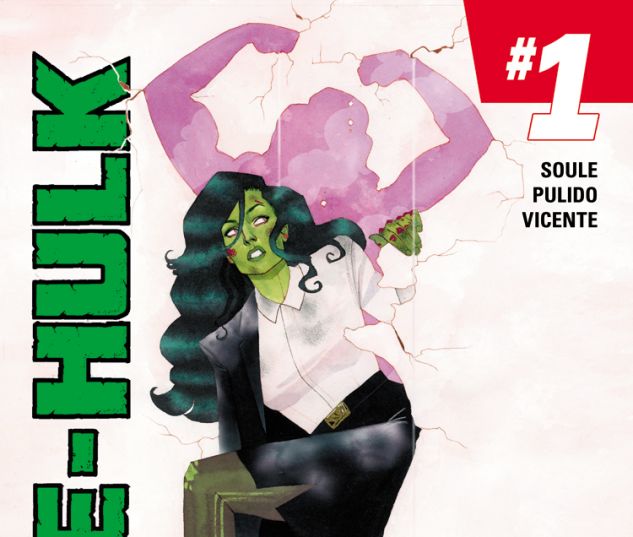
She-Hulk #1 Review (Charles Soule, Javier Pulido)


Read my review of She-Hulk #1 here: http://whatculture.com/comics/6-awesome-comics-must-read-week-13-february.php/7

Batman #28 Review (Scott Snyder, Dustin Nguyen)


Read my review of Batman #28 here: http://whatculture.com/comics/6-awesome-comics-must-read-week-13-february.php/6

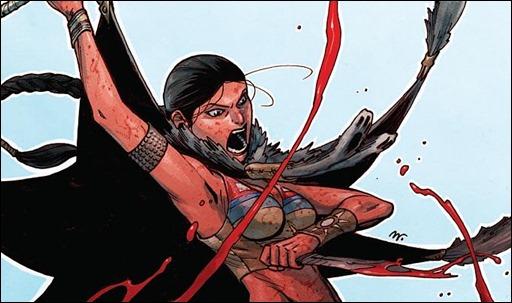
Manifest Destiny #4 Review (Chris Dingess, Matthew Roberts)


Read my review of Manifest Destiny #4 here: http://whatculture.com/comics/6-awesome-comics-must-read-week-13-february.php/5

Letter 44 #4 Review (Charles Soule, Alberto Alburquerque)


Read my review of Letter 44 #4 here: http://whatculture.com/comics/6-awesome-comics-must-read-week-13-february.php/4

Superior Spider-Man #27 Review (Dan Slott, Giuseppe Camuncoli)


Read my review of Superior Spider-Man #27 here: http://whatculture.com/comics/6-awesome-comics-must-read-week-13-february.php/3

The Maxx: Maxximised #4 Review (Sam Kieth, William Messner-Loebs)


Read my review of The Maxx #4 here: http://whatculture.com/comics/6-awesome-comics-must-read-week-13-february.php/2

The Best Comics of the week (12 February) + comics news!


Read my comics picks of the week and the week's biggest comics news here: http://whatculture.com/comics/6-awesome-comics-must-read-week-13-february

Tuesday, 11 February 2014

Skullkickers, Volume 1: 1000 Opas and a Dead Body Review (Jim Zub, Edwin Huang)


Set in fantasyland (think your standard D&D/Word of Warcraft landscape) where your fantasy comes true if you've ever wanted to live in Game of Thrones, a prince is assassinated and his body stolen by a necromancer. The kingdom hires a pair of bounty hunters – a nameless dwarf and barbarian – to bring his body back for burial but things don’t go quite according to plan and soon they have a zombie apocalypse on their hands!

Skullkickers is a light-hearted take on the fantasy genre, mixing in humour and ferocious action that reads like a buddy-cop movie. There isn’t much to the lead characters – or any of the characters really – who’re your standard template dwarf and barbarian characters with the barbarian perhaps written in a slightly more cerebral way than simply just a brawler. There also isn’t much to the plot: the two get their mission, they fight monsters, they get paid. 

Jim Zubkavich’s writing is competent and the story he tells is enjoyable enough but his take on the fantasy genre isn’t especially noteworthy. The back and forth dialogue is snappy without being that clever or funny, but I did feel that the action often ground what little plot there is to a halt. It’s very BIG action where multiple pages and large panels show how the fighting plays out but the action is very unremarkable – a dwarf and a barbarian hacking away at monsters looks exactly what you’d expect and if you’ve seen it once, you’ve seen it all.

Edwin Huang’s artwork is ok but it’s very clearly drawn digitally and I’m not the biggest fan of digital art – it just doesn’t look right. It’s a bit too bland and a bit too clean. Though I did like the onomatopoeia in the panels where a stage direction or action is literally written out as a sound effect.

The first Skullkickers book isn’t a complex story nor a very original one but is a decent comic that’s not badly written or drawn. I’m not a big fan of fantasy comics but I still liked it and if you are then you’ll probably enjoy this a lot more than me. Skullkickers is an ok but forgettable comic - for MMORPG addicts who need a rest from their game but don't want to stray too far into reality with any non-fantasy related reading matter.

Skullkickers Volume 1: 1000 Opas and a Dead Body

Captain America: Man & Wolf Review (Mark Gruenwald, Rik Levins)


As weird as the Superior Spider-Man pitch must’ve been – Peter body swaps with Doc Ock and becomes a ghost in his mind – it’s turned out to be a really amazing, well-written story arc, thanks in large part to Dan Slott’s talent and vision. Marvel are clearly happy to push the boat out with nutso storylines, and I’m happy to read them (what, you read superhero comics for “realism”?) but sometimes they can go a bit wrong, like they did with Captain America: Man & Wolf, the storyline where Cap becomes a werewolf and punches a druid!

Cap goes looking for John Jameson, J. Jonah Jameson’s son, who was also the Avengers driver at the time (!?) and has gone missing. Cap discovers that he’s been captured by a group of villains called Dredmund, Moonhunter, Deadly Nightshade and Doctor Druid. They’re creating an army of werewolves and Dredmund is trying to become an ultimate cosmic werewolf called Starwolf! This book is so 90s…

The story is good as an idea but is written in a stupid, boring and predictable way and the characters are just awful. Dredmund?! Hmm, how do we make this nerdy druid sound evil… I know, let’s pun-up the name Edmund! Moonhunter?! He doesn’t hunt moons so… I have no idea. I guess the moon and werewolves are connected and he’s the werewolf wrangler but really what a terrible name. I suppose Werewolfhunter was a bit too on the nose? “Moonhunter” is just dumb though and reeks of Liefeld. He does have a flying motorcycle though so that’s very cool in a Saints Row way. 

Do you know how to spot a 90s Marvel villain? Look at their outfit – is it black and covered in spikes? They’re a villain. Deadly Nightshade is a doctor (!?) yet wears an insane S&M outfit decorated with spikes and barbed wire! How would such an outfit benefit her medical work?! Are they sterilised? 

And why an army of werewolves anyway? Are they some kind of perfect killing machine? They can still be stopped by silver bullets. Pit them against a Sentinel and let’s see who wins! And Dredmund – a cosmic werewolf called Starwolf?! Was Gruenwald on drugs when he wrote this drivel? 

Man & Wolf isn’t bad because it’s Captain America becoming a werewolf, you can do whacky comics and still make them enjoyable; it’s crap mainly because Gruenwald’s writing is so flat and dull and the story plays out in such an uninspired way. Characters’ thought bubbles are constantly describing what we’re seeing on the page and reminding the reader what their (often bizarre) motivations are, villains are always announcing their evil plans aloud to no-one in particular – it’s the kind of writing straight out of the Chris Claremont school, and it reads in such an amateurish way compared to today’s more sophisticated comics writing. The art is ok but Levins’ style isn’t that different from a dozen other artists drawing at this time. It’s basically John Byrne-lite. 

Captain America: Man & Wolf is basically a cheesy b-movie featuring Marvel characters (why the hell were Wolverine and Cable in this again?!). It’s got camp value and is ridiculous throughout so if you like bad comics (like some people enjoy watching bad movies), I suppose as a curio it’s worth a look. But besides the stupidity factor which made me laugh several times, I didn’t enjoy reading it and can’t recommend it to anyone. Want to read a great Captain America book? Check out The Winter Soldier and Living Legend. 

Dredmund… hehe! AHAHAHAHAHA!! (Brain starts melting out of nose)

Captain America: Man & Wolf