
Thursday, 16 January 2014
Indestructible #2 Review (Jeff Kline, Javi Garron, Salvi Garcia)

Comics of the week (15 January) and comics news!

Read my comic picks of the week and the big comics news stories of the week here: http://whatculture.com/comics/6-awesome-comics-must-read-week-15-january
Tuesday, 14 January 2014
The Invisibles, Volume 1: Say You Want A Revolution Review (Grant Morrison, Steve Yeowell)

I know, I know, I’m late to the party on this one! The first volume of The Invisibles came out 20 years ago and I’m just now getting around to reading it – all I can say is: Batman. But anyway, I’m here now and glad to have finally read such a talked-about book and discovering that it’s really good!
The first Invisibles book introduces us to our hero Dane McGowan, an angry working class teenager from Liverpool who spends his evenings vandalising property while his single mother entertains her latest boyfriend in their council flat. After an attempt at burning down his school, he’s sent to a re-education centre called Harmony House, a nightmarish facility which tries to reprogram Dane’s nonconformist behaviour through lobotomy and castration. That is until he’s rescued by King Mob, the leader of a group of magicians called The Invisibles, who inducts him into his ragtag team of rebels and tells him about their secret war against The Outer Church.
Usually with books you can look at the many elements that influenced it and say that this part is inspired by this and this other part is inspired by that and so on; with The Invisibles Volume 1, a comic that came out in the early 90s, you can do the opposite. There are numerous scenes that would be used a few years later in the 1999 film The Matrix and the general spirit of the book - nihilistic anarchy and anti-consumerist - could be seen as the foundation of another highly influential 1999 film, Fight Club.
As Morrison himself has said, a really good piece of art captures a mood, and The Invisibles captures the mood of the end of the 20th century – the fight for individuality, the value of identity, and the anticipation and desire of a new century bringing about a new world. In some ways, considering the time, The Invisibles could be a reaction to the excessive consumerism of the 80s, being the search for substance and meaning and casting aside the superficial dross that makes up modern society; looked at another way, it’s a great story – either way, it’s undeniably a really good piece of art!
One thing that struck me the most about this book is its massive impact it must’ve had on the Wachowskis when they were coming up with The Matrix. Dane is basically Neo, whose antisocial behaviour brings him to the attention of King Mob (Morpheus) and The Outer Church (the Agents of the Matrix). He’s given the choice of enlightenment from King Mob, of discovering the real world, or becoming another drone. King Mob sees in Dane the potential of someone powerful, someone who can greatly help their fight against The Outer Church. Later on, he’s told to open his mind by leaping off of a building – sound familiar? Then there’s the astral projection scene where their bodies stay in one place while their spirits go elsewhere, like plugging in to the Matrix.
The Invisibles’ influence goes beyond The Matrix though. Dane is rescued from the Harmony House authoritarian monsters by King Mob, a scene that would be replicated in China Mieville’s first novel, King Rat. The Harmony House terrors look like Charles Burns’ creations from X’Ed Out and The Hive, matching the tone of surreal paranoia as well.
But The Invisibles also incorporates a lot of popular elements into its story too. Dane’s abandoned on the streets of London by King Mob but is soon picked up by a seemingly raving mad homeless man called Tom O’Bedlam, the Obi-Wan to Dane’s Luke, who teaches him about the true reality. There are also some brilliant historical scenes like a young John Lennon and Stu Sutcliffe talking about Stu leaving the band, just before The Beatles became big; Lord Byron and Percy Shelley discussing their work and its purpose; and an entire storyline set during the French Revolution, all of which wouldn’t be out of place in Gaiman’s Sandman comics.
It wouldn’t be an influential comic if it weren’t a fun read and it absolutely is. The story starts off normally, albeit disturbingly, with Dane’s troubling life and slowly becomes weirder with Dane watching Lennon/Sutcliffe’s ghosts, to going to the nightmarish Harmony House, to meeting King Mob, it’s built up masterfully so that the reader becomes more and more interested in what the comic is and where it’s headed. The comic is sprinkled throughout with wonderful characters like Tom O’Bedlam, the murderous fox-hunting toffs, and of course the rest of the Invisibles.
It’s a comic that would go on to cement Morrison’s reputation for abstract, crazy comics, especially those scenes where Dane goes for a bike ride and apropos of nothing, sees a planet hovering above him, and the many references to sigils and chaos magik that Morrison himself practices. That said, it’s much more accessible than you think and though it’s a wild ride, it’s totally understandable (for the most part!).
But this idea of whacky Morrison stories is a bit too dismissive. Critics of Morrison’s work might say a book like The Invisibles talks a big game about big ideas and big plans for humanity and society but it doesn’t really offer anything substantial – it’s pseudo-intellectual at its core. To which I say its inspiring message of instilling in the reader a belief in change, of unrealised and boundless potential in everyone, an unrelenting, sometimes euphoric, hope is real.
Whatever things Morrison talks about in The Invisibles, mixing in spiritualism and magik, philosophy and art, the impression it leaves on the reader is undeniable and real. That’s the power of this book – not necessarily of specific ideas ( that we’ve heard before thanks to its proliferation through other works of art), but of the idea of the idea, is a remarkably powerful one. It urges you think about yourself and your world around you and through this direction lies its meaning. It sounds new-agey and as intellectually flimsy as a self-help book, but it’s far more complex as no self-help book is ever this engrossing or clever. There is something real here and its power on the reader and the culture at large is proof of that.
The reason it’s not a full five perfect read is that I felt the French Revolution story arc and the Tom O’Bedlam speechifying went on a bit too long. They were fine in themselves but felt a little stretched. A small issue but there it is.
The first volume of The Invisibles is a fast-paced fantasy thriller with a cast of eccentric, colourful characters with a story that spans space and time coated with layers and layers of mysterious sub-story. It’s exciting and enjoyable, fun and funny, and frequently tickles the brain as you’re reading it in a way few comics do. It’s as fresh as it must’ve seemed 20 years ago brimming with energy and hope – I really liked it and look forward to the rest of the series! If you’re a Morrison fan and you haven’t read it, definitely check it out today.
The Invisibles Vol 1: Say You Want A Revolution

Ragemoor Review (Jan Strnad, Richard Corben)

I picked up Ragemoor purely for Richard Corben – a horror comic drawn by the legend himself? I’m in! And on the art front, I wasn’t too disappointed, but found the unpronounceable Jan Strnad’s script somewhat lacking. That said this might be a case of the writer accommodating the artists’ wishes, like Corben gave Strnad a list of things he wanted to draw and Strnad tried to make a story out of it.
The book is an interesting mix of two horror staples, Poe and Lovecraft. Ragemoor is a huge gothic castle perched on the edge of a cliff, inhabited by a young aristocrat and his faithful butler, who is visited by a relative and his wife who’re looking to scam them out of their castle. Except the castle is ALIVE – it’s literally this massive stone Transformer that goes from being a monster to a structure and back, over and over! Built atop the blood and bones of a death cult, the grounds are defended by skull-faced baboons from innumerable moloid-like creatures and the castle’s staff consist of a small team of Kafka-esque giant bugs! And the young aristocrat can never leave…
I liked the old school horror aspect of the comic. The gloomy haunted castle and its history is corny as hell but when presented alongside Corben’s art, I can forgive a lot. Strangely, Corben’s black and white art does seem to deteriorate in quality as the book continues. I’m not sure if it’s because he ran out of time and rushed it, or it’s intentional like the art becomes less detailed and focused because the characters are getting crazier and its reflecting their loosening grip on reality.
And while seeing Corben illustrate this book’s horrors is certainly delightful, after a while I wished there was more of a story here. It vaguely becomes about the young aristocrat giving Ragemoor an heir but then descends into unfettered madness. Again, maybe that was the point but it’s not very compelling to read. It doesn’t help that the book is somewhat skewed tonally – it’s more or less your cheesy, melodramatic gothic horror and that’s fine, and then the baboons show up and start fighting some weird little monsters and it starts to feel comedic. Maybe that was unintentional but I would’ve preferred straight horror and think that would’ve worked better overall.
Ragemoor definitely isn’t Corben’s best work but if you’re a fan like me it’s worth picking up for at least the excellent art in the first half of it. It’s also worth checking out if you like horror but don’t mind it with nonsensical, somewhat random and silly twists throughout.
Ragemoor

Revival, Volume 1: You're Among Friends Review (Tim Seeley, Mike Norton)

In a small town in rural Wisconsin, the dead are coming back to life! But these aren’t your regular rotting, shuffling, braaaains-eatin’ zombies, these are ordinary people, walking around with their memories of life, somewhat shocked at having experienced death and lived to tell about it! Officer Dana Cypress and the rest of her small police force, headed up by her stern father, cordon off the town and wait to discover what it all means – why won’t the dead stay dead?
I liked the premise a lot as it’s a different take on the overplayed zombie genre and has a lot of potential in exploring the nature of death and our relation to it. After all, losing a loved one brings with it an enormous amount of grief – but what if they came back to us? Would it be a relief or a mixed blessing? Also the subtitle – “rural noir” - is enticing as I think of Shirley Jackson’s terrifying short story The Lottery and Grant Wood’s haunting painting, American Gothic – all to the good.
But Revival Volume 1 doesn’t live up to any of it. It reads instead like a mediocre police procedural as the dull characters’ witter on about their clichéd and/or boring relationships throughout the fantastic events of the dead coming back to life. When it does get to the dead, it gets a little interesting but most of this first volume is spent repeatedly watching the dead come back to life, shocking the living, over and over again. How are the living going about figuring out what caused all of this? Which character is actively trying to find this out? None of them. Instead it’s a largely static storyline with the characters stuck inside the quarantined small town, reacting to yet another dead person returned to life.
It’s good to see a female main character but Dana isn’t the strong female lead you’d hope for and is more of a walking cliché. For example, it’s established early on that her daddy issues are so overwhelming that she’s become a police officer just to get her gruff father’s approval – not exactly something a strong female would do, is it? Also her character design, job, and the snowy Wisconsin winter reminded me a lot of the main character of Greg Rucka’s Whiteout – not a great reminder as I am definitely not a Rucka fan. Nevertheless, it’s like Seeley’s lifted that character entirely from that comic and transplanted her onto his.
It’s not just Dana either, her sister – one of the revivers, interestingly – is the clichéd student having an affair with her college professor while their dad is the emotionally distant police chief who looks a lot like Jim Gordon, and even the Indian/American guy’s issues at being typecast by his ethnicity felt over-used and tired.
Seeley throws in a few extra characters like a new age Exorcist – who I think was the bad guy? – and a weird amorphous ghost wandering through the woods but they’re more confusing than interesting. The ghost is apparently the ghost of a ‘Nam vet but there’s a ghost baby too? Uh… is it his? And how? Is he a she? Can ghosts have babies? And the Exorcist dude – what’s his deal?
Here are two things the book is missing: a plot and a villain. I think the Exorcist guy is evil but I don’t know why or what his motivations are. And instead of wondering where the story was going, I kept wondering what the story was – all Seeley’s done is bring the dead back which has shocked the living. That’s not a story, that’s an event, a setup – do something with it!
Revival has potential but I don’t think Seeley is talented enough to realise it, he’s simply not a good enough writer. Mike “Young Avengers” Norton and his art is definitely the best part of the comic but his character designs here leave a lot to be desired. Too many characters look alike and none are particularly memorable. Revival’s like a middle of the road TV show about country cops when instead it should be focused more on the supernatural horror noir story because that’s more interesting for the reader. Other reviewers who aren’t as enamoured with the series have said they’re interested in seeing where the series goes next – not me, I’m done with Volume 1. Will Dana get her dad’s approval? Who the hell cares?!
Revival Volume 1: You're Among Friends

Deathmatch, Volume 1 Review (Paul Jenkins, Carlos Magno)

For me, this was Paul Jenkins’ last chance – I didn’t like his New 52 The Dark Knight series with David Finch, I abhorred Wolverine: Origin, and last summer’s Tomorrowland was pitiful. I’ve heard Deathmatch is a good comic though so decided to give it a shot but, having read it, I can say it definitely isn’t. I now know for sure that I hate Paul Jenkins’ work and I will be avoiding anything with his name on in the future.
A group of superheroes are captured by some supervillains and forced to fight one another in a uniquely constructed deathmatch arena whose environments shift depending on the combatants’ powers. The story unfolds in two locations – the arena and the holding area - and there’s a twist: while in the holding area, they forget their actions in the arena and vice versa. Lifelong friends are forced to kill one another for survival in a bloodthirsty chain of fights.
I recently read another superhero deathmatch comic, Marvel’s Avengers Arena, and quite liked it. So, despite the similarity in concept, why didn’t I like Deathmatch as much? It’s not because the characters are new unlike in Avengers Arena, because I didn’t recognise any of the AA cast besides one character, with none being especially famous on purpose. The characters in Deathmatch are very obviously facsimiles of more famous characters like Superman, Batman, Rorshach, Iron Man, Punisher, Beast, and so on, which should be interesting but aren’t because they’re written so flatly and unimaginatively.
Deathmatch is supposedly Paul Jenkins’ subversive take on those famous superheroes but there’s nothing here Garth Ennis didn’t parody better in his series, The Boys. Moreover, I’m not sure what Jenkins’ point is in having all of these famous superheroes killing one another – some lame observation on the thin line that separates good from evil, or how easily their code of ethics can be broken? I really don’t know because all we get are superheroes talking about their puzzling situation – which doesn’t go anywhere - interspersed with fights that are supposed to be moving and meaningful because these are friends killing friends but because we don’t know the relationships between the characters until they’re in the arena, we’ve got a handful of pages to give a damn, and it’s not enough time. Keeping things like how they got here and who’s doing this to them does make for a mysterious premise but concealing character details makes it that much harder to connect with any of them.
Another key difference between Avengers Arena and Deathmatch is that Deathmatch reads in a very staccato fashion. Fight. Stop. Fight. Stop. There is some danger outside of the arena but not much, so the characters outside of the arena spend their time talking about what’s going on and eating – it’s not very tense. In Avengers Arena, they’re always in the arena, they’re always in peril – the tension is constant and unpredictable with a possible death to come at any time, and therefore more exciting as a result. I suppose the amnesia angle was supposed to make the book mysterious and interesting but the book is so plodding and one note that I couldn’t have cared less.
Deathmatch is a tremendously dull book. Characters I don’t care about trying to break out of a drab prison while sporadically being forced to kill one another in dreary fights is not interesting to read. Jenkins doesn’t have anything to say about the heroes the characters are modelled upon, or on superheroes in general. The setup, while contrived, has potential but instead isn’t even remotely entertaining, astonishing for a comic called Deathmatch.
It’s definitely not an amazing comic but compared to Deathmatch, Avengers Arena is a masterpiece – try that if you’re after a superhero deathmatch comic rather than Jenkins’ awful book.
Deathmatch Vol. 1

Uncanny X-Men: The Draco Review (Chuck Austen, Phillip Tan)

The premise is: Azazel aka Satan is trying to find a way to get to Earth from the nether-realm he inhabits (Hell, I suppose? Doesn’t look it) so he goes to Earth to impregnate a number of women who’ll give birth to a number of demons who’ll then be able to open a portal to allow him access to Earth. Spot the massive plot hole in that sentence? How is Azazel getting to Earth to impregnate women if the whole reason he’s doing all of this is because he can’t get to Earth in the first place?
Answer: Chuck Austen is a horrible writer who doesn’t know what he’s doing.
But that’s not the most offensive part of this book, it’s merely a flabbergastingly stupid moment. So one of the women Azazel impregnates is Mystique who gives birth to… Nightcrawler!? So Nightcrawler’s parents are Azazel and Mystique because Kurt looks demonic and his skin is blue like Mystique’s… fart noise.
Going back to the early days when Nightcrawler was first introduced into the Marvel Universe, he was being chased by people who wanted to kill him for looking like a demon – the key word being “looking”, not “actually being”. He was a mutant and he looked different but he was human – that’s the whole point of the X-Men: that we all look different on the outside but inside we’re all the same.
That’s why these characters were inspired by the Civil Rights Movement in the 60s, to draw parallels to black peoples’ plight to get the same rights as white people. By making Nightcrawler AN ACTUAL DEMON, the literal spawn of Satan, then it’s almost like Austen is giving credence to the mobs’ fears of hounding Nightcrawler – they were right, he really isn’t one of us! It completely destroys the whole message of the X-Men and Nightcrawler’s character. Austen completely misunderstood the characters and the series when he wrote this drivel.
There’s some other garbage in here involving Alpha Flight and Juggernaut and how domestic violence is solved with superhero violence that’s in line with the stupidity of the rest of the book, but really the Nightcrawler parentage thing is by far the most jaw-droppingly awful aspect of The Draco. The interesting thing about this book is that the fan reaction was (understandably) so severe that not only was it retconned by every X-Men fan but Chuck Austen was blacklisted by Marvel as a result! Austen then went to work on Action Comics for DC but a grassroots boycott of Austen’s work led to many retailers refusing to stock Austen’s comics. DC tried to control the damage by asking Austen to write under a pseudonym but when he refused, he was fired and blacklisted by DC. He ended his comics career writing porno baseball comics (!!), which was weirdly where he started!
The Draco was so bad that it destroyed a man’s career! And now it’s rightfully out of print. I found a copy at a used book store and picked it up out of curiosity – I’d heard it was bad, but was it really that bad? It was actually worse!
Phillip Tan’s art is horribly scratchy and his character designs are just terrible. I’ve never liked his artwork and The Draco just reminded me why. I was stunned to see Sean Phillips attached to this train wreck but I guess he must’ve really needed the cash. Still, what a black mark on your career to be associated with this disaster!
The Draco: a colossal fuck you to X-Men fans who responded as a group in kind. Now we need to retcon the Man of Steel movie….
Uncanny X-Men Volume 4: The Draco

Sunday, 12 January 2014
Sheltered, Volume 1 Review (Ed Brisson, John Christmas)

Set in the snowy backwoods of rural America, a group of survivalist nuts have been seting up fallout shelters filled with supplies for years in anticipation of the massive volcano in Yellowstone erupting soon and decimating the country. Except their children have other plans and decide to massacre all of the adults! While the kids and their leader, the quietly insane loner Lucas, prepare for the coming apocalypse, two girls, Vic and Hailey, didn’t know about the plan and have hidden away in one of the bunkers - which threat will they survive, their bloodthirsty peers or the volcano?
Sheltered isn’t a bad comic but there’s one major conceit that I couldn’t get past which marred the book for me: why would the kids kill their parents? I realise in the cases of Vic and Hailey that they wouldn’t because they liked their parents, but really, every other kid in Safe Haven would murder their parents because an older kid told them to? Because the older kid believes he has special information on the volcano in Yellowstone and knows more about food rationing than adults? So every kid would think, well, I guess I gotta off mum and dad because this weirdo with no friends and crazy eyes says so?!
Other than that the book is fine. Obviously comparisons to Lord of the Flies are bound to be made as its the kids now running the show and things falls apart as you’d expect, and chaos follows the authority vacuum. The only difference is at the end of the Lord of the Flies, the adults arrive to rescue the kids, and in Sheltered the adults are the first to die.
It’s an especially interesting look at what can largely be called an American story. Fringe groups like paranoid survivalists and cults tend to spring up all over the place in America with guys like David Koresh and Jim Jones being the most famous examples. Lucas very much fits this role of leader of an apocalyptic death cult and the comic is an intriguing look at the group dynamics of how a cult is created and operates through fear and intimidation.
Sheltered is a character-driven piece whose characters are thankfully very compelling. I was rooting for Vic and Hailey, our heroines, to survive and the sequence where Vic busts out of the shelter to look for medical supplies to help Hailey, dodging the guards, was very exciting. It reminded me of the David Fincher movie Panic Room where Jodie Foster runs out of the panic room to grab a phone before the crooks notice she’s out and try to stop her. Lucas is also a good bad guy, creepy and calculating but also vulnerable and ruthless in equal measure. Over the course of the book you see him growing in confidence and becoming crazier so that the series looks to become even more dramatic and exciting over time.
Despite my issues with the setup, Sheltered has an original premise and is well written with a fast-paced, gripping story and a fascinating cast of characters. I didn’t know a thing about the comic and had no expectations but nonetheless found myself caught up in it enough that I’ll be back to check out what happens next in Volume 2.
Sheltered Volume 1

Dr 2 #1 Review (Peter Tieryas, James Chiang)

Dr 2 #1 is a confusing comic that starts in 1945 at a Japanese internment camp and then skips ahead to 2045 where, in a dystopian future (of course!) some guy has died in some bizarre fashion where he’s been melted into the ground(!) and it’s up to an acupuncturist/forensics expert/detective called Dr 2 to find out why.
I didn’t like any part of this comic - the parts I could understand were standard police procedural dross (I hate police procedurals above any other fiction genre), and the parts I couldn’t understand were plain uninteresting. I’m not expecting to understand the entire story from the first issue alone but it doesn’t help that its opening scene feels completely out of context and disorienting to the reader. Why are we in 1945 Japan? Who’s the guy yelling and what do the dead bodies mean? Cut to 100 years later! O…K?
Dr 2 - and I don’t know why he’s called that - is for some reason the guy the future police call to solve bizarre murders. I thought with the title Dr that he was a forensics guy but apparently he’s also the detective? So some poor bastard has died by being melted into the floor of his apartment, Dr 2 shows up and sticks some acupuncture needles into his scalp and gets a psychic reading…? And then takes it upon himself to find the killer.
The art style is definitely amateurish, the outlines looking like someone drew it on Paint while an image gets used in multiple panels just by moving the focus closer to it - it’s so lazy! Otherwise, I’m not sure why the artist went with the same character design of Spy Vs Spy for their main character but the overall noir look they’re going for - something along the lines of Frank Miller’s Sin City - completely fails, which is weird because the creators’ backgrounds are in visuals, having worked in art departments on films like Cloudy with a Chance of Meatballs, Men in Black 3, and Ice Age 2.
And of course it’s a dystopian future because it’s the future set in America. The middle class is extinct, the stock market is a mess, poverty is everywhere and acid rain burns people… very unimaginative. Just take whatever naysayers on the news are barking and make it your comic’s reality.
As it’s a first issue, I’m sure some of the questions I’ve asked get cleared up in later issues, but I’m really not interested in finding out.
Dr. 2 Issue 1

Friday, 10 January 2014
Avengers Arena, Volume 1: Kill Or Die (Dennis Hopeless, Kev Walker)

You know what I like about Avengers Academy? It’s upfront about its bullshit (and it is bullshit). It doesn’t hide the fact that it’s blatantly riding the wave of The Hunger Games, nor that it’s ripping off Battle Royale’s logo/cover – it doesn’t even try very hard to work on the numerous characters in the story because they’re there just to die! It’s straight up exploitative comix, and it’s not bad.
The laughable X-Men villain Arcade has somehow captured 16 young (and unmemorable) superheroes, thrown them into a highly elaborate deathtrap-filled environment called Murder World, and forced them to kill each other – the winner is the last one standing. Up yours, originality! I’ll see you in hell!
So who are the superheroes? Apart from X-23, Wolverine’s female clone, I didn’t recognise any of them. Apparently, some are from Avengers Academy, some are from Runaways – both titles I don’t read – so I wasn’t invested in any of them, though strangely this didn’t affect my enjoyment of the book. Dennis Hopeless does attempt writing background info on some of the characters but it’s wasted. Why? These kids are doomed (in name only Dennis Hopeless is the perfect writer for these kids). They’re contrived plot devices, not characters in the traditional sense, and that’s what makes Avengers Arena such an interesting story – you’re actually not rooting for the characters to survive, you’re rooting for them all to die! So the less character work on them, the better. In fact the series might be improved with more characters, so there are more deaths, and fewer moments where Hopeless might be tempted to rise over the hackery of it all.
Avengers Arena is trash and Marvel knows it, so I don’t know why they don’t go all in and go full on mimicry of The Hunger Games – have Deadpool as a sponsor wearing that awful fake Woody Harrelson wig on top of his mask. Have the obvious heroine who won’t die, like Hope, the mutant messiah, and give Arcade a mad dystopian society to lord over – maybe the Moloids in fancy getup - and set the story in some parallel universe to 616. Maybe Arcade was the wrong choice for villain and it should’ve been Mojo instead? Makes more sense as Mojo could televise Avengers Arena as the new intergalactic reality show hit! Go full on, mouth-foaming crazy and throw out any and all attempts at telling a straight story – that would’ve made Avengers Arena a five star read.
As it is, the series almost reaches these levels of blasé idiocy by glossing over obvious story points like why Arcade is suddenly so powerful as to capture 16 superheroes and shackle them in a ridiculously large and complex environment AND have the powers of a god (the explanation probably being they’re in the Marvel version of The Matrix). But it doesn’t go far enough and trips itself up by reigning in the madness at certain points and introducing “feelings” for the “characters” which obviously doesn’t work because they’re not characters.
It’s not a great comic because great comics have real characters you care about, original stories, and well-crafted storytelling, but for what it is – The Hunger Games with cheap Marvel superheroes – it’s surprisingly not terrible. I’m on board to see which cardboard superhero eats it next (hilariously, there’s literally a character called Anachronism - even the characters know what they are! He’s my favourite by the way. Other characters created just for this series who should’ve made an appearance: Target, I’m Next, Arrow Through The Eye, and Marvel Doesn’t Care About Me), which cardboard supe wins, and what it’s all been about.
Here’s hoping it gets even trashier in the next book!
Avengers Arena - Volume 1: Kill or Die

The Bestselling Comics of 2013

Diamond Comic Distributors, the biggest comics distributor in the world, released figures this week detailing 2013’s comics sales – and it turns out 2013 was a great year for comics! Sales were up 9.04% with a rise in both comics and graphic novels up from 2012.
Marvel continued to lead the field with a dollar share of 33.50% with rivals DC coming in at 30.33% though DC were able to close the gap with gimmicks like Villains Month which undercut Marvel’s usual monthly lead. While the Big 2 remained untouchable, last year Image overtook IDW to become the third biggest comics publisher in the world thanks to the popularity of comics like The Walking Dead and Saga, both bestsellers and critically acclaimed titles.
The biggest selling comic of 2013 was Robert Kirkman and Charlie Adlard’s The Walking Dead #115, the celebratory 10thanniversary issue for the title, and the biggest selling graphic novel of 2013 was Brian K Vaughan and Fiona Staples’ Saga Volume 1 – both published by Image.
Six of the top ten bestselling comics were published by Marvel, with the Event comics Infinity #1 and Age of Ultron #1 taking the sixth and eighth spots, and surprisingly Guardians of the Galaxy #1 took the fourth spot – the relatively unknown series helped no doubt by the forthcoming summer movie from Marvel Studios.
In the year of Superman’s 75th Anniversary, it was good to see two Superman comics – Scott Snyder and Jim Lee’s Superman Unchained #1 and #2 – take the third and tenth places in the top ten. Justice League of America #1 was the second biggest selling comic of 2013.
But if the Big 2 dominated the comics chart, they were crushed by Image in the bestselling graphic novels of the year - Saga Volumes 1 and 2 took the first and third places, and five Walking Dead books were in the top ten! It’s been a great year for Saga which also took home a number of awards at this year’s Eisners.
Matt Fraction and David Aja’s Hawkeye Volume 1 was the only Marvel graphic novel to make the top ten graphic novel chart, with Scott Snyder and Greg Capullo’s Batman, Volume 1: The Court of Owls taking eighth position. The Batman classic The Killing Joke by Alan Moore and Brian Bolland continued to prove it’s enduring appeal, being the ninth bestselling graphic novel of 2013.
Full list below:
TOP COMIC BOOK PUBLISHERS
PUBLISHER DOLLAR SHARE
MARVEL COMICS 33.50%
DC COMICS 30.33%
IMAGE COMICS 8.00%
IDW PUBLISHING 6.47%
DARK HORSE COMICS 5.17%
DYNAMITE ENTERTAINMENT 2.72%
BOOM! STUDIOS 1.99%
EAGLEMOSS PUBLICATIONS 1.25%
VALIANT ENTERTAINMENT 0.98%
AVATAR PRESS 0.89%
OTHER NON-TOP 10 8.70%
PUBLISHER UNIT SHARE
MARVEL COMICS 36.97%
DC COMICS 33.35%
IMAGE COMICS 8.49%
IDW PUBLISHING 5.10%
DARK HORSE COMICS 4.50%
DYNAMITE ENTERTAINMENT 2.59%
BOOM! STUDIOS 1.92%
VALIANT ENTERTAINMENT 1.06%
ZENESCOPE ENTERTAINMENT INC 0.76%
AVATAR PRESS 0.74%
OTHER NON-TOP 10 4.52%
TOP 10 COMIC BOOKS
1 THE WALKING DEAD #115 (IMAGE)
2 JUSTICE LEAGUE OF AMERICA #1 (DC)
3 SUPERMAN UNCHAINED #1 (DC)
4 GUARDIANS OF THE GALAXY #1 (MARVEL)
5 SUPERIOR SPIDER-MAN #1 (MARVEL)
6 INFINITY #1 (MARVEL)
7 X-MEN #1 (MARVEL)
8 AGE OF ULTRON #1 (MARVEL)
9 UNCANNY X-MEN #1 (MARVEL)
10 SUPERMAN UNCHAINED #2 (DC)
TOP 10 GRAPHIC NOVELS AND TRADE PAPERBACKS
1 SAGA VOLUME 1 TP (MR) (IMAGE)
2 THE WALKING DEAD VOLUME 1: DAYS GONE BYE TP (IMAGE)
3 SAGA VOLUME 2 TP (IMAGE)
4 THE WALKING DEAD VOLUME 18: WHAT COMES AFTER TP (IMAGE)
5 THE WALKING DEAD VOLUME 2: MILES BEHIND US TP (IMAGE)
6 THE WALKING DEAD VOLUME 19: MARCH TO WAR TP (IMAGE)
7 HAWKEYE VOLUME 1: MY LIFE AS WEAPON TP (MARVEL)
8 BATMAN VOLUME 1: THE COURT OF OWLS TP (DC)
9 BATMAN: THE KILLING JOKE SPECIAL EDITION HC (DC)
10 THE WALKING DEAD VOLUME 3: SAFETY BEHIND BARS TP (IMAGE)
Thursday, 9 January 2014
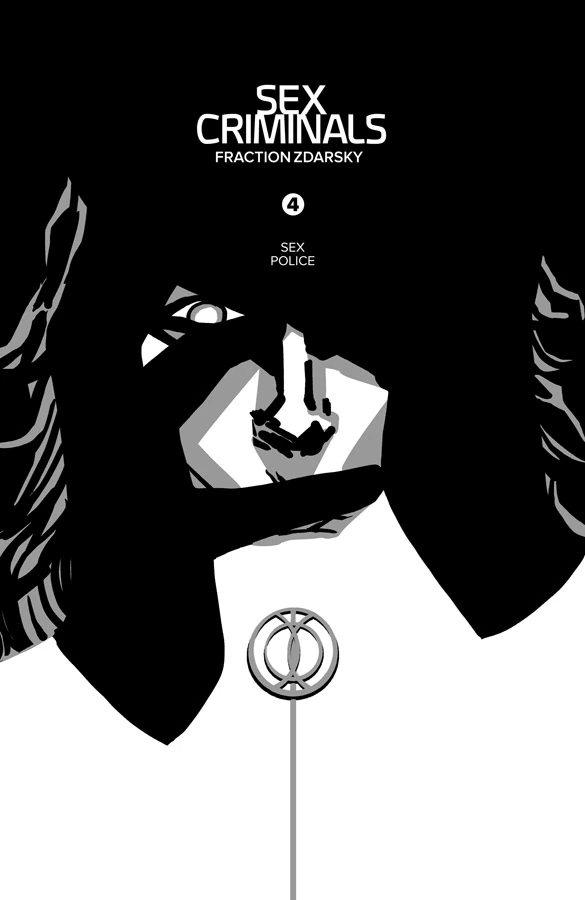
Sex Criminals #4 Review (Matt Fraction, Chip Zdarsky)
Young Avengers #15 Review (Kieron Gillen, Jamie McKelvie)

Read my review of Young Avengers #15 here: http://whatculture.com/comics/8-awesome-comics-must-read-week-8-january.php/8
Letter 44 #3 Review (Charles Soule, Alberto Jimenez Alburquerque)

Read my review of Letter 44 #3 here: http://whatculture.com/comics/8-awesome-comics-must-read-week-8-january.php/7
Subscribe to:
Posts (Atom)