Pages

Friday, 6 December 2013

Nemo: Heart of Ice Review (Alan Moore, Kevin O'Neill)


It’s 1925 and Janni, the daughter of Captain Nemo, is now captain of the Nautilus and continuing her father’s pirating ways. She and her crew rob an African Queen of her treasures while visiting New York and, in retaliation, a newspaper magnate called Kane sends some goons after her to reclaim it. Then Janni decides to take a trip to the Antarctic, emulating her father’s journey years earlier and the goons follow. And in the Antarctic, they will see the Mountains of Madness. Gibberish ensues.

Yup, this is Alan Moore regurgitating more HP Lovecraft after his Neonomicon book a few years ago. This time he’s doing the Mountains of Madness (MoM) story, incorporating it into his League of Extraordinary Gentlemen (LXG) series, though if you’ve never read any of the other books, Heart of Ice can be read as a standalone book – that’s also why it feels so pointless as it adds nothing to the overall LXG series. 

Readers of LXG will remember Janni from Century: 1910 when she ran away from Nemo for a life on land and wound up in a brothel - it was a pretty terrible book, so a follow-up wasn’t really necessary but here we go anyway. In Heart of Ice, Moore wants to show us how Janni became the cold-hearted person she was in later life though really a woman could become quite bitter being used as sex slave for years, so I’m not sure what the point of this book was. 

The best parts of Moore’s LXG series is the way he plays with famous characters and stories from culture, reimagining and twisting them in new and exciting ways. In Heart of Ice, he doesn’t do anything new with Lovecraft’s MoM story, he just retells it (how imaginative!), and badly at that too. Besides Janni, all of the characters look exactly the same, partly due to wearing heavy clothing due to the icy weather, and don’t have distinct personalities. In LXG stories, the characters are based on a mix of famous and obscure fictional characters though, while I could recognise a few (Charles Foster Kane, Ishmael, Tom Swift), I didn’t care about finding out more about the others, in contrast to previous LXG books. 

MoM isn’t Lovecraft’s best story and in Moore’s hands it manages to become even more tedious – Janni and co. wander about the ice, a big dark hole appears, a bizarre Lovecraftian monster show up, the end. It’s too short and too lacking in any strong narrative to be a decent book. I get that the jumbled up sequence was supposed to illustrate why it’s called the Mountains of Madness but it only further underlined how incoherent the story was up until that point and how little I cared about it or any of the characters. 

If you pay attention to any interviews Moore gives nowadays, you’ll know his opinions on modern comics are highly critical across the board, despite not having read any for (allegedly) 25 years! Well, his latest is an absolute bore and totally lacking in any ideas. Maybe he should read some recent comics to see how much better they are compared to the drek he’s churning out these days, and up his game accordingly? 

I think he’s trying to write an interesting classic adventure yarn but he’s barely making any sense here, much like his later LXG books. Kevin O’Neill’s artwork is just ok but he’s done much better elsewhere and I found his work here to be particularly uninspired, especially when drawing Lovecraft’s horrors. 

Nemo: Heart of Ice is a waste of time on all levels with Moore revealing how tapped out he is at this point in his career. He may have written some classics 30 years ago but his latest stuff is forgettable and trite at best. If you want to read a great comic book adaptation of Lovecraft’s story, check out INJ Culbard’s At the Mountains of Madness.

Nemo: Heart of Ice

Thursday, 5 December 2013

Carmilla by J. Sheridan Le Fanu Review


Set in 19th century Austria, Laura is a lonely young woman living with her father and their two servants in the Styrian countryside until one fateful night when she and her father encounter a mysterious stagecoach barrelling through the forest near their house. Rather rashly, her father agrees to let the sickly young woman inside stay in their house while her strange mother continue on her journey. And then people in the surrounding area start dying of an unknown disease and the peasants start muttering about an “oupire”. Who, or what, is Laura’s new friend, Carmilla, really – and will she survive the encounter long enough to find out?

Nowadays vampires are so prevalent in popular culture, nearly everyone knows about them. Their traits, their behaviours, every aspect of the vampire is so well defined that this Victorian story can seem quaint in the way it plays up the mystery of Carmilla. But when J. Sheridan Le Fanu’s novella Carmilla was published in 1872 (the year before the author’s death), the vampire was a relatively unknown creature in popular culture. John Polidori’s short story The Vampyre had been published to some success a few decades earlier and the pulpy Varney the Vampire had been a popular series, but Bram Stoker’s Dracula, the most famous vampire novel ever written and the book that would launch vampires permanently into the mainstream, wouldn’t appear for another 25 years.

In fact, Carmilla is credited by Stoker as an influence in the creation of his novel, and it’s easy to see why. The fangs and nightly blood-sucking, sleeping in a coffin in a ruined chapel, the associations of vampires with nobility, the ability for vampires to transform into animals, the aversion to Christianity, eternal life and youth, and the strong ties between vampires and sexuality all appear in Carmilla. Perhaps the reason why Carmilla wasn’t the success that Dracula was lies in its female protagonist and her relationship with the female vampire that Le Fanu implies went beyond mere friendship. 

The story opens when 6 year old Laura meets the beautiful young woman Carmilla, whom she doesn’t know by name yet, but who appears in her room nightly to drink her blood. When her nursemaid acts on her suspicions, a ritual from a priest is performed and Laura is no longer visited by the vampire. But years later, when our story takes place and Laura is 19, Carmilla re-enters her life, and Laura recognises her as the youthful visitor who used to bite her breast as a child – though she seems to have no trouble accepting that Carmilla hasn’t aged in 13 years! Instead, Laura’s feelings confuse her as she is both drawn to and repulsed by her though describes Carmilla as beautiful. Later, when the two are alone in Carmilla’s bedroom, she makes a move on Laura, kissing her and drawing close to her, talking intensely and unequivocally about how Laura belongs to her.

In this sense, Carmilla is a surprisingly un-Victorian story as it’s basically a lesbian vampire story! You could take this idea further still - if you interpret vampirism as a metaphor for homosexuality, you might even read the subtext of Carmilla’s speech to Laura’s father, explaining this “disease”, meaning vampires, as a sexually progressive argument:

“‘Creator! Nature!’ said the young lady in answer to my gentle father. ‘And this disease that invades the country is natural. Nature. All things proceed from Nature - don’t they? All things in the heaven, in the earth, and under the earth, act and live as Nature ordains? I think so,’” (p.39)

Besides the sexual undertones of the story, there are a number of memorable scenes that stand out for their rich, gothic imagery. Ruined chapels, castles with drawbridges, haunting forests with crumbling Christian totems, all bathed in a twilit glow and set against the schloss and background of the 19th century Austrian countryside. Le Fanu continues to hint at Carmilla’s true identity, though to modern audiences, it’s either known before you pick up the book what’s what, or you’ve guessed it within Carmilla’s first appearance. Nonetheless, there are a number of interesting scenes that will become classic staples of vampire fiction such as Laura looking at a painting from 1698 (150 years before this story is set) of a noblewoman called Mircalla who looks identical to Carmilla (and whose name nobody seems to notice is an anagram of Carmilla) strongly implying Carmilla’s immortality, or the image of Carmilla drenched in blood and standing at the foot of Laura’s bed when she awakens in the middle of the night! 

By far my favourite scene was Carmilla’s entrance where a blighted carriage rumbles precariously through the moonlit forest path, nearly toppling at the sight of an ancient Christian cross as its horses react violently to the religious symbol. Laura watches as her father approaches and before long Carmilla emerges to go back with them. Meanwhile, Laura observes inside the carriage the “hideous black woman, with a sort of colored turban on her head” who is presumably Carmilla’s mother, if not guardian, who nods and grins derisively at her with “gleaming eyes and large white eyeballs, and her teeth set as if in fury”. And the carriagemen, described as “ugly hang-dog-looking fellows” - couple this ghoulish group with Carmilla and it’s like the carriage was regurgitated from Hell itself! 

Not every aspect of the modern vampire mythos is laid out here - Carmilla walks about in daylight and can see her reflection in the mirror, while the creation of a vampire is rather glibly described by Le Fanu as someone evil who kills themselves, and somehow becomes a vampire. They then feed on others, draining the blood of their victims until they die and then rise from the grave, vampires themselves. The second part was used in Dracula and kind of makes sense in a parasitic way but the original vampire creation is very weak. 

If Le Fanu’s story is unconventional for its time, his writing is unfortunately all too similar to his Victorian contemporaries. Overwritten scenes, overwrought dialogue, overly proper behaviour all make this book a rather slow read even though it’s barely 100 pages long and its predictability too doesn’t help. However, Carmilla has remained in print at least in part because it’s an original and striking story whose titular character would go on to influence numerous horror writers to create their own female vampires in her mould. The imagery and the vampiric scenes do still retain their ability to mesmerise modern audiences, and for fans of the literary sub-genre of vampire fiction, it’s worth reading Carmilla to see where a number of tropes and stock characters originated, in particular the Van Helsing figure in this book, General Spielsdorf.

There’s certainly more than enough here to warrant the classic label it’s earned since it was first published, and it’s story is a lot more interesting than many other classics too! So, if you’re feeling sinister, take a trip to Styria and meet the eternally youthful Carmilla - she’ll never let you leave!

Carmilla

New Avengers, Volume 1: Everything Dies Review (Jonathan Hickman, Steve Epting)


T’Challa aka Black Panther makes a startling discovery – parallel universe Earths are crashing into one another and one is headed to crash into our Earth! With an INFINITE number of EARTHs all destined to be destroyed, the Illuminati are in a CRISIS. What would be a good title for this story? Everything Dies! 

T’Challa convenes a meeting in Wakanda with the Illuminat to decide what to do next. The Illuminati are the biggest brains in the Marvel U (sans Bruce Banner), Reed Richards, Tony Stark, Black Panther (left but returned for this book), Namor, Doctor Strange and Black Bolt, Beast as Professor X’s replacement, and the bizarre addition of Captain America. The only reason Cap might be on the Illuminati is because this book is pointlessly called New Avengers and apparently every freakin’ iteration of the Avengers has to have this dude regardless of whether he fits or not. 

Anyway, T’Challa captures an alternate universe character called Black Swan (Hickman’s character names are just the worst) who has a device that literally blows up planets! Everything Dies is a morality story as the Illuminati must decide how far they will go to protect their world and how many must die to save many more. 

After reading Hickman’s other Avengers title and the Infinity mini-series and utterly disliking both, I was surprised that his New Avengers book was really good, especially as it’s yet another Hickman story about the end of the world (a tired clichĂ© of Hickman’s you’ll notice if you’ve read a few of his books). Part of why this book is better than the others is because Hickman’s managed to keep the cast to a reasonable level rather than the sprawling mass of costumes he’s got in Avengers and Infinity, and kept the crazy new characters to a minimum as well. Though calling this New Avengers is a bit misleading as it stars the Illuminati, and Cap, but the title Avengers has more recognition than Illuminati, so here we are. 

The story sounds like gibberish and yet you can follow what’s happening and more or less understand the story, a damn near miracle when it comes to a Hickman book these days! Because the Illuminati are the holders of the Infinity Gems, they predictably choose to assemble the Infinity Gauntlet to deal with this new problem but what’s unpredictable is the way that plan plays out. I won’t tell you exactly what happens except that watching someone as un-technical as Cap handling the Gauntlet is like watching your gran trying to figure out how an iPad works.

This isn’t a very action-heavy story with a lot of scenes featuring the Illuminati sitting around a table talking but Hickman’s got such a great handle on the characters that it’s never boring. Little scenes like T’Challa speaking bitterly to Namor, referencing the events of AVX show that the characters have history, while Cap is his usual idealistic and somewhat stuffy self, and Reed and T’Challa come off the best as conscientious participants in what is essentially genocide on a scale that dwarfs anything Hitler or any of history’s villains could ever accomplish. So are the Illuminati really good guys – or the worst villains of all time? It’s an interesting situation. 

A lot of cool villain characters show up like Galactus (yay!) doing his usual planet-eating stuff and his alternate universe herald Terrax (ol’ stone face) has a throw-down with the Illuminati. There’s even a scene in Latveria at the end where Doom is single-handedly taking on the parallel universe baddies and you find yourself rooting for the guy! So while there’s little fighting going on, when there is, it’s pretty damn good. 

Steve Epting’s art is what I really love about this book. His page layouts are always amazingly cinematic and well-placed, lending the story an appropriately dramatic gravitas. The characters all look amazing and every panel looks beautiful, finding the perfect balance between realism and cartoonish-ness. The way he presents the parallel worlds is really atmospheric where the characters step through a portal into what looks like the middle of a red eclipse. 

New Avengers is a well-written, engaging story that also features Hickman’s ambitious storytelling without missing out the characters - if only Hickman wrote this well in all of his Marvel titles! Steve Epting’s art is as absolutely blinding as it always is. Great Illuminati story all round! If you didn’t like Hickman’s main Avengers title, give this one a shot - it’ll remind you why he’s in the top tier of Marvel writers.

New Avengers - Volume 1: Everything Dies

Burn the Orphanage #2 Review (Sina Grace, Daniel Freedman)


Read my review of Burn the Orphanage #2 here: http://whatculture.com/comics/5-awesome-comics-must-read-week-4-december.php/6

Velvet #2 Review (Ed Brubaker, Steve Epting)


Read my review of Velvet #2 here: http://whatculture.com/comics/5-awesome-comics-must-read-week-4-december.php/5

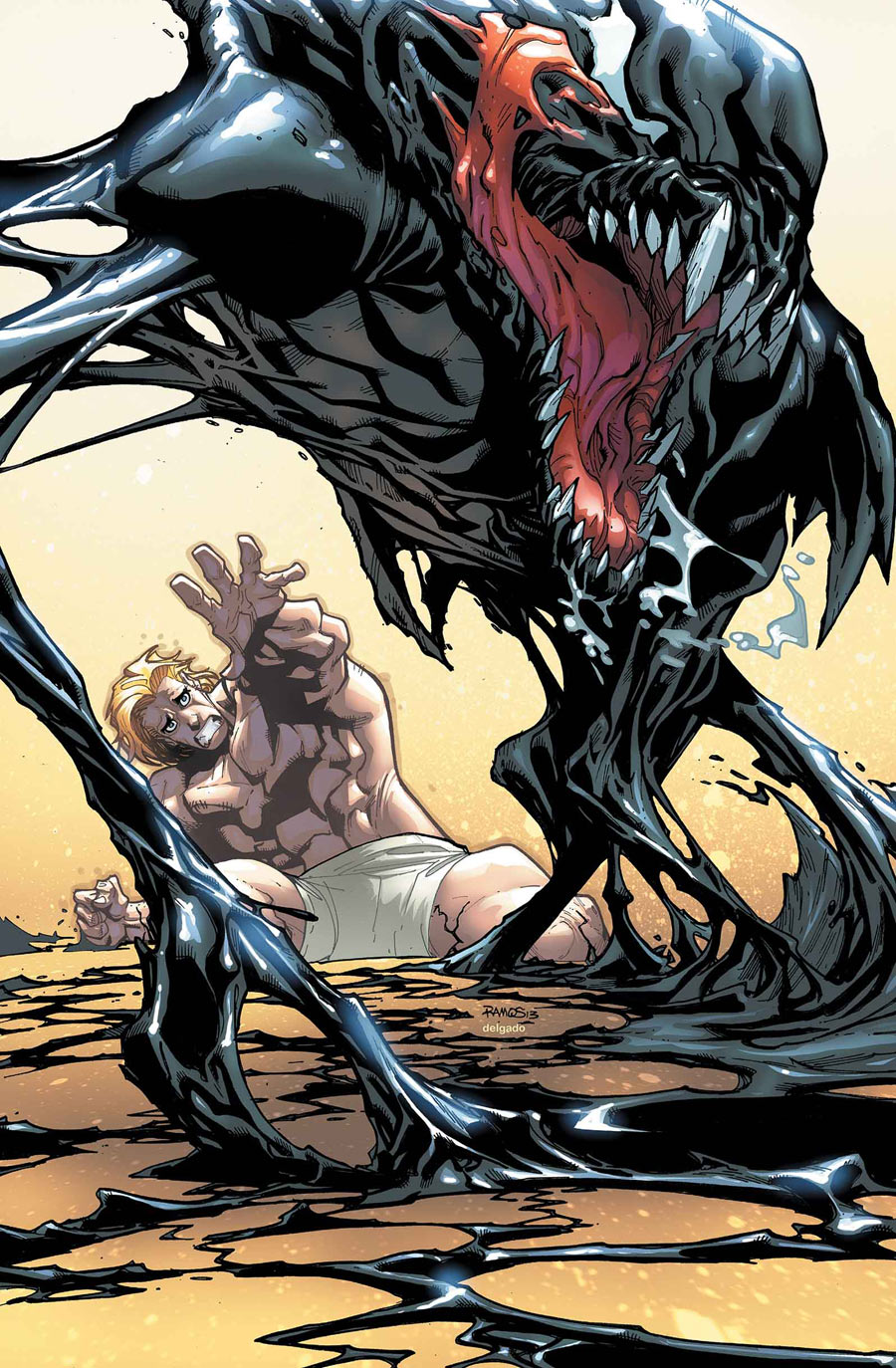
The Superior Spider-Man #23 Review (Dan Slott, Christos Gage, Humerto Ramos)


Read my review of Superior Spider-Man #23 here: http://whatculture.com/comics/5-awesome-comics-must-read-week-4-december.php/4

Rover Red Charlie #1 Review (Garth Ennis)


Read my review of Rover Red Charlie #1 here: http://whatculture.com/comics/5-awesome-comics-must-read-week-4-december.php/3

Hellboy in Hell #5 Review (Mike Mignola)


Read my review of Hellboy in Hell #5 here: http://whatculture.com/comics/5-awesome-comics-must-read-week-4-december.php/2

Best Comics of the week + Comics News! (4 December)


My picks for the best comics of the week went up today along with the biggest comics news stories of the week. Read the full piece here: http://whatculture.com/comics/5-awesome-comics-must-read-week-4-december.php

Tuesday, 3 December 2013

Wolverine MAX Volume 1: Permanent Rage Review (Jason Starr, Roland Boschi)


Wolverine wakes up in the wreckage of a plane floating in the sea with no memory of who he is. After being saved, he begins the investigation into what caused the plane crash and why.

I don't know who Jason Starr is but he's basically just ripping off the Bourne Identity with his book Wolverine MAX: Permanent Rage. Besides the Logan floating in water with no memory scene, there's a scene where he discovers a safe full of passports and false identities! Why does Logan need so many different identities? Because he's some kind of hitman for Sabretooth which is nonsense. Also, most of this book is set in the present day and you'd think Wolverine by now would be pretty famous to the general public, even in Japan. He's an X-Man, an Avenger, he's the headmaster of the Westchester school, yet despite having his picture plastered across 24 hour rolling news, nobody tells him he's Wolverine, and not one of his many supe buddies comes to tell him that either!

If you don't already know, any Marvel book with MAX in the title means that you can expect to see swear words, bewbs, excessive blood from fighting and basically all the grown-up stuff that gets censored out of the main Marvel comics. Starr gets mileage out of Wolverine swearing by having him repeat the f word over and over for the first few pages, and then having a scene in a strip club for no reason other than to show some topless strippers. None of this stuff enhances the book in any way or has any relevancy to the plot, it's just put there because they can do this in MAX books. Blood in a Wolverine title is appropriate given his claws and violence and I suppose the downed plane wouldn't feature in mainstream Marvel stuff, but generally it feels like a lot of stuff in here is excessive.

Starr's writing is truly uninspired. His zig-zag plot has Wolverine trying to first figure out how his plane went down then switches to Wolverine trying to find a sword, neither of which are particularly interesting to read about. It's a Wolverine book so Mariko and Sabretooth both get shoe-horned into the script. Mariko does what she always does and makes Logan fall in love with her while Sabretooth does what he always does and shows Logan his own limits on what he'll do. In other words, nothing we haven't seen in numerous other Wolverine stories, and an utterly snooze-inducing read. Plus the whole plane crash story is garbage - I won't say what the resolution is but it's just garbage.

The writing and story may be pitiful, but by far the worst thing about the book is the art. Somewhere like 6 or 7 artists worked on this book, the varied art styles chopping and changing for no reason at all. After a few pages, we switch to an artist seemingly channelling R. Crumb because we suddenly get cartoony Logan with massive Hulk-like hands! And the character designs are the worst - the Yakuza boss literally looks like the Gangnam style dude. He's supposed to be menacing but I couldn't take him seriously, I kept waiting for him to start hopping up and down, twirling an invisible lasso!

Sabretooth's character design is just plain baffling. When we first meet Victor Creed aka Sabretooth he looks exactly like Sam Elliott, then the second time we see him he looks like Owen Wilson, and the third time he looks like classic Sabretooth - what the hell is going on!? Having multiple artists drawing him doesn't help either, but the way his appearance kept changing was nuts.

The only art that was any good were Jock's covers and is the only positive thing I can say about this book. Everything else about it is a disaster - the writing is dull, the story is completely boring, and the art is messy at best. Permanent Rage would be a good description of how I felt when reading it but it didn't really produce that strong an emotion in me - Permanent Disinterest would be more accurate.

Wolverine Max Vol. 1: Permanent Rage

Monday, 2 December 2013

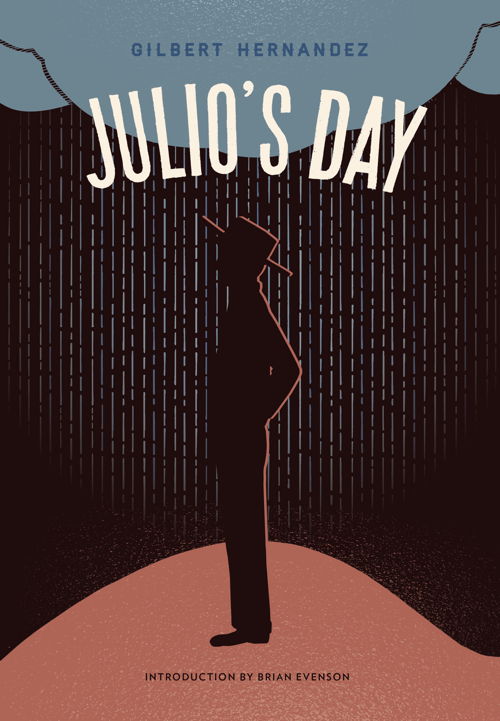
Julio's Day Review (Gilbert Hernandez)


Gilbert Hernandez’s latest comic, Julio’s Day, tells the story of Julio, a Mexican gay man born in 1900 and who dies in 2000, and takes the format of telling the 100 year life of Julio in 100 pages. The book follows the lives of Julio and his family, and his friends and acquaintances that make up the small town they live in and how their lives change over the course of growing up alongside the major events of the 20th century. It’s a deep, complex, and absolutely captivating story filled with the horrors of life amidst its many joys, and deals with things like war, disability, sexual attitudes, child abuse, love, innocence lost, family, ambition unrealised, dreams and nightmares, life and death. 

Hernandez has been creating comics for decades now with the end result being that he is an incredibly accomplished comics storyteller. Eschewing narrative boxes, Hernandez tells his 100 year story without once naming any of its locations or times. Occasionally a character will mention an event that will place the scene in historical context like World War 1, or the Wall Street Crash, or Vietnam, but it’s up to the reader to judge for themselves the times certain scenes take place by looking at the characters’ appearances as they age. 

Hernandez doesn’t use exposition and never uses excess speech – it’s a lean script with perfectly placed dialogue. He knows when to let the art speak for the scene and when to accentuate it with conversation. Reading this book is like watching a master-class in how to tell a comics story. Bear in mind he’s not doing anything innovative, he’s using black and white panels in a grid layout to tell his tale like so many comics before, he just happens to do it so well that it feels fresh, vivid and new. 

He also incorporates dream sequences and hallucinations into the real story with no warning or signposting. All at once we go from a childhood scene to a nightmarish sequence that may or may not be real to another scene which is definitely dream-like to a hallucination from the perspective of a character who’s losing their mind. It sounds difficult to follow, but it honestly isn’t, and Hernandez’s totally unobtrusive narrative approach leaves all kinds of interpretations open to the reader over what’s symbolic, what’s real, and what it all means. 

If this surreal style and hands-off approach, coupled with the 100 years/100 pages format, make it seem like this book is going to be arty and pretentious, I assure you it isn’t. It’s simply the best way to tell this kind of story that’s subtle, clever and enthralling to read. It’ll be confusing but you can absolutely read this book for the story and still enjoy it immensely, but Hernandez is doing more here than spin a good yarn and readers who look for more substantial reads will find Julio’s Day very rewarding. 

Julio’s Day is a rich, character-driven, family saga full of memorable characters and scenes that’ll haunt your memory long after you put the book down. In some ways it’s a discussion of the changing, and unchanging, sexual mores of the 20th century; in some ways it’s a deeply intimate portrait of a lonely man always surrounded by people; and in other ways it’s an exploration of the most relevant and poignant themes of literature. If John Steinbeck were creating comics, he would write something like Julio’s Day, the book feels so much like his novels Tortilla Flat, Cannery Row and Of Mice and Men. I could talk about my favourite scenes and characters but I feel like discovering them yourselves, in this instance especially, really adds to the impact of the story – it’s so unpredictable and surprising in the best possible ways that you’ll never guess where it’s headed and never put the book down for an instant as you find out what happens next. 

I’ve enjoyed many of Hernandez’s comics over the years from his work with his brother Jaime on their ground-breaking Love and Rockets series to his own projects like the surreal and entertaining stories of Sloth and Speak of the Devil - Julio’s Day is my favourite thing he’s done. Brutal, beautiful, subtle, stark, compulsively readable, and put together like a true work of art by an artist at the height of his powers, Julio’s Day is one of the best comics of the year and a masterpiece of sequential art.

Julio's Day

Why did the Marvel Comics Event Infinity suck?


I finished the sixth and final part of Jonathan Hickman's Marvel Event Infinity last Wednesday and decided to write an article on exactly why this latest Event was so terrible. I call it 6 Reasons Why Jonathan Hickman's Infinity Was Absolute Drivel and if you're interested, you can read it here: http://whatculture.com/comics/6-reasons-jonathan-hickmans-infinity-absolute-drivel.php

Sunday, 1 December 2013

Secret Avengers, Volume 1: Reverie Review (Nick Spencer, Luke Ross)


Remember that line from The Avengers movie during the Battle of New York where Black Widow says “This is just like Budapest” and Hawkeye says “You and I remember Budapest very differently”? Their Budapest story opens this volume. Also in this book is Agent Phil Coulson - whether that’s a good thing or no, depends on if you like him. Me? Nah. He’s boring. The guy’s monotone and wears a suit, I never got his appeal.


Nick Spencer, writer of the awful Image comics Morning Glories and Thief of Thieves, pens yet another dismal comic with Secret Avengers. Why Hawkeye and Black Widow sign up for covert ops isn’t revealed but it’s apparently a big deal - Coulson whispers it to them so we don’t hear - and Sam Jackson Nick Fury rounds out the team. Iron Patriot’s in it but not really because there are multiple empty Iron Patriot suits used as strike drones, and Hulk’s suddenly introduced to the team in the latter part of the book because as the recent TV series proved, SHIELD stories without superheroes are not interesting.


To help ease their guilty consciences, Black Widow and Hawkeye are given memory implants which wipe their memories after each mission and makes them perfectly able to withstand hostile interrogation (torture) by giving them no memory of why they’re there besides the target. The book mostly follows this rather bland powerless team (Hulk’s yet to make his cameo) through some rote missions - the Budapest story is ok but over very quickly - until they target a fairly big-ish villain, the head of AIM (Advanced Idea Mechanics), also known as those beekeeper dudes you sometimes see pop up.

Spencer’s writing is uninteresting at best. The SHIELD personnel just waffle on in the most interminable we’re-terribly-important-clever-and-so-very-cool language that’s so flat to read. You know the kind I mean where characters waffle on about nothing for pages and the dull writer pretends what they’re saying is witty - it’s just filler from a hack. Luke Ross’ art is similarly forgettable - ink heavy, decent but not very special or imaginative. Secret Avengers is definitely one of the most forgettable and boring titles in the Marvel NOW! lineup.

Secret Avengers - Volume 1: Reverie

A + X, Volume 1: Awesome! Review (Dan Slott, Marvel)


A + X is a collection of short stories teaming up a member of the Avengers and the X-Men for a silly throwaway kind of story. Some stories tend to be more serious than others like Dan Slott’s Captain America/Cable teamup in WW2 where the two defeat Sentinels Bolivar Trask is burying in England and then you have stories like Peter David’s Wolverine/Captain Marvel where they play poker the entire time!


I was wary about picking this one up purely because I disliked AVX so much and thought that by association (kind of) it’d be awful too, but it’s not a bad little read. Some of the team-ups are fun and the quick done-in-one format opens up all kinds of possibilities, like the stories I mentioned earlier. Slott and David’s stories were both quite good, as was Kathryn Immonen’s Iron Fist/Doop team-up (I like any comic featuring Doop), which take the opportunity to tell some pretty funny, whacky stories. Storm and Black Panther have a race, Black Widow and Rogue have a spa day (which of course is disrupted by a bad guy), and Hulk and Wolverine fight about who gets the last slice of cake!


Though if you’re not into the team-up or story, it can be a bit of a slog to get through. The Spidey/Beast team-up where they go to a parallel universe run by Beast’s descendants should’ve been more fun but was just all about the set-up and turned out to be a snooze, as was the Cap/Quentin Quire story set in Cap’s mind (or something). It’s like any short story collection where some stories are inevitably better and worse than others.

A + X is an ok melange of characters and ideas, with some stories worth reading and others not so. By the end, the format of the collection became somewhat tedious and I wanted to read a longer, more substantial narrative instead. But for dipping in and out of, A +X isn’t bad. 

A+X - Volume 1: = Awesome