Pages

Wednesday, 10 July 2013

Superman Unchained #2 by Scott Snyder and Jim Lee review


Superman Unchained #2 dropped today and turned out to be as awesome an issue as the first one. Scott Snyder is on a roll, he is creating an incredible Superman story- and it's first one! You can read the full review here: http://whatculture.com/comics/superman-unchained-2-review.php

BPRD Hell on Earth Volume 6: The Return of the Master by Mike Mignola review


I’m not sure if its deliberate but it feels like Mike Mignola and John Arcudi are going around and around in circles with the BPRD – at least that’s what it feels like if you’ve been following the series since the start like I have. Hell On Earth is basically Season 2 of BPRD but in Volume 6: Return of the Master, a lot of characters from BPRD Season 1 pop up and a number of concepts from that first run also appear here. Namely, Rasputin and the Black Flame, two BPRD villains who’ve died more than once get brought back and we revisit the concept of Rag Narok, aka the End of the World.

This isn’t the best volume as the main focus is on a minor villain and a squad of BPRD human soldiers who aren’t particularly memorable. The minor villain is The Master who sets up shop in a ruined Scottish castle, bringing with him some human followers while resurrecting some giant monsters to fight the BPRD squad sent to take him out. The characters we’ve come to know and love are either absent or doing very little in this book. Hellboy is of course absent, as he’s battling his way through hell, Abe Sapien is still comatose inside a tank, and Liz Sherman is AWOL (though she does check in with a single panel). Meanwhile, Johann Krauss is putzing around BPRD HQ, arguing with new recruit (and Marvel rip-off) Fenix, a red-headed girl with powerful psychic powers.

BPRD is at its best when it does short, self-contained spooky stories in the vein of The X-Files but without the TV budgetary restraints (a special effects sequence costs the same as a conversation between two people in a room in the comics world) but this volume is instead more about the larger series storyline going on. As such, it’s not a volume anyone unfamiliar with the series should be picking up casually as a lot of it will just be confusing. The problem with this book is that The Master storyline is pretty uninvolving – BPRD squad fire guns at monsters for most of the book – and it kind of ends in a way that makes you think the entire thing was pointless anyway, and the rest of it involves resurrecting the Black Flame (again) and the end of world happens (again). So half of it feels like a waste of time while the other half feels like rehashed material.

There’s some decent art and Mignola/Arcudi does make the material interesting enough so it’s never too boring to read even if the impression they leave you with is underwhelming. The series could be better if Abe woke up (him being comatose only makes his absence more keenly felt as the other characters just aren’t as interesting), if Johann went out into the field again, and Liz came back (or else did something more than nothing!). But I do like the dead Russian guy with the little girl in the jar, I think he’s a complex character, at times seeming good, others seeming downright evil, and his plans are obscure enough to keep him on the fence between good and evil.

But the whole Rag Narok thing is played out. Giant storylines are fine but we’ve seen it so many times in BPRD that it’s become boring. The Black Flame is played out. Rasputin is played out. The best BPRD stories in this Hell On Earth series have been mini story arcs focusing on one or two characters and a new supernatural creature(s) in an interesting location – this large scale, end of the world stuff is too vague and overdone at this point to matter (at least to me). Volume 6: The Return of the Master has its moments but doesn’t contain enough fresh material or ideas to make it a standout in the series.

B.P.R.D. Hell on Earth Volume 6: The Return of the Master

Monday, 8 July 2013

A User's Guide to Neglectful Parenting by Guy Delisle review


Guy Delisle takes a break from his usual travelogue comics to produce a highly amusing look at being a dad, specifically his parenting style towards his young son and daughter. The stories range from Delisle’s shortcomings as a dad to his mischievous nature trumping his paternal instincts – all stories which are almost all hilarious.

One of the stories shows Delisle forgetting to put a coin under his son’s pillow when his tooth falls out – for 3 nights in a row! – and having to make up a story about why the mouse (in Delisle’s household, or maybe Canada generally, there’s no tooth fairy but instead there’s a tooth mouse) kept forgetting. Later on he plays a practical joke on his son, using a chainsaw to chop up a dead tree in their backyard and then, to grab his son’s flagging attention, pretends that the chainsaw cut his hand off, leading to his traumatised son running indoors screaming!

One of my favourites is at bedtime his daughter asking him to reassure her that baby snatchers aren’t real, which of course he does. And then he goes on about a newspaper story he read earlier where a monkey in Malaysia stole a baby and leapt out of the apartment window, says goodnight and walks off, leaving his daughter completely wide awake and scared. Or when his daughter brings him a drawing she made and Delisle ends up critiquing the hell out of it, telling her she’ll never win an Eisner (the comics industry Oscars) and ending with Delisle ranting about hack artists in the comics industry.

It might seem like he’s a cruel dad but you get a strong feeling from the book that he deeply loves his kids and that he just likes playing around with them for his own amusement – and our own of course. His abilities as an animator make the stories paced perfectly so that they read fluidly and while it seems like I’ve spoken a lot about the content, believe there’s a lot more here and reading it from Delisle rather than myself is a very different experience. I love his travelogues - and if you’re new to Guy Delisle check out his book on North Korea, “Pyongyang”, or last year’s “Jerusalem”, for excellent reads – but “A User’s Guide to Neglectful Parenting” shows Delisle’s talents easily transfer to the domestic stage creating a funny, quite brilliant book that all comics readers will enjoy, parents or not.

A User's Guide to Neglectful Parenting

Straight White Male by John Niven, Vimanarama by Grant Morrison reviews


Imagine you’re having a nice drink in a bar. Then an utterly wasted middle-aged man staggers over to you, purple nose with cracked veins, face so red it looks about to explode at a moment’s notice, reeking of alcohol. He sits next to you heavily and proceeds to tell you details of his life you don’t want to know in an extremely loud voice, details that comprise his sex life and his drug and alcohol intake, all of which he is very proud of. Then imagine, as you try to leave, that you can’t and that you and this drunk are now tethered together for the rest of the evening, which means you have to endure his tedious drivel for a few more hours before you’re free. Now imagine that drunk is this book. 

John Niven’s latest novel “Straight White Male” is the story of Kennedy Marr, a bestselling novelist who has become a highly paid screenwriter and script doctor living in Los Angeles. Middle-aged and single, Kennedy is enjoying his sybaritic Hollywood lifestyle, sleeping with many beautiful women, ingesting copious amounts of alcohol and drugs, and getting paid large amounts of money for minimal writing effort. And then he receives his tax bill. It seems he owes the IRS $1 million - money that he doesn’t have. But when he is awarded a prestigious literary honour for his novels back in Britain, he learns that if he accepts the award he will receive £500,000 tax free with a catch: he must teach for a full school year at the university. 

Straight White Male (SWM) pretends to be a satire about Hollywood and academia and fails miserably on both. First of all, these aren’t exactly the hardest subjects to lampoon - Hollywood is such a bizarre and ridiculous place to start with that a satire feels pointless and that a simple non-fictional look at how studios work would yield more amusing results. And academia has been satirised by David Lodge and Malcolm Bradbury so successfully that there isn’t much more to make fun of - as SWM shows. 

The Hollywood targets are easy and unsurprising - vain, superficial starlets, handsome leading men who’re secretly gay, bloviating self-important producers and directors, every single one of them utterly pretentious. On the academic side we have snobbish literary teachers writing esoteric long-winded essays about an insignificant detail in an obscure novel. What does Niven have to say about Hollywood? A ludicrously wealthy playground full of childish personalities without an ounce of artistic integrity. About academia? Full of boring people taking the joy out of art and reducing creativity to a series of clinical exercises that don’t work. In other words, he has nothing to say that hasn’t been said before, better. 

The real point of the book is to act as a soapbox for Niven to play wish fulfilment via Kennedy. Kennedy Marr is a middle-aged novelist who also makes a lot of money screenwriting. This apparently makes him James Bond, minus the licence to kill. Everywhere he goes women are throwing themselves at him. He can’t go to the toilet without some young twentysomething following him, ready to throw off her small dress and slop around in the stalls with him. He’s constantly boozing, doing drugs, but always manages to appear ravishing to women despite the damage such a lifestyle would do especially to a 40-something who does no exercise. Occasionally he tosses off a few words, gets handed wads of cash, and he saunters off to continue his manboy activities. 

Far more annoying than the poor characterisation of Kennedy - or anyone - is the flimsy plot. Normally there is conflict in a story to give it some drama, and to make said conflicts more interesting, there has to be stakes. This book contains a few obstacles, some conflict, for Kennedy to overcome, which he does far too easily, but minus the stakes. Because no matter what happens in this story, everything always works out for Kennedy. Money problems that screenplay work won’t solve? No matter, somehow an institution in England is willing to pay you huge sums of money to show up at their university! Headbutt a rich businessman on a flight to the UK? No matter because charges won’t be pressed and the headlines make you, and the university, more famous! Curse out the star of the movie? Without lifting a finger, all will be forgiven and your status will be further enhanced for “being real”! There are supposed problems at the start of the book where Kennedy is behind on several scripts, which Niven attempts to make seem an impossible task, but when push comes to shove, Kennedy writes them all in a couple of paragraphs! There are more examples of non-conflict being resolved in an impossibly simple way, especially the ending, but I won’t spoil those here. Suffice it to say, Kennedy gets what he wants very, very easily whether he tries or not. With no real problems for our protagonist, and no real story, all that’s left is Niven’s snide and tiresome remarks about whatever’s on his mind to fill out the rest of the nearly 400 page novel - and unfortunately Niven has nothing interesting to say. 

The novel makes some awkward gear changes as it shifts from Kennedy’s adult holiday and laughalong at Hollywood/academia, to “real” life. It’s as if Niven realised Kennedy was completely unlikable or maybe too much of a caricature even for a supposed satire and attempted to make him sympathetic by showing his family’s problems. There’s his dead junkie sister Gerry whom we learn about through flashbacks and Kennedy’s guilt at his lavish ways compared to the poverty that his sister resided in, and his lack of intervention that led to her premature death in her early 30s. There’s his dying mother whom he can’t bring himself to visit while his understanding social worker brother Patrick looks after her as she wastes away, pining for her Kennedy. It’s such a badly misjudged inclusion in this novel that spends so long celebrating Kennedy for his “bad-boy” behaviour that any attempt at humanity falls completely flat. 

But the ending to the novel is spectacularly awful. After failing to establish a legitimate love interest in one of Kennedy’s students but going for the heartbroken angle for his protagonist anyway, Niven then has Kennedy learn some bad news leading to a decision to off himself. He wanders the streets of London, reciting poetry to himself, wallowing in nostalgia. This sickeningly sentimental and self-indulgent sequence goes on for 30 pages - and it’s utterly unbearable to read! Just when you’re wishing that he’d just kill himself already, he launches into another rose-tinted memory that the reader has to suffer through to get to the next tedious memory. And the ending itself... well, it’s a slap in the face to anyone thinking that this is a book for grown-ups. 

“Straight White Male” is a satire absolutely devoid of anything to say and spends a long time saying it. It’s a boring novel full of lazy writing, cliches, stereotypical characters, and a smirking attitude that believes will cause readers to overlook everything else. Like the dinosaur on the cover, here’s hoping childish stories about overprivileged, self-entitled manbabies become extinct, and Niven actually makes an effort for his next novel.

Straight White Male


*


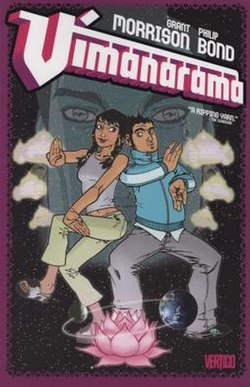
Ancient Indian space gods return to wreak havoc on London just as Ali, a young British-Indian man, is about to find out what his betrothed wife-to-be will look like. As Ali discovers he is somehow tied into the chaos happening around him, he and his bride-to-be set off on a mystical adventure to save the world!

Vimanarama is Grant Morrison writing what he does best - crazy superhero stories with spiritual-ish elements liberally mixed in. It's also a much lighter, funnier story than we usually see from him and the humour and jokes are the best quality in this book.

Philip Bond's artwork is pretty good - I wouldn't say I was blown away by anything I saw but the line work is strong and the designs for the Ultrahadeen (the good Indian space gods) were great even if the bad guys bore a heavy resemblance to Kirby's Darkseid.

Maybe because it was such a short read (it's a 3 issue mini-series) and as a result the story and characters don't really feel fully fleshed out, but I didn't connect with this one as strongly as I usually do with Morrison's work. Vimanarama is a quirky, fun read in places but compared to the other high quality stuff he usually writes, it's all too forgettable and brief to make a strong impression.

Vimanarama

Saga Volume 2 by Brian K Vaughan and Fiona Staples Review


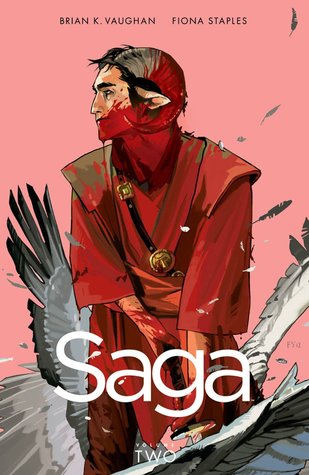
I'm really trying to get into this series but can't seem to do it - and I know how so many people love this series too! I wonder if I re-read Y:The Last Man or Ex Machina, whether they'd hold up... Anyway, in depth review of Saga Volume 2 can be read here: http://whatculture.com/comics/saga-volume-2-review.php

Sorry in advance if you're a fan!

Sunday, 7 July 2013

The Strange Talent of Luther Strode by Justin Jordan and Tradd Moore review


Luther is a nerdy-looking, skinny high school kid with more than a few problems with violence in his life. His dad beat him and his mother up until he was sent to prison - but now his dad’s out - and a bully at school is kicking his ass up and down the lockers in front of the girl he likes. He sees an ad for something called the Hercules Method, sends off for it in desperation, and begins building up his body. Except the Hercules Method really does give you strength - super strength - and soon Luther, a once powerless young boy, now finds himself among the most physically powerful men in the world, and those problems he once had? He’s about to start solving them.


What a book this is! I started reading this cautiously, noting that I’d seen a lot of this before, and then new stuff started happening and I was glued to the book until the final page, totally enveloped in what I was reading. Justin Jordan does a fantastic job of pacing the story just right so we see Luther’s world from all angles before he acquires the powers. Then we see him go through the initiation period of becoming a superhero, coming up with a costume, patrolling the city, before the sinister element of Cain, the Librarian, and the murder cult is introduced to make it stand out from other similar stories. Jordan executes all of the plot points perfectly, striking the right balance in tone as Luther transitions from being a big fish in a little pond to a little fish in a big pond as he fixes the problems in his life before realising why he’s been given the powers and what’s expected of him. It goes from kinda fun to deadly serious in just the right amount of time.


Tradd Moore’s artwork compliments Jordan’s work perfectly, giving it this distinctive appearance that seemed kind of like Rob Guillory’s style in Chew - kind of, but different - and his character models have this great look to them that’s this great mix of cartoonish-ness and realism (on the subject of Chew, I have to say that the Librarian reminded me a lot of Mason Savoy - but maybe it’s just because I’m obsessed with Chew!). Moore draws the violence vividly lending his imagination to Jordan’s script to bring the gruesome fight scenes to gory life. I can honestly say that if any other artist had drawn this book, it wouldn’t have been as good. Moore elevates the material and makes it look so damn cool. That brief look we got at the murder cult? It’s an intriguing idea in the first place but Moore made it look so much more sinister and interesting with the way he drew it, jumping through pockets of time, getting those facial expressions just right - amazing! Also Felipe Sobreiro’s colours make the scenes pop, adding to the impressive presentation of the comic.


Luther Strode, if you can’t guess from the cover of an angry-looking dude with blood-soaked hands, is a hyper-violent comic. Luther’s super-strength means that when he punches someone, his fist goes through them. When he chops at someone’s head, he slices it in half. When he kicks someone in the back, his foot comes back with that person’s spine wrapped around it. Fair warning to anyone who’s squeamish or doesn’t like violent comics - Luther Strode is definitely not for you. I wouldn’t say it’s the defining element of the comic but it is a big part of it.


I’ve noticed a few people comparing this to Mark Millar’s Kick Ass and they’re wrong - Kick Ass was always just an ordinary kid who decided to dress like a superhero but he never had powers. Luther Strode actually has superpowers like super strength, super speed, some weird kind of x-ray that enables him to see beneath the surface of human flesh to the organs beneath. Dave from Kick Ass and Luther both start out as high school kids but only Luther becomes a real superhero.

If someone had told me before I read this that The Strange Talent of Luther Strode is about a kid who gets superpowers, I’d have rolled my eyes - how many times have we seen that before? And I can say having read it that it’s similar to a lot of stuff that’s gone before it but also manages to be its own thing. Luther is a character we’ve not seen before with a unique situation despite the misleading, reductive summary of his story that’s also kind of accurate. Luther Strode is an original superhero comic that’s well-written, well-drawn, and possesses that important element so few books have when you turn the final page - the desire to keep reading. I really want to see what happens next and I’m hungry to read more! I certainly will do that but for now I strongly recommend anyone who enjoys superhero comics that offer something different (and who don’t mind explicit violence) to check out the brilliant Luther Strode brought to you by The Super Talents of Justin Jordan and Tradd Moore. 

The Strange Talent of Luther Strode

Saturday, 6 July 2013

5 Death Predictions for DC's Trinity War Event


Trinity War is upon us! DC's latest Event kicks off next Wednesday with the death of a superhero who starts the conflict and will probably end with the death of another superhero. Who's destined to fall? My 5 death predictions for the Event are here: http://whatculture.com/comics/5-death-predictions-for-dcs-trinity-war-event.php

Thursday, 4 July 2013

I Wear The Black Hat by Chuck Klosterman review


Chuck Klosterman looks at the character type of the villain, both in real world figures and imagined, and surmises that a villain is someone who knows the most and cares the least. It sounds like a simple idea but becomes more complex as you think about it. He uses a number of examples to highlight his point and one of the first is Niccolo Machiavelli. Machiavelli, if you know him at all, is famous for writing The Prince, a book about political theory. The Prince is controversial as it makes Machiavelli appear not just incredibly cynical but evil too in the way he advocates ruthless domination for a ruler over every other form of governance. Klosterman argues, convincingly, that Machiavelli wasn’t saying that this was his preference but that this was his observation of how the real world worked having spent his career as a diplomat seeing how politics actually operated. That his book was used and influenced any number of shady characters is not his fault and yet we have his name as a term describing a backstabbing, conniving person today. Machiavelli was not Machiavellian.


In this way he argues that George W Bush was not a villain (gasp!) because he didn’t know the most (that would be Dick Cheney) and he seemed to care at least a bit (unlike Cheney), whereas Joe Paterno will be remembered as a villain because he knew about Jerry Sandusky’s sick life but chose not to do anything about it, ie. caring the least.


Other examples Klosterman uses to explore the nuances that go along with the way we see villains include Mohamed Atta, one of the 9/11 hijackers who is justly reviled by all, and DB Cooper, another plane hijacker who in 1971 pulled off the only unsolved case of air piracy ever - and yet is seen favourably, almost like a folk hero (possibly because no one was hurt in his hijacking with the likely exception of himself, seeing as he was never seen again after he leapt out of a plane at night). Klosterman makes the thoughtful observation that if a person has confidence, no matter the crime then they are the hero even if they should be the villain.


He lost me at one point when discussing Batman. He wants us to imagine Batman is real and doing what he does in the comics in real life (all well and good) but then ruins his thought-experiment by comparing Batman to Bernhard Goetz, a mad, gun toting lunatic who shot several young black men in the early 80s who were going to rob him. He tries to make a connection saying that Bernhard was obsessed with squirrels and Batman with bats and both are vigilantes, but it seemed like a long shot and felt like Klosterman was going off of the movie Batman rather than comics Batman (aka the real Batman). But he does make the interesting point that “when considering the vigilante, the way we think about fiction contradicts how we think about reality” which is definitely true.  


Despite this hiccup, the book is a really great read for the most part as he continues his thesis by looking at Bill Clinton, Don Henley, Snidely Whiplash, and OJ Simpson and comes up with fresh, clever perspectives on all of them through the prism of his villain argument. Klosterman’s background as a music critic though never fails to come through in his books and I Wear The Black Hat is no exception. In one pointless chapter he spends several pages telling you which bands he disliked each year for 20 years from the mid 80s to the mid 00s! After reading the book I’m struggling to see how this connected to the overall villain thesis but worse, it’s easily the most boring, self-indulgent tangent in the book.


However, “boring” is something that this book rarely is and reading the essays in I Wear The Black Hat is a highly enjoyable experience. Klosterman writes lucidly and articulately, especially as he is aware that he at times uses words that inhibit some of his audience’s understanding of his points (he is loquacious and eloquent at the same time, sometimes to the writer’s downfall). If you enjoy informative pop culture discussions especially one involving the dissection of what a villain is and isn’t, I Wear The Black Hat is for you.

I liked it so much I tied it to the train tracks while rubbing my pencil thin moustache - BWHAHAHAHA!

I Wear the Black Hat: Grappling with Villains (Real and Imagined)

The Shadow Out Of Time by HP Lovecraft and INJ Culbard review


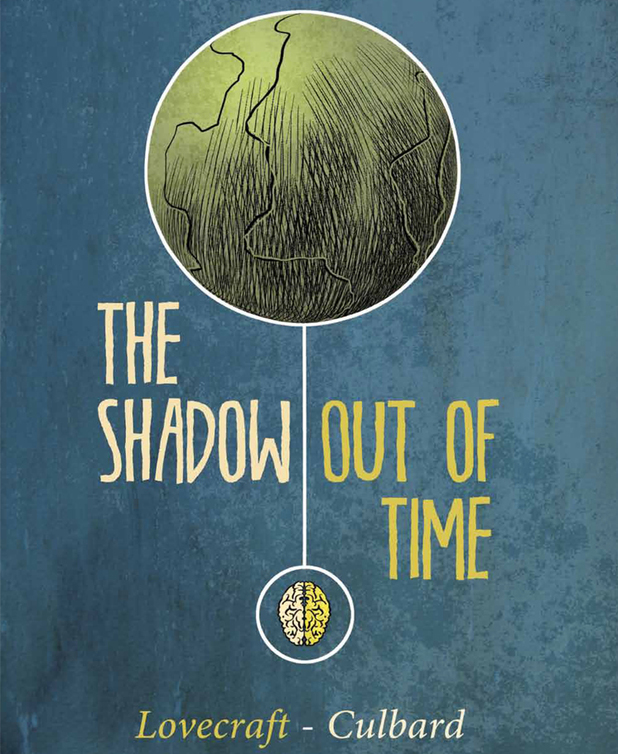
INJ Culbard’s latest HP Lovecraft adaptation is of Lovecraft’s last major work, the sci-fi-esque horror story The Shadow Out Of Time. Unlike Culbard’s last 2 adaptations, At The Mountains Of Madness and The Case Of Charles Dexter Ward, The Shadow Out Of Time is a trickier story to make work in a comic and is tonally different from Lovecraft’s more straightforward horror tales - as a result this is the weakest book in the series so far. 

For those unfamiliar with Lovecraft, HP (Howard Phillips) Lovecraft was an early 20th century pioneer of the horror genre, which is referred to as “weird fiction”. Published primarily in low-circulation pulp magazines, he went largely unrecognised in his lifetime and experienced a resurgence after his death in 1937 when his fiction entered the lives of numerous popular writers of today like Stephen King, Michel Houellebecq, Neil Gaiman and Alan Moore, who would count Lovecraft amongst their influences. 

The Shadow Out Of Time (TSOOT) is about Professor Peaslee who suffers a fainting spell one day at Miskatonic University in Lovecraft’s fictional town of Arkham. When Peaslee awakens he discovers 5 years have passed - but even more disturbingly, he finds out that he wasn’t unconscious and bedridden for all those years but actively walking around. But how was that possible? And what was “he” doing in those lost years?

With TSOOT, it seemed like Lovecraft was moving away from the horror genre as the story is mostly about the space dreams Peaslee experienced and relays, in rather tedious exposition, to the reader. There are numerous scenes of odd-looking aliens, somewhat familiar yet ominous pyramids and monoliths, and ancient statues hidden in remote areas that attest to the idea that We Are Not Alone In The Universe. All of which is fine material for Lovecraft to tackle except he tries to make it fit the horror template and it doesn’t work because they’re two different genres. 

Culbard does his best to diminish Lovecraft’s awkward writing style (the description “horrific prose” was never more ironically applied than to Lovecraft) where his characters repeatedly tell the reader that what they saw was shocking and horrible beyond belief which doesn’t work quite so well as experiencing it yourself. If you’re told over and over again that something is scary, it’s probably not. Thankfully, Culbard does away with those extensive paragraphs from the original story so the book reads a lot smoother and he even gives the characters dialogue, something Lovecraft notoriously avoided in his fiction (I should say that he claimed dialogue was vulgar and that was why he refused to use it in his work, but I think that he didn’t mostly because, as a recluse, he rarely spent much time around other people and so had no idea how they spoke. The few times he did utilise dialogue, it is absolutely laughable - ellipses everywhere!).

Perhaps the most damning aspect of this story and that makes TSOOT one of the least interesting Lovecraft stories is the descriptions of the Great Old Ones, the ancient deities that make up Lovecraft’s legendary Cthulu mythos. Culbard does his best to depict them as scary going off of Lovecraft’s descriptions but they’re really anything but - in fact, they’re kind of funny and kind of stupid at the same time. One of them looks like a giant strawberry nestled atop a can of tuna; another looks like a grasshopper with jelly for arms - these are the terrifying gods of chaos and madness?! They resemble the product of a 5 year olds imagination! 

I know Lovecraft’s fans really love his mythos but the stories related here read more like something Tom Cruise and John Travolta would believe in rather than credible sci fi or horror - it’s that poorly conceived and related. I respect that Lovecraft put a lot of effort into making it seem fascinating but I found it as byzantine and inscrutable as Tolkien’s extensive Middle Earth history. 

I enjoyed parts of the book like Peaslee’s eerie experiences, the mystery of those lost years, and his travels to remote areas of the world in search of answers. All of this was great, its just when those answers are revealed and turn out to be, well, kind of boring, that the book fell apart for me. Lovecraft droning on about some alien mythology he created is only interesting to the most indulgent of readers willing to try to understand this rambling discourse, a group to which I don’t belong. 

The Shadow Out Of Time is a somewhat interesting Lovecraft story with some good moments, decent art, and I think Culbard make the story far better in this book that Lovecraft did by himself so if you want to read this story, pick up this adaptation rather than punish your brain by reading Lovecraft’s prose. It’s also the weakest Lovecraft adaptation Culbard has done so far - instead of TSOOT, I highly recommend checking out The Case of Charles Dexter Ward for a more entertaining and haunting Lovecraft comic.

The Shadow Out of Time

Batman 66 #1 review, Damian Wayne Returns to DC!


My review of Batman '66 #1 went up today here: http://whatculture.com/comics/batman-66-1-review.php

and I talked about Damian Wayne's return to DC despite being dead here: http://whatculture.com/comics/damian-wayne-returns-from-the-dead.php

Wednesday, 3 July 2013

Batman Inc #12 Review


My review of Grant Morrison's penultimate Batman comic, Batman Incorporated #12, went live today. No surprises that I LOVED IT!! This series has been amazing and issue 12 is no exception. Read the full review here: http://whatculture.com/comics/batman-incorporated-12-review.php

Tuesday, 2 July 2013

Saga Volume 1 by Brian K Vaughan and Fiona Staples review


I'm about to write my review of the second volume of Saga, Volume 2 so I thought it'd be a good idea to post my review of the first volume for context. You can read it here: http://whatculture.com/comics/saga-volume-1-review-brian-k-vaughan-and-fiona-staples.php . I'll just say right now to all Saga's fans - I tried, ok?

Monday, 1 July 2013

Edison Rex, Star Wars: The Clone Wars - The Smugger's Code reviews


A superhero. His arch-villain nemesis. What if the nemesis defeated the superhero - would the villain be satisfied? Or would he become the hero himself? 

I know what you’re thinking - that’s the premise for the 2010 film “Megamind”. And you’re right, it is. But the similarities don’t stop there. Chris Roberson doesn’t have a single original idea so he just rips off other stuff, mostly from Marvel and DC Comics, to create a book that’s blandly like every other superhero analogue book - minus a new spin on things. 

Valiant is the superhero and is exactly like Superman, even down to the origin of the dying planet, etc. Edison Rex, his villain nemesis and unlikely hero of the book, is exactly like Lex Luthor. He’s a human scientist, extremely intelligent, hell bent on destroying the alien he believes is a threat to his planet and people. 

The similarities continue! Once Edison Rex disposes of Valiant in a kinda funny/silly Silver Age comics way, Edison becomes the hero and fights a series of ripoffs, sorry parodies, sorry - homages? - of famous creations. Sven the Nuclear Norseman is Silver Age Thor who was also a weak human called Donald Blake. Cerebella is kind of like Ultron. Defiant is Bizarro. Platypus Rex is reminiscent of the Guardians of the Galaxy animals as badass heroes with guns motif. The Multiverse. A Galactus/Brainiac hybrid. Fortress of Solitude type place. There’s even an alien chick with a lightsabre thrown into the mix!

Kurt Busiek writes the intro almost like an apologist for this kind of flip-flammery hack writing, saying that everything in fiction is a ripoff of something else and that soon the thing that you think is a ripoff becomes its own thing and spawns other imitators. To which I respectfully disagree - this is a mindless ripoff of Superman and superhero comics in general that isn’t its own thing, its just a ripoff.

It isn’t even entertaining. Chris Roberson is a mediocre writer at best and Edison Rex is a good example of the kind of competent but uninteresting style that he usually writes. After a while I was just waiting for the book to end rather than interested to see what it would do next. 

The one good thing here is the art. Dennis Culver’s art is fantastic, almost too good for this half-assed story, and Stephen Downer’s colours really brought the drawings to life. But that’s it for this comic - good art, crap story, dull writing, no ideas. Maybe I’ve read too many Superman analogue stories, maybe it’s because I’m not that big a fan of Silver Age superhero comics to appreciate all the references, but I found Edison Rex to be an utterly underwhelming and boring read.

Edison Rex


*


When Obi-Wan, Anakin and Ahsoka take some time off and go to Wielu, a beach resort-like planet, to relax, Obi-Wan sees a face from his past. T'Mott Zoat was a criminal that got away from him after killing his friend 20 years ago, but this time Obi-Wan won't let him get away again! Along the way he meets a smuggler, Rook Pryce, to help him navigate the treacherous and criminal landscape of the paradisiacal Wielu.

Set sometime during Season 4 of the Star Wars TV show The Clone Wars, The Smuggler's Code is a fairly decent Star Wars comic with everyone's favourite character, Obi-Wan, as the lead. The story is well-paced and has a few decent twists and turns, including some interesting additions to the Star Wars Universe like saberfish - fish like narwhals with lightsabers for noses - and its never boring.

That said, the ending has the feel of an after-school special, and the writing, while competent, is never challenging with the book feeling like its aimed at younger readers. Eduardo Ferrara's art is fine, maybe overly cartoony in places, but fits the story well.

Rook Pryce was an interesting character, fitting into the established Star Wars world by wearing a Han Solo-esque jacket, possessing a weirdly proportioned Millenium Falcon-type ship, and betraying people left and right, adhering to the smuggler's code of the title, the rather banal and cynical motto "get paid, as much as possible". Though I did wonder if Obi-Wan had been paying attention to anything that happened to him in this book when he told Rook that he'd been helpful to him on his mission, when really he'd been anything but!

The Smuggler's Code is not a comic that's going to general comics readers much, but fans of the Clone Wars show and younger Star Wars fans will probably enjoy this light-hearted adventure a lot.

Star Wars: The Clone Wars - The Smugglers Code

Batman Year Two: Fear the Reaper, Superman, The Black Ring: Volume 2 reviews

Batman Year Two: Fear the Reaper


I realise I don't have the worst life in the world, that there's probably some poor sod in the third world eking out a single meal to feed his family today, and if the worst thing that happened to me today is that I read a bad Batman book, it's still streets ahead of what that guy's going through - but Batman Year Two: Fear the Reaper makes you feel worse than that guy while you're reading it. It's a book so bad you lose perspective on everything and start howling out your frustration at the injustices of the world far more effectively than any infomercial showing stick thin children with bugs crawling over their open eyes and swollen bellies could ever hope to accomplish.

This is going to painful to write because if I were less in control, that is if I still had this book to read, I might just record myself throwing up and post that as the review for Year Two - and it would get across my point far more clearly than this review would otherwise - but here goes nothing. And it's a big nothing - Year Two is about the world's crappiest villain called the Reaper. He's clothed in a red gimp outfit, a black cloak, and wears a silver skull mask, minus the jaw. His hands though are what kills me - giant question mark-sized scythes protrude from balled spikes in which house twin handguns. I had to go online immediately to see if Rob Liefeld had designed the Reaper, it was that outrageous - but no, this particularly insane creation was dreamt up by Mike Barr and Alan Davis.

The Reaper aka Judson Caspian (say that name out loud - Judson! Incredible) is also a geriatric. He's ancient! This old guy dresses up like Poe's Red Death but with ridiculously unwieldy blades for hands and heads out into the city's red light district to carve up prostitutes, Ripper-style baby! And he also thinks Batman, who, this being Year Two, is still green around the ears, is his protegé and will replace him when he's gone. He is a godawful villain. His 2 page origin is laughable, his appearance screams 90s chic, and every single aspect of him is cringeworthy.

Oh and he has the most hilarious catchphrase ever. Every single time he shows up he says some rubbish and then says "Have you learned yet to Fear..the Reaper?" That phrase "Fear... the Reaper" is done the same way every time with the ellipses following the word fear. Every. Single. Time.

Batman meanwhile has fallen in love with Judson's daughter in the most forced romance you'll ever read - I forget her name and everything about her because I kept being distracted by her mom hair. Seriously if you were a kid in the early 90s you'll recognise your mom or your schoolteacher or at least a couple of women who had the same look as Bruce's sweetheart in this book. Oh and Batman is also using guns in this book. Yeah. I can sort of forgive him because you could argue it's early in his career and he's not totally forsworn against guns - even though, duh, he should be! - but it's still a terrible choice by Barr and co.

While Batman fights the Reaper, there's a pitiful subplot about Joe Chill and Batman facing Joe for killing his parents, and then when Joe gets offed, we get his son and his grandson going after Batman and oh god make it stop!

I was having such a hard time getting through this crap that I had to look up what Mike Barr looked like so I could visualise my hatred of him. Then I dozed off for half an hour and during that nap I imagined Mike Barr with Year Two books for hands coming after me like the Reaper does after Batman, saying "Have you learned to Fear...My Crappy Book?". Oh yes. The one thing you will learn to fear when reading this is picking it up to keep reading.

It's not just that it's filled with bad characters, a contrived plot, stupid dialogue, crap writing/art and forgettable scenes - it has all of that but it's unlike other bad Batman books in the sense that those things aren't the reason why it's so bad. No, this book is crushingly BORING. It's so, so boring, that's what makes reading this such a chore. Every single thing that happens makes you shrug, "so... what.".

It's amazing how much of a polar opposite Year Two is compared to Year One. Year One is a masterpiece, Year Two is utter garbage. Seriously, if you see this on the shelf, flip it off and move on.

Batman: Year 2: Year Two - Fear the Reaper


*


Superman, The Black Ring Volume 2


This is the second and final part of Lex Luthor's mini-series, The Black Ring, where he hunts down the energy sources that power the Black Lantern's Black Rings (see Blackest Night - yup, Geoff Johns sure is imaginative in his naming of things). And he finds them of course, and finally Superman shows up too (he's been absent for this entire run). But is the mini-series worth reading? Meh. It's got its moments but its really overlong and kinda pointless, telling us what we already know about Lex and Superman's relationship.

There's a storyline where Vandal Savage is trying to do something with Lex regarding his happiness which didn't make much sense and was very tedious but then things got good when Darkseid showed up. I should mention that this isn't a very linear story, at least in this volume - the story kind of jumps around a lot before settling into the whole Black Ring plot, and one of those jumps lands us in the past where we find out Lex Luthor in his early 20s was Darkseid's apprentice in Apokolips! This sequence feels very much in keeping with Lex's character where his ego leads him to challenging Darkseid despite being basically just a human - super intelligent but still mortal - and Darkseid is a super-powerful god! But the two characters have some great exchanges that were fun to read.

Then we're on a who's who of villains in the DCU with Lex working with Ra's Al-Ghul and learning stuff from him before having a sit down with Joker in Arkham Asylum and a fight with Larfleeze, an Orange Lantern, and Brainiac. All of which is to say that despite it's rambling plot that it's never really boring even though I kind of have a hard time believing Lex outsmarted Brainiac (a cerebral version of "who's faster, Superman or the Flash?"). I suppose it had to be Lex because this is his story - but really?

The final part where Lex basically becomes God and Superman shows up felt a bit tacky. I like to believe Lex is a more multi-faceted character than someone who mindlessly wants to destroy Superman, even though that's been his character for so long. It just seems kinda lame, y'know? That's why this part felt a bit dull, a bit un-ambitious in terms of ideas, and more of a standard Lex/Superman scene despite Lex being in a unique position and perhaps doing something more interesting.

The Black Ring isn't a must-read mini-series even if you're a fan of Lex as it's mostly quite uneven, some parts being fun, some parts being boring, and Pete Woods' artwork isn't particularly special - but generally, it's a decent read with enough in it to keep it from being a total waste of time. Paul Cornell's mostly a good writer and he does DC spinoffs really well (check out Knight and Squire if you can, that book is a hoot!) but The Black Ring is one of his less impressive efforts.

Superman The Black Ring Volume 2