Pages

Wednesday, 5 June 2013

Wolverine Savaged: Why Origin Is The Worst Wolverine Book Ever


Batman has an amazing origin story - the Mark of Zorro, the mugging in Crime Alley, the pearls falling onto the street, the young boy stood crushed between his two dead parents. Later as a young man the bat comes crashing through the window of Wayne Manor and he finds the symbol he must become. Spider-man has a great origin too with the death of Uncle Ben tying into the message of with great power comes great responsibility, a credo that is central to the character. Superman’s origin is so extraordinary and iconic it gets retold again and again - in the last decade alone there have been numerous retellings in Birthright, Secret Origin, Earth One.

Wolverine should have a great origin too, right, something suitably memorable and as powerful? He is among the greatest superheroes ever created and is extremely popular with readers, starring in at least 3 series being published at any one time, and he’s known beyond the comics from the many successful X-Men movies where he’s played by Hugh Jackman. The character should have an epic backstory to explain how he became who he is.

No. No, he doesn’t. At least not if this book - Origin - is anything to go by. Origin is a creative abortion.

The scene opens with a young redheaded girl sat next to an older man with mutton chops, the pair seated in a hansom cab being led by a pair of horses, their dress and vehicle of choice already dating this story beyond the 20th century, to the 19th. The girl is called Rose.

Rose is essentially the main character of this Wolverine origin story. Who is Rose, you ask? She’s a recently orphaned girl who’s been sent to the Howlett Estate to be a companion to young Master James (Wolverine). She’s our narrator and is basically a surrogate mother/big sister/best friend/love interest to James – no wonder he’s screwed up with that kind of confusing relationship being his most primary in his formative years! Plus as she’s a redhead it establishes Wolverine’s “type” as in later years he’ll fall for another redhead, Jean Grey. But if you’re wondering why we never hear from Rose beyond this book, it’s because she dies at the end in the most contrived, stupid way imaginable – but more on that later.

Continuing the trend of new terrible characters, we’re introduced to the groundskeeper of the Howlett Estate, Thomas Logan and his son who is referred to colloquially as “Dog” Logan. Thomas looks exactly like Wolverine does as an adult which immediately makes you wary of James’ real parentage – is it John Howlett or is it this surly beast? In Thomas’ introductory panel he’s also holding a pair of gardening shears, thus completing the Wolverine-esque imagery.

Thomas is a dick, plain and simple. Angry all the time, he’s always drunk, he beats his son, Dog, and has a massive chip on his shoulder in terms of class – he’s downtrodden poor (he does live in a shed with his son) while John and his family live in a mansion. Dog on the other hand looks and behaves identically to Huck Finn, wearing dungarees, a straw hat, with a piece of corn sticking out of his sly, grinning mug. Huck’s dad also beat him.

But maybe the worst character in the book – and this book has nothing but bad characters – is, ironically, Wolverine himself, or James Howlett as he called here. James is first introduced wearing a blouse with a bow tie and a big guile-less smile on his face as he chases after a hoop (the hottest 19th century toy) and then at bedtime he’s wearing onesie footed pyjamas (which I’m pretty sure weren’t around in the 19th century) surrounded by stuffed toys. As if to complete the humiliation, Wolverine as a sickly child (geddit – because later when his healing factor kicks in it makes him impervious to illness!) has a speech impediment: “Can I have my hoop back, pwease?” and “La la la, I love Wose!”. I’m not sure why we had to see all of this as it doesn’t help us understand the character anymore and doesn’t provide any insight, it seems to be there as a weak visual gag (“Can you believe Wolverine was such a wuss?! LOL”) – but this lack of insight into the character will be a running complaint with this origin book.

So the setup so far is: John Howlett is a rich industrialist with a crazy wife (driven mad with grief after losing James’ brother at an early age of an unknown malady) who probably had an affair with the groundskeeper (DH Lawrence style) Thomas Logan, and produced James Howlett, a sickly but cheerful kid with no friends because of his family’s enormous wealth and geographical location – their massive estate is built in the middle of nowhere, Alberta, Canada as the country is being settled. Rose is his slightly older companion, and their other friend is Dog Logan, an abused young boy who grows resentful of the differences he sees between his life and James’. Does anyone feel that this origin has become wildly convoluted at this point? Spiderman didn’t have to go through this much nonsense. But wait, it gets even more complicated!

James gets a puppy for Christmas and Rose mentions in her diary (the clunky narrative device used throughout) that she doesn’t know what James would do if the puppy was hurt – he’d probably lose his sanity, he loves the darn cute little thing so much. Which is as big a signpost as you can get to say the puppy is dead meat - which of course happens! This book is ridiculously predictable. Dog Logan and James get into a fight, over the dreary but pretty Rose, the puppy tries to help James by biting Dog and Dog gets his knife out and slits the puppy’s throat. This is the last straw in a series of alarming incidents from Dog and John fires Thomas Logan and Dog, telling them to leave his property forever.

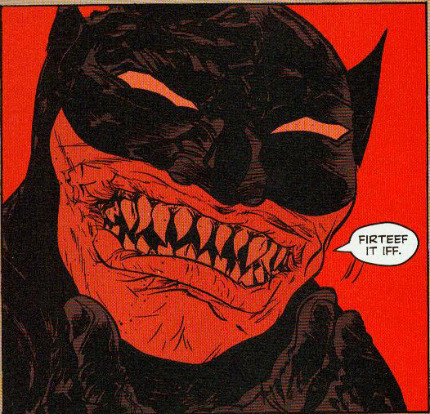
This is the impetus to move the story away from this boring estate and out into the Canadian wilderness. Thomas and Dog take up arms and manage to break into the mansion to steal as much cash as they can before escaping forever. The plan isn’t really a plan but then we’re not dealing with a couple of brainboxes so whatever. Somehow their non-plan goes wrong! John shows up, yelling for Thomas to leave, Thomas shoots him in the face just as James sleepily wanders in. The trauma is the trigger for his mutation and he rushes at Thomas in a fury seemingly punching him in the gut, only for the pull out to reveal James’ bone claws have popped and stabbed Thomas to death. Dog is scarred across the face by James and James’ mother screeches at James to leave as he’s a “beast”. Though why she’s angry is unknown – didn’t he just avenge her husband/his father’s death? But again its implied that she truly loved Thomas and that Thomas was really James’ dad. Either way, it’s a really confusing scene that’s got no emotional weight to it, despite the finale being James making the funniest sound I’ve read in comics ever: “NNAHHHHWWW!” as he kneels, bone claws protruding from his hands. And then James’ crazy mother kills herself.

I will give the book this one thing: James’ crazy mother’s suicide is a truly chilling panel. She has this blank eyed-stare looking straight at the reader with a faint smile about her lips as she holds the shotgun up to her head, murmuring “it’s not going to hurt”. Damn! That is a haunting look – well done, Andy Kubert.

From there, Rose rushes out after James and the two hide out in a barn where he’s developed short-term amnesia, forgetting what just happened and beginning a tradition of this character forgetting who he is and the events in his life. Meanwhile the dumbest police in the world show up and here’s what they see: John Howlett, a wealthy industrialist, his dead wife, a dead groundskeeper obviously poor, holding a gun, his scruffy and violent son also holding a gun and clutching his mauled face. Also, earlier that day when Thomas Logan had been fired, he’d shouted, in front of several witnesses, “I’ll get you, hear me? The whole lot o’ you! I’ll make you pay!”. So what would your conclusion be? Dog tells the policemen that it was Rose – a young teen girl with no experience of or access to firearms and no motivation for senseless killing, who was responsible for all of this mess. Rose. AND THEY BELIEVE HER!!!

This means Rose and James (who’s changing by the page – his healing factor has kicked in now and he’s somehow lost his speech impediment) are now wanted fugitives. But I don’t know why they’re worried: if the police are stupid enough to believe Dog’s insanely improbable story that Rose somehow caused the multiple homicides and abducted young James, I doubt they’d possess the mental capacity required to organise a hunt for a wanted person. But on the run they go, just because that’s what the plot requires - not because it makes sense - from Alberta to even more isolated and rural British Columbia.

Here is where James Howlett completes his transformation into the Logan/Wolverine we know, in the most idiotic, contrived sequence ever written. Rose and James wind up in a camp where they decide to hole up. The camp leader – Smitty – challenges them, demanding to know their names. And this is where James Howlett becomes Logan – because Rose simply states to Smitty that James is called Logan. That’s it. The “great mystery” over his name, revealed! Bear in mind that if she had simply told him James, that it would’ve been accepted without question as well. But James is on the run, you say – well, kind of, yes, but James is a pretty common name, no? It’s not like Smitty was asking for a surname as well, so why wouldn’t Rose go with simply James? Plus there’s no evidence of any police presence or a manhunt so why feel the need to change his name? Most likely these bumpkins have never heard of the Howlett murders. Also, Logan is a much less common first name, so would’ve actually worked against them, especially as that’s the name of the murdered man back in Alberta the police are currently investigating! Does she have no imagination – were the choices just James or Logan? Plus, giving James the name of his father’s murderer? What a slap in the face to James! And why didn’t he simply reject it after he left the camp instead of keep it?

Next, for whatever reason, the newly christened Logan becomes a hunter – he just develops that skill – and learns to drink and smoke cigars like the other frontiersmen that live in the camp. He also learns to fight when the camp cook – imaginatively named Cookie – decides to pick on Logan, just because Cookie’s a dick. The other men of the camp also use words like “knucklehead” and “bub” which Logan adopts, so that’s why he talks like that!

If the puppy’s death earlier in the book was predictable as hell, Cookie beating up Logan repeatedly is an easily predicted resolution – d’you think Logan beats up Cookie by the end of the book? He sure does. Yawn. Where’s the imagination, eh?

The nonsense starts coming thick and fast at this point – Logan runs off upset into the woods after being saved from another beating by Cookie, and runs into some wolves. They stare at one another and more wolves show up, surrounding Logan. Logan passes out for some reason and the wolves gather around him, not trying to eat him, but accepting him as his own. For no reason! Then in the next scene Logan is literally running with wolves, hunting with them! …

And then the dumb naming conventions thing comes up again. We found out how James came to be known as Logan in a pitiful scene, but now we find out how he came to be known as Wolverine: one of the camp’s men says about Logan “He’s a digger, all right. He’s like … you ever seen one of them wolverines goin’ after a root? They never give up till they got it. That’s what that kid is... he’s a wolverine.” I knew I didn’t like the book by this point but I really wanted to throw this out the window after I read that panel. “Monumentally shit” doesn’t quite cover describing that panel.

One final thing needs to be established before the book closes out – we know Wolverine has a thing for Japan, but how did it start? Did he travel there himself and just fall in love with the culture? That would make sense, right? Nope, not according to this book! Smitty, the camp leader and now Rose’s paramour, is a worldly man who has travelled and he gives Logan a book he picked up in Nagasaki about samurais. So that’s why Logan becomes interested in Japan – he was handed a book about it by a random person he once knew. Rubbish.

And then we get to the moronic ending. Logan is fighting Dog Logan who’s hunting Logan down for killing his dad. They fight, Logan pops his claws and Rose, who’s rushing towards them from the crowd to stop him from killing Dog Logan, somehow manages to run right into Logan’s claws, stabbing herself through the shoulder and arm. This then kills Rose. Whaaaaaaaaat?! That’s the best Jenkins and co. could come up with. So a terribly dull character dies and Logan runs off to live in the forest with his wild animals – the end.

That’s Wolverine: Origin – the most overcomplicated, idiotic, and unimaginative origin story ever. It is such a grim, joyless book featuring child abuse and animal cruelty, and yet maybe the worst thing about it is how boring and forgettable it is. There’s nothing truly interesting about Wolverine’s origin despite being one of the most interesting characters in the Marvel Universe. After reading this we’re no closer to understanding why Wolverine decides to become a superhero, using his powers for good, to save lives, etc. With Spiderman’s origin, we understand why Peter Parker chooses to use his powers for good – because his Uncle Ben, an innocent and beloved father figure – died when he didn’t use them when he could have. With Batman’s origin, we understand his motivations for pursuing a life of justice against crime because of his parents’ untimely deaths, and how he came to adopt the symbol of the Bat. With Wolverine: Origin, things just happen to him and inexplicably become bound into his character for no reason, with no meaning beyond the most superficial. He just happens to be called Logan because Rose says so. He’s called Wolverine because some random guy remarks that he’s kinda like a wolverine. His entire time in British Columbia is contrived because of an incident that any person with half a brain could see had nothing to do with Rose and that James acted in self-defence – they could have stayed in Alberta, thus negating everything else that happens after. His powers develop because he’s a mutant and his mutant gene kicks in.

Based on the events of this book, it would make more sense if Wolverine never again popped his claws and refused to live among humans for the rest of his life, spending his days in the forests until his final breath.

All we know is how he came to adopt certain character traits – smoking cigars, saying “bub”, growing sideburns – while the important stuff such as becoming a hunter and becoming animalistic, aren’t dealt with at all. There’s absolutely no insight into the character. It doesn’t even really feel like a Wolverine story – it’s more like a crappy Jack London wannabe tale filled with badly written period drama scenes.

Origin is to Wolverine fans as The Phantom Menace is to Star Wars fans - just a massive fuck you to the fans of the character. It’s a godawful prequel that should never have been made because of how poorly conceived it was. Wolverine is a character whose mysterious past should’ve stayed mysterious, in order to remain enigmatic and interesting. Explaining it in the most convoluted way just how he came by his many names and so forth is a mistake, pure and simple. Maybe the character could have a great origin story but the creative team here simply weren’t up to it and completely dropped the ball, instead creating a forgettable, confusing, laughably stupid and pathetic origin story for one of Marvel’s biggest characters. As for me, I’m just going to retcon this stupid book from my memory - Origin never happened, Wolverine’s past remains a mystery, this book is just some weird parallel-universe crap.

There’s really only one sound that truly expresses the frustration I had reading this book:

“NNAHHHHWWW!”

Wolverine: Origin

Indestructible Hulk, Fantastic Four, The Wake #1 and JLA #4 Reviews


I've posted some new reviews.

First up is Indestructible Hulk, Volume 1: Agent of SHIELD by Mark Waid and Leinil Yu: http://whatculture.com/comics/indestructible-hulk-volume-1-agent-of-shield-review.php

Here's The Wake #1 by Scott Snyder and Sean Murphy: http://whatculture.com/comics/the-wake-1-review-scott-snyder-and-sean-murphy.php

Fantastic Four, Volume 1: New Departure, New Arrivals by Matt Fraction: http://whatculture.com/comics/fantastic-four-volume-1-new-departure-new-arrivals-review.php

And finally, Justice League of America #4 by Geoff Johns here: http://whatculture.com/comics/justice-league-of-america-4-review-geoff-johns.php

Enjoy!

Tuesday, 21 May 2013

Batman Year 100 by Paul Pope Review - An OK Dystopian Elseworlds Adventure


Set in 2039 (100 years after Batman debuted in Detective Comics #27 in 1939), Gotham has become a police state and the overbearing authorities know everything about everyone. A cop is killed and Batman is suspected as he was at the scene - an obvious frame job. It’s also the first appearance he has made in public for years and people have forgotten his existence - is the mythological Batman real? He is nonetheless hunted by psychic cops, robot dogs, and other futuristic crime-fighting tools. In the course of finding the real killer, Batman discovers that there’s a doomsday weapon being sold on the black market by the (clearly corrupt) cops in charge. Will he stop them in time...?

Year 100 is a very uneven book that I really wanted to like. There’s the dystopian future angle, and the attention-grabbing title adding to the mystery of whether Batman is still Bruce Wayne (it couldn’t be - could it?), both of which I liked, but while this is an initially exciting story, as it goes on Paul Pope keeps readers at a distance from the characters and this world by revealing very little information about them.

How did things get to this point - Gotham as a police state? What event triggered such an extreme reaction? If this is Bruce Wayne as Batman, how is that possible - Wayne would be somewhere around 120-150 years old, so who is Batman? What happened to his fortune? What of the rogues like the Joker? What happened to the Justice League? We’re never told the answers to any of these questions.

So it’s quite a limited view of the future. On the one hand that’s great because we don’t need someone there literally explaining the history of this Gotham, but on the other hand a hint as to the origins of this dystopian future would’ve been appreciated for a more satisfactory reading experience. As such, Pope’s narrative deftness makes the book feel that much easier to forget and become less involved with because we’re never given the chance to inhabit this world. 

Also, I found that the plot ended up becoming more of a hindrance than an enjoyable story. At first it’s a fast-paced, exciting story of Batman on the run and then after about 100 pages, Pope decides to explain the plot by having the reader follow Batman figure out what’s going on, step by tedious step. It’s an overlong sequence where for nearly 40 interminable pages Batman sits in a room and talks with Robin and Oracle. Exposition, exposition, exposition - it really puts the brakes on the story while also being really boring to read. I get that the reader needed to be caught up to the point of the book, but what a clunky way of doing it. 

Some people have complained about Pope’s art but I loved it. It’s different, it’s fluid (which is an excellent quality to have when it comes to the action), and he somehow manages to make machinery feel organic! The Batmobile in this book is an awesome tricked-out motorcycle that, when not being used, hangs in such a way (dripping oil like sweat) as to look like a giant sleeping bat - it’s a really cool effect. Pope also has Batman live up to his name, making him look animalistic in fight scenes, wearing sharp false teeth, and also on the cover where he looks almost rodent-like perched atop a pair of chimneys. I also liked that his mask is similar to the original Bob Kane design while also looking like something a luchadore would wear, and the fact that the cops of the future look like hockey players with colourful uniforms instead of boring black kevlar. 

I would’ve liked Pope to have at least hinted at Batman’s identity, but I’m fine that he didn’t. I get that it’s not so much about the identity behind the mask as the mask itself as a symbol of justice and hope for the disenfranchised and that it doesn’t matter who wears the cowl, just that someone wears it and exemplifies the ideals of Batman. The book is basically about Batman fighting the Man in a futuristic setting - dystopian future meets Hong Kong action movie - and that’s fine as far as it goes.

I did find the ending a bit silly with Pope using the kind of ending that’s been used too many times - Batman tells the baddies that he knows all about their plan and then the Bad Guy says: “How did you know?” to which Batman grins and says “I didn’t but you just confirmed it for me”. Ugh. It’s that smarmy playground-ish kind of ending that doesn’t befit the World’s Greatest Detective - though it does add credence to the idea that this isn’t Bruce Wayne after all as I think Bruce would’ve figured it out himself rather than guessed.

Overall, Year 100 isn’t a great Batman book but it’s not a bad one. It has enough in it to make it worth picking up but it felt overlong by half, the ending was disappointing, and there were simply too many unanswered questions that stopped it from being a satisfactory read. It’s got some great art and is an interesting Elseworlds concept, but it’s not an essential Batman book to read.

Also included is the 18 page short Pope wrote/drew back in 1997 featuring a German Jewish Baruch Wane/Batman in 1939 Berlin, fighting against Nazi oppression in the lead up to the war’s outbreak.

Batman Year 100

Avengers, Volume 1: Avengers World by Jonathan Hickman Review


I really like Jonathan Hickman’s Manhattan Projects and he strikes me as a good ideas guy who puts together really cool designs like logos in his books, but, man, try as I do, I just cannot warm to any of his superhero comics. They’re all filled with what seem like big ideas - “gods” creating life, high evolution, solving galaxy-sized problems, looking at the universe as a whole - but reading it is just the blandest, most boring experience. 

The comics almost always feature narratives along the lines of creation, space, the universe, and abstract characters like a New Adam or the Mother of the Universe. The first three issues of Avengers World has a trio of World Engineers who’ve lived for millions (or billions or whatever, it doesn’t matter) years creating and destroying worlds and they’ve now set their sights on Earth to terraform into a new utopia, wiping out humanity. Except they’re on Mars which they’re turned green with their alien tech and have decided to bombard Earth with organic bombs a la the giant bugs in Starship Troopers. 

And then we get to the Avengers who teleport over to Mars to fight these god-like aliens. In what world do characters like Black Widow, Hawkeye, or Falcon stand a chance against these ridiculously powerful creatures? Even Cap, the team leader, really shouldn’t make a dent on any of the alien creatures, throwing his shield at them or no. The only ones who could make a difference would be Thor, Hulk, Hyperion - the truly powerful members of the Avengers. It’s farcical to believe that every member of the Avengers can make a difference in this scenario - even fan favourites like Spider-man and Wolverine seem useless in this story. 

I get that Hickman is “going bigger” with this storyline but his additions to the team lineup render almost all of them useless. I mean, the Mother of the Universe? Why even bother having any other member on the team? Considering her powers are limitless and insanely powerful, it seems wholly pointless having someone like Spider Woman on her side as her contribution is completely diminished. 

Hickman’s bland storytelling, which involves characters talking abstractly about, what become, boring concepts - we’ve got to get bigger, we’ve got to get smarter, etc. over and over - makes for a truly tedious read. After the world-building aliens in the first three issues, the second half is a cobbled-together assortment of random space battles and setting up another Hickman-esque event storyline called The White Event. I’m trying but I really can’t connect with his superhero stuff - reading this book makes me feel that he doesn’t care at all and that he cares a lot all at the same time. I know, it’s really weird. 

But honestly, I did not care about anything in this book even for a moment. Big ideas, sure I guess - space adventures, god aliens - but executed so poorly as to render interesting ideas, dull. Once again, Hickman fails to interest with another superhero book. The one time I enjoyed the book was looking at the variant covers gallery and seeing Deadpool dancing gangnam style. If only that had been this book...

Avengers Volume 1: Avengers World

Why The Long Halloween Is The Most Overrated Batman Book Ever


Want to know exactly why The Long Halloween is the most overrated Batman book ever? Here's a link to an article I wrote explaining the reasons: http://whatculture.com/comics/7-reasons-why-batman-the-long-halloween-is-the-most-overrated-batman-book-ever.php

And if you think all I do is complain about stuff, here's a link to the best Superman books I highly recommend seeking out, especially as this is a Superman summer with Man of Steel just around the corner! Full list here: http://whatculture.com/comics/8-super-essential-superman-books-you-must-read.php

And more generally, here's a link to all the articles I write for WhatCulture! They're mostly comics reviews and all are fantastic: http://whatculture.com/author/noel-thorne

If you want to know what a positive review by me looks like, here's the link to my review of Batman Incorporated, Volume 1: Demon Star: http://whatculture.com/comics/batman-incorporated-volume-1-demon-star-review-grant-morrison-and-chris-burnham.php

And Hawkeye Volume 1: My Life As A Weapon: http://whatculture.com/comics/hawkeye-volume-1-my-life-as-a-weapon-review-matt-fraction.php

Both of which are a ton of fun.

Here's a link to my latest review, slamming Aquaman, Volume 2: The Others: http://whatculture.com/comics/aquaman-volume-2-the-others-review-geoff-johns-and-ivan-reis.php

As Punk Rock As Avril Lavigne: A Review of Punk Rock Jesus by Sean Murphy


I feel like I should qualify this review as it deals with a major religion in a clearly blasphemous way and I wouldn’t want anyone thinking I didn’t like this book for religious reasons: I’m not a Christian and I’m not religious in any way. If I had to label myself anything it’d be secular humanist. 

Ok, now that that’s out of the way: Punk Rock Jesus is a dumb book. It’s dumb like Point Break except it’s not nearly as funny and I get the feeling it’s trying to be intellectual and profound which makes it worse. 

But let’s start properly. A TV company creates a show called J2 where they use 2000 year old DNA from the Shroud of Turin to clone Jesus. They select a telegenic virgin female and impregnate her with the DNA and the pregnancy, birth, the subsequent years raising the child, everything, is filmed for reality TV. The baby boy - Chris - lives a kind of Truman’s Show life where he grows up on the J2 island in front of the cameras. That is until his mum dies, he hits puberty, and he discovers punk music. He becomes the frontman of a punk band called The Flak Jackets and rebels against Christianity by becoming an atheist.

Here are my problems with this book: 

How would a TV company get away with keeping a young woman and her baby prisoner? That’s the premise for most of the book. Gwen (Chris’s mum) eventually becomes sick of the TV show and wants to leave but she’s stopped at every turn, essentially becoming a hostage. The cameras show her desperately begging to leave but no-one, not the government, no-one at all, allows her to leave. So we’re supposed to believe that a TV company is allowed to suspend human rights in America and no-one is going to say boo? 

Gwen trying to escape is, by the way, fully half of the book! The first half is all about Gwen trying to escape this super-Christian island. We only see the Punk Rock Jesus at the halfway point of this book. 

We’re also supposed to believe this Jurassic Park crap about cloning Jesus from the Shroud of Turin and then we’re supposed to believe that everyone buys into this! Look, we’ve really cloned Jesus, this kid is definitely him, don’t look at any evidence or think for a second, just believe us - oh you do? Great. The people that populate this world are monumentally thick and gullible. 

All of the Christians are one-dimensional caricatures. To even say they’re characters is giving Sean Murphy way more credit than he deserves. Murphy is simply a terrible writer - he doesn’t understand nuance or subtlety, so his characters, all of them, are pathetic creations that are totally unconvincing. All Christians are apparently super-crazy, gun-bearing, sign-toting loonies, and atheists are all intelligent, bar none. Like I said I’m not a Christian but I thought this was such a broad and unbelievably dumb swipe that I felt bad for any Christians reading this tripe.

The TV exec who set this J2 show up, Slate, is of course insanely evil. This is guy who in public is transparently “nice” and behind the scenes is literally trying to drown babies! All for the sake of ratings. Murphy just has no idea. The other characters are just as moronic. Thomas, the ex-IRA bodyguard, is maybe the one guy who’s got more than one dimension to him though that only manifests in the final act - up until then he’s your basic unstoppable tough guy character. 

But the worst character of all is Chris himself. Besides being this obnoxious teen who decides to become a punk rocker, we’re supposed to believe that a 14/15 year old is the perfect voice for a band. Yeah, pick a kid whose voice is modulating from high to deep - that’s who you want as a singer! There’s also this laughable scene where an intellectual (and an atheist of course) says, quite seriously, “Chris’s anti-theist lyrics are incredibly well-written and extremely moving - clearly the product of his massive IQ.” What’s that writing rule - show, don’t tell? So rather than actually write some “well written and extremely moving” lyrics, Murphy has a “credible” character tell us that the lyrics are “well written and extremely moving”. Hack writing alert! 

In an even more laughable scene is Chris’ realisation of a world outside Christianist dogma - the only world he’s known up til now because crazy-evil Slate has kept all that information from him and yet at this convenient point in the plot, is unable to stop Chris from finding out about Darwin, etc. We get this potted history (1 page) of thinkers from Galileo to Lincoln to Darwin to Carl Sagan - Chris literally says “Sagan was awesome!” and Sagan is drawn way cooler than he actually was. Hmm, I wonder how we as readers are supposed to feel about Carl Sagan?

Chris’ “shocking” speech where he comes out as a non-Christian is an intellectually lightweight gumbo of generalisations and banal phrases: “Religion is dangerous - it impedes human progress like a virus. It’s a global opiate for the masses, it numbs us with feel-good magical thinking and inflates our egos”. Gee, thank Chris, the veil has been lifted and I see clearly now for the first time.

I won’t say how it ends but the story gets even stupider culminating in a scene that’s as anticlimactic as you can get. I was left wondering what book other critics had been reading. These are actual quotes about the book: “Belongs in the same league as Watchmen, it’s a complete game changer” - Craveonline; “Sean’s work is flawless...” - Pop Matters; “In more ways than one, this is a legend in the making” - Comic Book Resources. Well, I know which sites to avoid for comic book opinion at least. Suffice it to say, they’re all hopelessly wrong.

I enjoyed Sean Murphy’s work with Grant Morrison on Joe the Barbarian and his artwork in this book is fantastic - it’s easily the best quality of the book and it’s saving grace - but he just can’t write. He has no clue how to create character, the dialogue was stilted - every page I was mentally rolling my eyes at yet another badly written conversation - and he has no sense of plotting. The book ambles along at the best of times and the story is muddled and frequently boring. It’s a 222 page book that feels twice as long.

I don’t know what this book was supposed to be about - some kind of representation of Murphy’s own journey through his feelings on religion maybe - but from what I read I can say this is one of the least affecting, most boring Jesus-returns stories I’ve ever read. If you want to read a good Jesus returns story, check out John Niven’s “The Second Coming” where Jesus comes back and goes on an American Idol-type show, which is genuinely funny, clever and moving. Or even check out James Frey’s flawed but interesting “The Final Testament of the Holy Bible” where Jesus returns as a homeless man told from the perspectives of his various followers.

This book is about as punk rock as Avril Lavigne, as edgy as a spoon and a crap comic to boot.

Punk Rock Jesus

Sunday, 7 April 2013

The Doors of Perception by Aldous Huxley review


Have you ever had to be the designated driver while your buddies got wasted? Watching them laugh at nothing and behave like asses while you’re (unfortunately) stone cold sober is a pretty miserable experience as your mind hasn’t been altered by chemicals. Reading “The Doors of Perception” is like this - Aldous Huxley does mescaline and then describes it extensively to the bored reader who is probably not on mescaline. And it’s not nearly as fascinating as Huxley believes it to be - because we’re probably not on mescaline (I know I wasn’t when reading this crap). “The Doors of Perception” is a 50 page essay and it’s sequel, “Heaven and Hell”, a 33 page essay, read like far longer works because they’re so unreadable. 

The point of the essays is that Huxley believes there is more to human nature than the base level of survival and that it’s because of how our species has developed that has made us forget ways in which we can perceive things beyond the ordinary. He wants to allow people to experience mescaline in order to see things he believes are there but beyond our reach without the help of hallucinogenics. 

And here’s the big problem I have with this view - it’s that assuming that what you experience while high is worth more and is more real than what you experience everyday. I mean, what you’re experiencing is simulated with the aid of chemicals - why would it be more “real” than reality? A problem endemic to this book is that Huxley is talking about experiences that are purely visceral and “beyond man-made constructs” such as language and are therefore indescribable - yet he’s trying to describe them with language. Which is why you get drivel like this: 

“I spent several minutes - or was it several centuries? - not merely gazing at those bamboo legs, but actually being them - or rather being myself in them; or, to be still more accurate (for “I” was not involved in the case, nor in a certain sense were “they”) being my Not-self in the Not-self which was the chair.” p.10

“Confronted by a chair which looked like the Last Judgement - or, to be more accurate, by a Last Judgement which, after a long time and with considerable difficulty, I recognized as a chair - I found myself all at once on the brink of panic.” p.33

Good lord, this crap goes on and on for nearly a 100 pages and it doesn’t help that he’s not a very good writer to start with. His rambling style fused with a dry, almost academic, vernacular makes reading this book of insubstantial observations and half-formed ideas all the more insufferable. All he proves is that drugs make intelligent people sound like morons.

He feebly attempts to make the argument that researchers and scientists don’t take “spiritual” experiences seriously because they can’t see it, measure it, rationalise it, in any scientific way. Duh. He bewails methods (eg. taking mescaline) that allegedly “make you more perceptive, more intensely aware of inward and outward reality, and more open to the spirit” which constitute the “non-verbal humanities” aren’t taken more seriously. Well, when you put it like that, Aldous...

He attempts to rectify this by constantly referencing William Blake, Homer, and Goethe in an effort to make the essay appear academic and therefore substantial and worthy of consideration. It’s truly pretentious and pathetic in its ineffectiveness. 

This quote basically sums up the essays:

“Those folds in the trousers - what a labyrinth of endlessly significant complexity! And the texture of the grey flannel - how rich, how deeply, mysteriously sumptuous!” p.16

Wooaaaah, Aldous got fucked up on mescaline!

The Doors of Perception / Heaven and Hell

Saturday, 6 April 2013

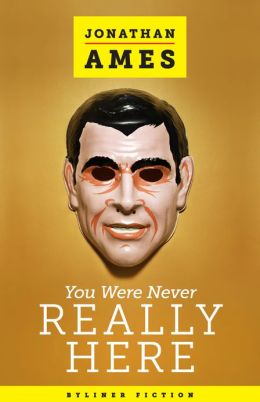
Batman: No Man's Land Volume 5 Review, You Were Never Really Here Review (Greg Rucka, Jonathan Ames)

Do I need to say "spoilers"? I guess so - spoilers ahead. I wrote both today and one is a hugely negative look at the final book in the Batman: No Man's Land series, Volume 5, written by Greg Rucka, and the other is a gushing, enthusiastic review of Jonathan Ames' recently published Kindle Short "You Were Never Really Here". Enjoy!

*


And so we come to the end of (what is in my opinion) the worst Batman event book ever, No Man’s Land, Volume 5. 

No Man’s Land’s basic setup fails to convince me so throughout the series I’ve never really believed any of this could happen anyway: a massive earthquake destroys Gotham so the US Government abandons it, leaving the remaining citizens to fend for themselves for over a year. I know Bush 2 and FEMA abandoned those devastated by Katrina for a week but they ended up helping those people eventually and helped get Louisiana and surrounding states back on their feet. So abandoning one of the biggest (fictional) cities in America because of earthquake damage for a year never made sense to me. 

That’s the first big boo-boo - the second is that Bruce Wayne would abandon Gotham too! The Dark Knight of Gotham would just wander off and bum around Monaco while his city - HIS city - was in ruins? Makes no sense at all. But that’s how Book 5 starts off, with Bruce shooting craps in Monaco. Ok, whatever Greg Rucka. Oh and Greg Rucka is one of the most overrated writers in comics today - I’ve yet to read something of his I’ve enjoyed unreservedly and NML stands as one of his worst achievements to date. It doesn’t help that this Bruce in Monaco sequence is illustrated by the godawful Greg Land. 

But while the US government have abandoned Gotham, Lex Luthor hasn’t and he shows up doing what the government should’ve been doing on Day 1, and sets about rebuilding the wrecked city. But Lex being Lex, he’s got more sinister plans... and here’s a perfect example of why Rucka is such a piss-poor writer - his depiction of Luthor is of the cackling, hand-rubbing cartoonish villain sort that hacks resort to when they’ve got no ideas of their own. So rather than a nuanced Lex like Morrison or even Azzarello would write, we get the crappy Lex, a rather dull-witted, transparently “evil” baddie which makes the book that much more boring to read. 

Bane makes a pointless cameo and then Joker finally makes an appearance and totally fails to make an impression. Here’s a good rule of thumb when reading Batman books with Joker in - if the Joker isn’t creepy or disturbing or even interesting, then the writer is probably Greg Rucka. I mean, terrible. But yes, the same thing in my book. Joker is an amazing character and, in the right hands, can elevate the story exponentially - in the wrong hands, he’s basically playing off of his reputation rather than doing anything new. Such is the case here. His “plan” involves babies (gasp! the monster!) but he doesnt’ actually kill any, and then he kills a really minor (not in age, just relevance) character which Rucka probably thought gave this book emotional weight it doesn’t have. 

Huntress is another character who for some reason is totally out of character as well. She spends the book hanging around a nutjob who’s basically acting like a tyrant and then begins executing his men one after the other - because he’s a nutjob! And her response? Standing there, hopelessly. That isn’t Huntress. If it were, she wouldn’t be called a hero of any sort to permit such behaviour. She eventually acts but not before half a dozen men or more are dead. Useless. 

As for the ending, which basically closes with the death of a character who, even the most hardcore of Batman fans will have trouble remembering, it is disappointing and dull. It kind of ends with a shrug like “I guess it’s over? Back to normal then”. Really, what a terrible event - it was so meaningless and boring. I’m having a go at Greg Rucka (partly because I’ve read other books by him so know he’s no good in general) but I’m sure any other writer, no matter how capable, would have a dickens of a time trying to squeeze anything good out of this awful setup. 

Be warned if you’re setting off on reading this bloated, overwrought affair - NML starts off very ordinarily and quickly loses steam until all drama and tension is long gone by the end and you’re left wondering why you bothered in the first place. NML is the worst!

Batman: No Man's Land Volume 5


*


If revenge is a dish best served cold, Joe (the main character of this story) is serving up some icy entrees. If this story were a person it’d be lying passed out face first on the floor of a dive bar in a puddle of various human (and some inhuman) liquids, covered in cuts and bruises and, upon hearing your approach, would stagger upright, spit out a tooth, take a double shot of whiskey and lurch outwards to pick a new fight with anyone. The shadow of death and hopeless despair hangs over this story - and I love it! 

Jonathan Ames is best known for his excellent (and cancelled long before its time) HBO series “Bored to Death”, a comedic detective series about an inept amateur sleuth and his friends solving cute and silly mysteries while stoned, in and around Manhattan. This ominously-titled story “You Were Never Really Here” is the polar opposite to that show’s tone. This story is pitch-black noir at its finest. 

Joe is a past-middle aged hitman with a troubled past. Beaten ruthlessly by a now-dead alcoholic father in his youth, he took his psychologically scarred self into the marines and got trained up to kill and fight, becoming the best. Leaving the army he went to work at the FBI and when he left he found employment working as an assassin-for-hire. Now living with his senile and deaf mother, he heads out on a case for a politician that goes pear-shaped when he realises too late the mob are involved and things aren’t as they seem. Now, Joe, a jaded and worn-out man, armed with a hammer, sets out to save an innocent girl’s life no matter what the cost to himself because he doesn’t have anything left to live for. 

A highly skilled killer with a deathwish on a mission - is there anything better to read? 

The unstoppable tough guy is a trope we’ve all read many times before, in books and comics and film, but it’s told again and again because when it’s done well, it’s compelling as hell and Ames’ writing is so good, that this story is well worth reading. The writing isn’t as lifeless and limp as Lee Child or James Patterson, though the story is similar to something both would write, but reads much more vibrantly and intelligently. It’s still exciting and dark and full of action but Joe as a character really feels like a person and Ames’ deft touch gives meat to the story which would otherwise in summary feel too straightforward to be interesting. Ames’ writing is Chandler-esque but modern - all the archetypes are here but feel updated and more visceral. 

What’s amazing too is that it’s only around 50 pages long but feels like Ames got an entire 300 page novel reduced to the bare minimum in this story. By the end, I could’ve read another 200 pages easily. I’d gotten to know Joe and wanted to see him continue his avenging mission, right to the end - here’s hoping Ames decides to develop this short story into something more substantial, and if he does, I’m there. 

If you enjoy Raymond Chandler, Michael Connelly, Frank Miller’s “The Hard Goodbye” (for Marv), Garth Ennis’ “The Punisher MAX” series, the movie “Taken”, and of course Jonathan Ames’ previous writings, this one is right up your alley. “You Were Never Really Here” is an amazing short story, well worth checking out. Read it wearing your best fedora.

Saturday, 23 March 2013

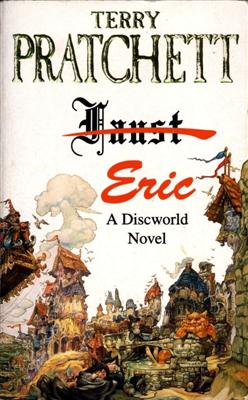
Why I Love Eric by Terry Pratchett


“‘Multiple exclamation marks,’ he went on, shaking his head ‘are a sure sign of a diseased mind.’”

I LOVE TERRY PRATCHETT/DISCWORLD/RINCEWIND!!!!!!!!!!!!!!!!!!!!!!!!!!!!!!

Ahem. I aten’t crazy. 

Like a lot of people I first read Pratchett when I was a teenager and have stuck with him well into adulthood. So, going through a dry spell in reading where everything I picked up seemed to, well, suck, I was immediately drawn to a small paperback that’d fallen off my shelf - “Eric”, a book I haven’t read since I was 12 (I’m now 28). Coming to a beloved book after 16 years is great as you know you’ll like it and you’ve all but forgotten everything in the story.

Eric is the Disc’s first demonologist hacker who summons a demon to grant him three wishes. Except the “demon” is Rincewind, the Disc’s most inept wizzard (the second z is intentional as Rincewind can’t spell), who happens to have gotten stuck in the Dungeon Dimensions and, by chance, wound up in a teenage boy’s bedroom. The three wishes Eric asks for - To be Ruler of the World; To Meet the Most Beautiful Woman in All History; and To Live Forever, should be easy to arrange. I mean, when have wishes ever gone wrong for anybody in a story, especially one with “Faust” crossed out on the cover? 

I’m delighted to say that my impressions of the novel haven’t changed in 16 years and that I still loved reading this. It’s still fresh and funny and fast paced and so damn entertaining. It reminded me exactly why I fell in love with Pratchett’s Discworld in the first place and what propelled me through all of his books so quickly. 

Here are some quotes from the novel that I adored: 

“The gods of the Disc have never bothered much about judging the souls of the dead, and so people only go to hell if that’s where they believe, in their deepest heart, that they deserve to go. Which they won’t do if they don’t know about it. This explains why it is so important to shoot missionaries on sight.”

“Rincewind had been told that death was just like going into another room. The difference is, when you shout ‘Where’s my clean socks?’, no-one answers.”

“No enemies had ever taken Ankh-Morpork. Well technically they had, quite often; they city welcomed free-spending barbarian invaders, but somehow the puzzled raiders found, after a few days, that they didn’t own their horses any more, and within a couple of months they were just another minority group with its own graffiti and food shops.”

Great, right? 

It also makes me sad to see the decline in his writing recently. I got through a third of “Snuff” in about a month and gave up thereafter. I haven’t returned to it in nearly a year. Also, those Tiffany Aching books are pretty diabolical - I know they’re aimed at “Young Adults” but really, kids can read the “adult” Discworld books. I did, and I turned out fine. Plus the adult humour is really subtle and will go over a kid’s head. I didn’t pick up on it when I was 12 but at 28? Yeah I noticed it. Pratchett’s really clever like that and his books can be read for all ages. Those Aching books are just pandering and condescending. Kids, teenagers, are smarter than that and should just read the regular Discworld stuff rather than go for Discworld Lite. And yes, I realise the decline in writing is linked to his Alzheimer’s which I couldn’t be more saddened by, but still. Reading this early Discworld book and comparing it to his most recent one is really eye-opening. There aren’t any quotes from “Snuff” that I’d type out to read to myself over and over, unlike “Eric”. 

“Eric” is set after the events of “Sourcery” but before “Interesting Times” - both books I encourage you to seek out if you enjoyed this - but it can be read as standalone book too. It might even be the best introduction to the new reader of Pratchett. Rincewind and the amazing Luggage (a steamer trunk with dozens of tiny legs that’s sentient but silent) are the main characters, there are appearances from Death and the Librarian, and you get a tour of the Disc courtesy of the three wishes that takes Rincewind and Eric across time and space. The story is straightforward and you don’t need to have read the half dozen or so titles that preceded it - it’s a satire on the legendary Faust story. Seriously, you can just jump on board with this book and, if you like Pratchett’s style, continue on your way. And due to it’s shortness, It’s the perfect sampler. 

I have to mention the Luggage - I’d forgotten why I was so enchanted with the Rincewind stories and it’s partly RIncewind for his cowardly wit, but it’s also for the Luggage. They’ve got this great chemistry like a buddy cop story where one of the cops doesn’t speak and might be homicidal. Luggage has some amazing scenes in this as well, particularly his introduction which is so fantastic and funny so I won’t spoil it here. And Pratchett’s humour has never been more prevalent than in this story. Here are some more quotes I loved: 

“There’s a door”
“Where does it go?”
“It stays where it is, I think”

“What’re quantum mechanics?”
“I don’t know. People who repair quantums, I suppose”

And these two gems about war:

“The consensus seemed to be that if really large numbers of men were sent to storm the mountain, then enough might survive the rocks to take the citadel. This is essentially the basis of all military thinking.”

“The sergeant put on the poker face which has been handed down from NCO to NCO ever since one protoamphibian told another, lower ranking protoamphibian to muster a squad of newts and Take That Beach.”

“Eric” is just a really, really fun read. I loved it, it was just what I needed to remind me why I love reading and that a truly good book trumps nearly everything else in the world. 

Never read Pratchett? Check out “Eric”. Been a while since you read early Pratchett? Check out “Eric”.


Sunday, 3 March 2013

Gunning for Sanity: A Review of Stephen King's essay "Guns"


What struck me as so astonishing about the points raised in this 25 page essay on guns by bestselling author Stephen King, was not the reasonability of his points but that they needed stating at all. He's not against the Second Amendment, he doesn't want it repealed especially as he owns 3 handguns himself - no, he wants gun control, like millions of other Americans, because he's sick of seeing more and more news stories of yet another maniac loading up on firepower and shooting random innocents because they're miserable and crazy.

King wrote a novel as a teenager about a kid who goes into a school with a gun, then rewrote it years later and published it under the pseudonym Richard Bachman as "Rage". Unfortunately, as King points out, the novel became a touchstone for some gun toting lunatics who went on to kill others in schools and he ended up withdrawing it from publication. To him it was the responsible thing to do.

After detailing the most recent atrocities of gun violence in America - specifically Sandy Hook and Aurora - he reaches the crux of the essay which is that assault weapons should be banned, clips should be limited to 10 bullets, and background checks be made more thorough. Very reasonable - and amazing that anyone would oppose this!

What is the use of an automatic assault rifle? Hunters readily admit that if you shot game with it they'd be inedible making the whole point of hunting in the first place pointless. What, you're going to defend your home with an automatic weapon?! It doesn't make any sense that such military grade weaponry should be made readily available to members of the public. And limiting clips to 10 bullets? How many do you need to take out the imaginary burglar just itching to get into your place? If you need more than 10, you probably shouldn't have a gun to start with. Thorough background checks and harsh penalties against those who lie to obtain guns - who could be against this, honestly!

That these points are still issues shows just how badly America needs this discussion on gun control, especially as the news becomes morbidly repetitive in its stories of yet another disturbed young man (it always seems to be young men) pushed too far for whatever reason and deciding to check out in the bloodiest way possible. It's good that someone as famous as Stephen King use his celebrity to bring more focus on this important issue, using his writing ability to express clearly and eloquently the matter at hand. Here's hoping reason wins.

Guns

Friday, 1 March 2013

A Hit and Miss Project: A Review of Graeme Simsion's novel The Rosie Project


Don Tillman is an Associate Professor of Genetics with (probably) Asperger’s Syndrome who has decided that, as he is nearing 40, he will solve “the wife problem” (ie. not being married) by creating a questionnaire that will ascertain, for him, the perfect wife and then marry her. That is until he meets Rosie, a grad student working part-time in a gay bar who’s looking for her biological father, and slowly Don’s “Wife Project” becomes “The Rosie Project” as he realises he’s falling in love with her. 
I say that Don probably has Aspergers because it’s never explicitly stated but as he narrates the book in the first person, the reader is immediately aware that he sees the world differently than the rest of us. It’s kind of like having Sheldon Cooper from “The Big Bang Theory” talking to you - Don is a genius with no social skills who’s unable to read facial expressions and has a highly regimented lifestyle and peculiar way of speaking. Couple that with the opening scene where he gives a talk on Aspergers and it’s highly suggested that he has it. Not knowing anyone with Aspergers, I can’t tell whether he sounds convincingly like someone with it but what little I know of the condition suggests that his personality is unlikely to change as dramatically as Don’s does throughout the book. It’s almost like his meeting Rosie reverses the condition. I mean, he’s unable to feel love - but he can? He’s unable to read facial expressions or understand social conventions - but then he can? 

Nevertheless I thought the first 200 pages of the book were charming. Don is a likeable guy whose eccentric lifestyle makes a change of pace to the usual rom-com formula and the different angle it gives to the genre made me interested in it even though romantic comedies aren’t usually my thing. There were also some excellent scenes that stuck out memorably like Don and Rosie’s first date, from using aikido on the waiters to altering time and having dinner on a whiteboard (not as surreal as it sounds but nice touches anyway), and Don and Rosie’s moonlighting as cocktail waiters and Don using his remarkable memory (eidetic?) to take complex drink orders for dozens of people at a time. I read the first two-thirds of the book in a couple days, smiling a lot throughout. And then I got to the final third which took me over a week and ruined the book for me. 

The first 200 pages had been unique to the rom-com genre and felt highly original which is why I responded so well to it - it wasn’t going over the same ground countless other stories had gone over before. The final third is all about convention and it opens with a scene in New York. The story is set in Australia but because Don and Rosie are hell bent on finding Rosie’s biological father, their search takes them to two possible fathers in NY. This 50 page section felt completely contrived and could’ve been cut from the book entirely. 

This book was originally a screenplay and these scenes felt very cinematic and included so that film backers would have recognisable locations for their film to make it easier to sell, rather than serving the story. Yes, the finding Rosie’s real dad storyline is in play but if you took those two people away from NY and cut it entirely, the book would’ve been snappier. As such it feels really contrived and dull, like the scene in the movie where the two romantic leads get to do a kind of montage sequence of things. It also constantly references other romantic comedy movies the entire time too, adding to the feeling that this is a homage to the genre and included because that’s what’s expected when you do something like this. 

Then the final 70 or so pages are about Don winning Rosie back and it’s done in such a conventionally rom-com way that I totally lost interest. Worse, Don’s character didn’t seem consistent in this part either (see the criticisms in the Aspergers section above). 

I’ve used the label “romantic-comedy” throughout because that’s what the marketing says it is but it’s not. It’s romantic, sure, but it’s not funny. I didn’t laugh once and didn’t think Don’s numerous social faux pas to be particularly funny either. Worse still are the scenes which are clumsily designed to be funny and feel very forced, like when Don is learning sexual positions from a book and uses a skeleton (he’s at the university for this scene so it’s not a Dahmer moment or anything) and the Dean walks in on him. It feels like the kind of scene in a sitcom where the canned laughter goes on and on as the camera switches from Don’s face to the Dean’s and back again while the audience begins to clap and laugh at the same time. It might as well be labelled “funny scene”. And it’s not. 

Despite my criticisms, I was quite happy to give this book 3 stars - until I read the end. Now I know the ending shouldn’t have more importance over any other aspect of the story, whatever the genre, but the ending to this book is especially bad. So Rosie, at the very start when she’s introduced to Don, tells him about her dad Phil, a man who raised her alone after her mum died when Rosie was 12, who’s a person whom she doesn’t particularly get along with (largely because of a minor quibble which she’s unreasonably held against him for her entire life) - but no more so than any other person who doesn’t get along with their mum or dad for whatever reason. Except she’s convinced herself he can’t possibly be her real dad and that her real dad must be out there somewhere. This is basically the motivation for everything Don and Rosie do in this entire book and right off, I thought “I bet it turns out Phil IS her real dad after all”. Well... I won’t give it away but you can kind of guess what happens in the end. And I really, really hated that. Don all but says what I was feeling in the second-to-final sentence of the book and I immediately dropped the book down another star. 

This book definitely has some good moments and Don is a memorable and oftentimes delightful character, but the final third of the book really frustrated me. If the book had been more tightly edited with the NY sequence thrown out and had had a less predictable ending, I would be enthusiastically recommending this novel. As it is, it is a flawed debut novel that’s well written but severely lacking in crucial parts of the story reducing it from a charmingly quirky romance story to yet another rom-com with no surprises and a sloppily rushed final act. Graeme Simsion can write and he might one day write a brilliant novel but sadly “The Rosie Project” is not that book.
The Rosie Project

Friday, 8 February 2013

Justice League, Volume 2: The Villain's Journey Review


Lotsa spoilers in this review - you've been warned!

*


“STAAAY!” “AWWAAY!” “STAYAWAAYY!” screech the toothy horrors that burst off of the first page of the second Justice League book. It serves as a not-so-subtle warning to potential readers that this volume of Justice League is pretty diabolical and might best be avoided. As a fan of the first book, I was surprised to see how low the quality of writing had dipped and disappointed that by the second book the magic had all but gone. However, like the JL in the story, I hacked my way through the monsters and delved deeper into “The Villain’s Journey”, a confusing story about nothing.

The villain in question is Mr Graves, a bestselling author of a book about the Justice League with an interest in the supernatural. After he and his family are saved from Darkseid and his minions by the JL (see the first volume), his family become sick from exposure to Darkseid’s omega energy and die. Warped with sickness and grief he seeks out an unholy power in the uncharted mountains of Asia to reunite him with his loved ones and destroy those who had taken them from him - the Justice League!

This book gets off to a really slow start. The first issue is the prologue to the “Villain’s Journey” and frankly this could’ve been two pages instead of a whole issue, two pages added to the first chapter of the story for all the relevance it has to the arc. The second issue is by far the worst though. This is the Green Arrow crossover that sits awkwardly in between the prologue and first chapter of the main storyline. Green Arrow wants to join the Justice League SO BAD! He follows them everywhere, whining “aw, c’mon guys! Let me join the club!” etc. For an entire issue. He is so annoying and needy! This issue has no point at all either, especially with the splash page at the end where we see the new “New 52” series “Justice League of America” revealed - with Green Arrow kneeling and drawing back his bow. So we find out he wants to join a superhero team and at the end he gets his lame wish. Why...

This story picks up 5 years after the first book. Let me say that again because this is a huge plot point - Volume 1 = 5 years ago, Volume 2 = 5 years later. 5 years! What happened in between? Wonder Woman and Steve Trevor, an army dude, got together then broke it off, and the Justice League have not managed to mesh as a team and still bicker about who the leader is. I don’t understand why Geoff Johns made this decision. In this reboot, technically we’re seeing the characters for the first time but when you fast forward 5 years in between issues, you’re avoiding all of the stuff that you should really be addressing in a reboot. Those are the formative years of these heroes and we’re still not seeing them, even in a reboot designed specifically for this purpose!

And it would really make sense for this book to still be set in the early years of the Justice League’s formation because are we really to believe that after 5 years they still can’t work together as a team - are they truly that ill-suited to teamwork? Then why not disband? But I’m getting ahead of myself...

The problem with skipping over so much time is that everything is told in passing or in flashbacks. So the emotional core of the book is Wonder Woman and Steve Trevor’s relationship but we never saw any of that because it was never written, at least not in the New 52. So we’re told in passing and in a handful of panels sprinkled across the entire book that WW and Steve Trevor had a relationship but WW broke it off for some reason and poor Steve never got over it. Why Steve is even in this book is baffling - why do the JL need a liaison between themselves and the rest of the world? There’s also a tantalising storyline that’s not explored - a splash page of the JL fighting J’onn J’onzz who’s managing to hold his own against the entire team! Uh... I’d like to read that story! That looks fantastic! Martian Manhunter - he was on the team or he wasn’t? Anyway, I’d much prefer to read that than this Mr Graves crap. But no, it’s a 2 page spread and then we’ve moved on. Flashback over, we’re 5 years ahead. Do you care about Steve Trevor now? No? Too bad, we’re 5 years ahead.

Mr Graves as a villain is baffling. He single-handedly discovers an area of Asia where giant Indian Death Gods wander the mountainous landscape that no one’s ever seen before, and somehow inherits from them these magical powers that feed on emotion... or something. Also, he’s one of these villains who looks inhuman - so you know he’s evil - and whose powers kind of swirl around him ethereally so he doesn’t have to do anything, he just stands there and lets the mists or ghosts or whatever they are do their thing while he stands back cackling evilly. That’s always interesting to see a bad guy doing – nothing. And through doing nothing, managing to defeat the most powerful team of beings on the planet.

He not only looks like a stereotypical villain, he does something all idiot villains do: when he has Steve Trevor tied up and on the brink of death, he leaves before witnessing his death! Even though Steve’s death is central to his plan of destroying the JL - “You have to be dead for this to work!” he exclaims in surprise when Steve shows up at the end - he doesn’t make sure he’s dead! It’s shocking how inept a bad guy he is.

His plan to “show the world who the Justice League really are”? Never understood it. How exactly was he going to do this? There was a moment where Wonder Woman, for no real reason, decides to punch Green Lantern and then Superman gets roped in and is kicked by WW, and Graves, somehow, manages to broadcast this scene on every single screen in the world, thus showing the world they’re not a very unified team. But that was it. And that’s not much of a plan in the first place is it? I mean what if WW hadn’t flipped out and they flew calmly off – what then? No big scene and the world continue loving the JL, Graves’ plan is in the crapper. I guess it’s a good thing the script is so obliging.

Also, Graves’ writing cabin? It’s a freakin’ mansion, not a cabin! And why does he need a dedicated cabin/mansion to write anyway? Does he really need so much ritual and pretension to write his crummy books?

There are a lot of moments throughout the book that don’t really make sense but instead feel wholly contrived. Wonder Woman and Superman kissing at the end? When did they have feelings for one another - don’t tell me, in the 5 year gap, right? Because it’s not established anywhere. WW fighting Green Lantern and Superman for no reason, then Aquaman challenging Batman for leadership of the JL at the end, and Green Lantern leaving the Justice League - why are any of these things happening!?! There are no reasons, these are events that just happen. I like Geoff Johns’ writing, I think his first JL book was great and his “Aquaman” and “Batman Year One” books were excellent, but his awful writing in this book is inexcusable.

Believe me, I really wanted to like Volume 2, especially after such an enjoyable first volume, but there was so much wrong with this book from the awful villain, the nonsensical story, the bizarre moments, and the glaring 5 year gap between books, that I couldn’t enjoy it. All of these problems failed to immerse me in the story and instead I found myself dreading turning the page for fear of the next blunder about to emerge. Jim Lee’s art is ok but in no way makes up for Johns’ lacklustre script. I’d heard there was a Shazam backup to the JL comics drawn by Gary Frank that I was looking forward to reading but it’s not included in this hardback - maybe they’re saving it for the next book or as a standalone series? Anyway, “The Villain’s Journey” is a dud - “SSTAAYAWAAAYY!”.

Justice League Volume 2: The Villain's Journey